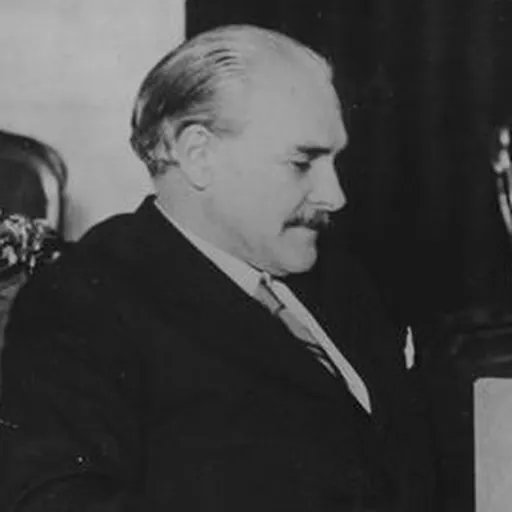
About Miklós Kállay
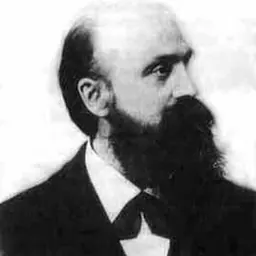
Lived 1887 – 1967 (aged 79). Miklós Kállay was a Hungarian politician, diplomat, jurist and head of government.
Miklós Kállay de Nagykálló (23 January 1887 – 14 January 1967) was a Hungarian politician who served as Prime Minister of Hungary during World War II, from 9 March 1942 to 22 March 1944. By early 1942, Hungarian Regent Admiral Miklós Horthy was seeking to put some distance between himself and Hitler's regime. He dismissed the pro-German prime minister, László Bárdossy, and replaced him with Kállay, a moderate whom Horthy expected to loosen Hungary's ties to Germany.
Kállay successfully protected refugees and prisoners, resisted Nazi pressure regarding Jews, established contact with the Allies and negotiated conditions under which Hungary would switch sides against Germany. However, the Allies were not close enough. When the Germans occupied Hungary in March 1944, Kállay went into hiding. He was finally captured by the Nazis but was liberated when the war ended. He went into exile in 1946 and died two decades later in New York City.
Early life and career The Kállay family was old and influential among the local gentry of their region, and Miklós served as lord-lieutenant (ispán) of his county from 1921 to 1929. The British historian C.A Macartney who knew Kállay well described him as "a Kállay of Szabolcs County and that itself to any Hungarian was a characterisation. Szabloces County, on the left bank of the middle Tiza, had always been the one of the most Hungarian parts of all Hungary. If Szabolcs might be called the quintessence of Hungary and the Kállays of Szabloces, Miklós Kállay was the quintessence of the Kállays". The main dividing line in Hungarian politics in the interwar era was not between left and right for the left had been effectively stamped out after the failure of the Hungarian Soviet Republic in 1919. The Hungarian Communist Party had been banned while the Social Democratic Party was barely tolerated. Rather, the main dividing was within the right between a right-wing faction known as the conservatives vs. an more right-wing faction known as the radicals. The dispute extended into the Hungarian state with the radicals controlling the ministries of defense, industry and finance while the conservatives controlled the ministries of the interior and agriculture. The ministries of foreign affairs and justice tended to alternate between the conservatives and the radicals. Kállay was associated with the conservatives.
Kállay then moved on to national government and served first as deputy under secretary of state for the Ministry of Trade (1929–1931) and later as minister of agriculture (1932–1935). In 1932, the radical Gyula Gömbös was appointed prime minister. Gömbös's long-time rival, the conservative former prime minister Count István Bethlen wanted to limit Gömbös's room to maneuver as prime minister and had several of his allies appointed to Gömbös cabinet with the express purpose of keeping Gömbös in line. Allies of Bethlen such as Ferenc Keresztes-Fischer served as Gömbös's Interior minister while Kállay served as Gömbös's Agriculture minister. In a mostly rural country, Kállay's portfolio as Agriculture minister gave him much power, and Kállay's purpose was to block any land reform. Gömbös liked to present himself as a populist right-winger, the champion of the "little guy" and as a reformer battling a corrupt system. Gömbös had sometimes talked about a land reform as a way of winning popular support, a position which was anathema to Bethlen who was implacably any land reform that might weaken the power of the aristocracy. Kállay resigned in 1935 in protest over the right-wing policies of Prime Minister Gyula Gömbös. He kept out of politics for most of the next decade before Hungarian Regent Admiral Miklós Horthy asked him to form a government to reverse the pro-Nazi policies of László Bárdossy in March 1942.
Exile In 1946 he went into exile and finally settled in the United States in 1951. In 1954, he published his memoirs, Hungarian Premier: A Personal Account of a Nation's Struggle in the Second World War (Columbia University Press).
Don’t just read it —
keep it.
Full-length biographies made to live with: read them, listen on the way to work, watch them tonight.
- E-book
- Audio
- Video
Instant download · yours to keep · every purchase keeps this site free
Important facts
People in Miklós Kállay's life
Named in this biography and alive at the same time




Related people
Same field, nearest in time





Contemporaries
People whose lives overlapped Miklós Kállay's



Frequently asked questions
Who was Miklós Kállay?
Hungarian politician (1887–1967)
When was Miklós Kállay born?
Miklós Kállay was born on 23 January 1887 in Nyíregyháza.
When did Miklós Kállay die?
Miklós Kállay died on 14 January 1967 in New York City.
What was Miklós Kállay's occupation?
Miklós Kállay was a politician, diplomat, jurist and head of government.
What nationality was Miklós Kállay?
Miklós Kállay was Hungarian.
Sources & further reading
Cite this page
APA: Biography.guide. (2026). Miklós Kállay. https://biography.guide/miklos-kallay/
MLA: "Miklós Kállay." Biography.guide, https://biography.guide/miklos-kallay/.
Chicago: "Miklós Kállay." Biography.guide. https://biography.guide/miklos-kallay/.
Data last updated: 2026-09-24 · Spot an error? Report a correction.
Portrait: Wikimedia Commons · author & licence
Page generated 2026-09-27 05:08 UTC