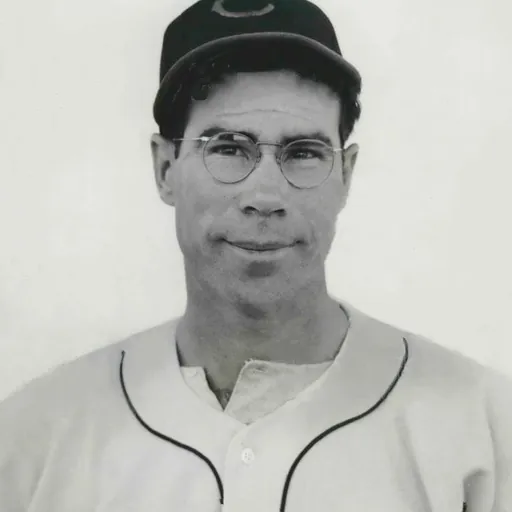
About Thurman Tucker
Lived 1917 – 1993 (aged 75). Thurman Tucker was an American baseball player.
Thurman Lowell Tucker (September 26, 1917 – May 7, 1993) was an American professional baseball player. A center fielder, Tucker played in Major League Baseball for nine seasons in the American League with the Chicago White Sox and Cleveland Indians. In 701 career games, Tucker recorded a batting average of .255 and accumulated 24 triples, nine home runs, and 179 runs batted in (RBI). Due to his resemblance of the film comedian Joe E. Brown, Tucker was nicknamed "Joe E.".
Born and raised in Texas, Tucker first played professionally with the Siloam Springs Travelers. After gradually progressing through minor league baseball, he signed with the Chicago White Sox before the 1941 season. His major league debut came the following year and he spent two years as the White Sox's starting center fielder until he enlisted in the armed forces during World War II. Upon his return, Tucker played two more seasons for the White Sox. Subsequently, he was traded to the Cleveland Indians, for whom he played four years, and continued to play minor league baseball throughout the 1950s. After his retirement, he became a major league scout and insurance agent.
Early life Thurman Tucker was born on September 26, 1917, and raised in Gordon, Texas. In high school, he was a three-sport athlete, playing baseball (where he was a second baseman), basketball, and track and field. After graduating in 1935, he played semi-professional baseball and enrolled in a baseball school located in Hot Springs, Arkansas. In 1936, at age 18, Tucker signed as a professional with the Fayetteville Bears of the Arkansas–Missouri League, but left the team after only two weeks, without playing a game. Soon after, he was signed by the Siloam Springs Travelers of the same league, where he began his professional career.
Minor league career In 1936, his first season with the Travelers, Tucker changed fielding positions and became an outfielder. The following year, he was to play for the El Dorado Lions of the Cotton States League, but a back injury caused him to miss nearly the entire season. After playing in 97 games, finishing with an average of .390, Tucker was promoted and played in 40 games for the Oklahoma City Indians. At the beginning of the 1941 season, Tucker failed to win the final outfield spot on the White Sox roster from Dave Short, and consequently spent 1941 at Oklahoma City, where he was coached by Rogers Hornsby. In 141 games for the Indians, Tucker had a batting average of .246 and 12 triples. White Sox management liked Tucker's defensive abilities, leading to them adding Tucker to their 1942 major league roster; Tucker made his major league debut on April 14, 1942. After playing two games for the White Sox, Tucker was sent down to the Fort Worth Cats of the Texas League, where he spent most of the season and hit .313 in 144 games. Consequently, after spring training Tucker became the starting center fielder for 1943, and the team's leadoff hitter. Partway through the season, Tucker's performance caught the eye of American League President Will Harridge, who noted him as someone the public came out to watch in the absence of stars serving in World War II. Among Tucker's achievements during the year were a walk-off home run on July 26 to win a game against the New York Yankees 2–1. Tucker finished the season with a .235 batting average, six triples, and 79 walks in 135 games. He also stole 29 bases, the third best total in the AL, and was caught stealing 17 times, which was second in the league. he was able to play the entire season for the White Sox. Tucker hit very well during the first month of 1944; he had a .403 batting average on May 16, which led the American League. His hitting and fielding abilities impressed critics: sportswriter Fred Lieb noted him as a breakout performer that year, and manager Jimmy Dykes called Tucker the finest defensive outfielder in the American League. Tucker and Dixie Walker led their respective leagues in batting average throughout June; at the end of the month, Tucker had an average of .369 in the American League while Walker had an average of .377 in the National League. Owing to his achievements, Tucker was added to the 1944 All-Star roster for the only time in his career. He was the leadoff hitter in the 1944 Major League Baseball All-Star Game, but went hitless in four at-bats.
Tucker's form faded after the All-Star Game; in early July, he had a hitless streak of 28 at-bats, causing his batting average to shrink from .375 to .327, resulting in losing his status as league leader. When his average fell to .320 after recording one base hit in 35 at-bats, he was removed from the starting lineup for a weekend matchup against the Detroit Tigers in an attempt to halt his decline. Tucker returned to the starting lineup shortly after being removed, and finished the season with a batting average of .287 and six triples. After the season ended, Tucker formally joined the Navy, and spent the 1945 season serving in the war.
When the players returned to their teams at the end of the war, Tucker was slated to be the starting center fielder for the 1946 season, working alongside Wally Moses and Taffy Wright. Unlike the previous season, he struggled with the bat at first, and was relegated to his original status on the White Sox roster as a good fielder but a poor hitter. At the end of June, Tucker had a batting average of .229, nearly 150 points lower than his average at the same point in 1944. His form recovered in the second half of the season and he finished the year with a batting average of .288 and 20 doubles, both career highs. However, he started the year by missing some playing time due to a stomach ailment, and did not play regularly for the White Sox until the middle of May. After returning to regular play, Tucker alternated playing time with Philley, and he finished the season with a .236 batting average in 89 games. He started off the year as the starting center fielder for the Indians, and in one early matchup against the Detroit Tigers, was the only player not to record a hit in an 8–2 victory. He missed three weeks of playing time in June after breaking a finger when he was hit by a pitch. Upon returning to the lineup, Tucker spent most of the second half of the season as a fourth outfielder, splitting time with Allie Clark and playing in the outfield alongside Larry Doby and Dale Mitchell. He finished the season with a .260 batting average and 52 runs in 83 games, and ended the season with a perfect fielding percentage of 1.000.
The Indians planned to use Tucker as their fourth outfielder for the 1949 season when he served mostly as backup to Doby. He was relegated mostly to pinch hitting duties, and finished the season with a .244 batting average in 20 games and under 200 at-bats. Tucker was again set to be a backup outfielder in 1950. His performances during the year included hitting a home run, the only one he hit that season, in an 8–5 victory over the Brooklyn Dodgers; the teams raised $60,000 in that game to benefit sandlot teams in Cleveland. Tucker finished the season with a .178 batting average in 54 games, the lowest mark of his career. Tucker played only one game for the Indians, on April 29 when he recorded a strikeout in his lone at-bat.
Later life After being sent to the Padres, Tucker completed the 1951 season with them. In 88 games, Tucker had two triples and a .222 batting average. He eventually played 47 games for the now-unaffiliated Padres, hitting .225 in the process. Tucker played in 72 games for the Indians that season, hitting .263. He retired from baseball before the 1953 season, and did not play with any professional team during that time. He hit .360 in 25 games for the Hubbers. He continued as player-manager for the Potashers in 1956, but the management considered firing him during a 14-game losing streak. He finished the year with a .306 batting average in 128 games. The following season, he was the player-manager of the Hobbs Sports, but only played in 16 games for them, hitting .273.
After retiring, Tucker became an insurance agent and lived in Oklahoma City. He married and had four children; his son Ronald served in the Vietnam War. Tucker died on May 7, 1993, in Oklahoma City and is buried at Gordon Cemetery in his hometown of Gordon, Texas.
Don’t just read it —
keep it.
Full-length biographies made to live with: read them, listen on the way to work, watch them tonight.
- E-book
- Audio
- Video
Instant download · yours to keep · every purchase keeps this site free
Important facts
People in Thurman Tucker's life
Named in this biography and alive at the same time

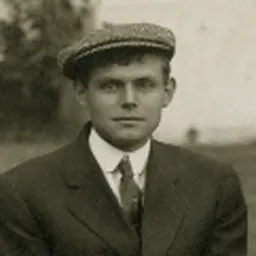
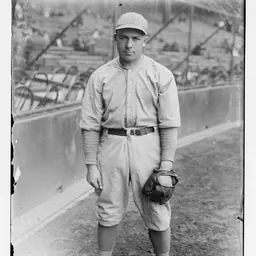

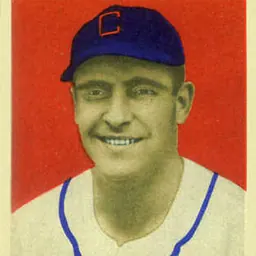
Related people
Same field, nearest in time

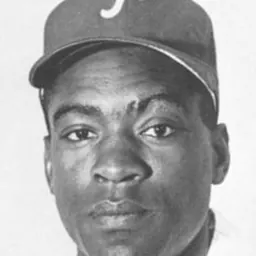
Contemporaries
People whose lives overlapped Thurman Tucker's

Frequently asked questions
Who was Thurman Tucker?
American baseball player (1917-1993)
When was Thurman Tucker born?
Thurman Tucker was born on 26 September 1917 in Gordon.
When did Thurman Tucker die?
Thurman Tucker died on 7 May 1993 in Oklahoma City.
What was Thurman Tucker's occupation?
Thurman Tucker was a baseball player.
What nationality was Thurman Tucker?
Thurman Tucker was American.
Sources & further reading
Cite this page
APA: Biography.guide. (2026). Thurman Tucker. https://biography.guide/thurman-tucker/
MLA: "Thurman Tucker." Biography.guide, https://biography.guide/thurman-tucker/.
Chicago: "Thurman Tucker." Biography.guide. https://biography.guide/thurman-tucker/.
Data last updated: 2026-09-22 · Spot an error? Report a correction.
Portrait: Wikimedia Commons · author & licence
Page generated 2026-09-27 05:03 UTC