
About Allie Clark
Lived 1923 – 2012 (aged 88). Allie Clark was an American baseball player.
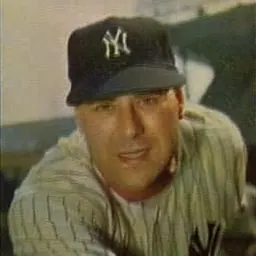
Alfred Aloysius "Allie" Clark (June 16, 1923 – April 2, 2012) was an American right fielder in Major League Baseball who played for seven seasons in the American League with the New York Yankees, Cleveland Indians, Philadelphia Athletics and Chicago White Sox. In 358 career games, Clark recorded a batting average of .262 and accumulated 32 home runs and 149 runs batted in (RBIs).
Clark was born in South Amboy, New Jersey, where he attended St. Mary's High School, and joined the New York Yankees organization after graduating. He spent the next six seasons playing minor league baseball and serving in the U.S. Army during World War II. He made his major league debut in 1947, and after one year with the Yankees, he spent four seasons with the Cleveland Indians. He was a member of the World Champion Yankees and Indians after the two teams won the 1947 World Series and 1948 World Series, respectively. He then played with the Philadelphia Athletics and Chicago White Sox through 1953, and played minor league baseball until 1958. After retiring, he returned to South Amboy and resided there until his death in 2012.
Early life and minor leagues Clark was born in South Amboy, New Jersey on June 16, 1923. His parents were Alfred and Helen Clark, and he had four brothers and two sisters. He attended St. Mary's High School in South Amboy, later known as Cardinal McCarrick High School, where he served as the baseball team's shortstop. Clark led the 1939 baseball team to the county and state championships, and was named to the All-State baseball team that year; he has since been inducted into his high school's athletic Hall of Fame.
After graduating from high school, Clark was signed by the New York Yankees as an amateur free agent. He was scouted while in high school, and was invited to a tryout in Newark, New Jersey, where he was signed to a minor league deal. Clark spent his first year in their farm system with the Easton Yankees of the Eastern Shore League and the Amsterdam Rugmakers of the Canadian–American League. He hit .325 for the Yankees in 70 games, and .368 in 20 games for the Rugmakers. In 1942, he was promoted to the Norfolk Tars of the Piedmont League, where he spent the season as the team's second baseman and played with future major league teammate Vic Raschi. In 129 games with the team, he hit .328 with 34 doubles. He finished the regular season with a .373 batting average in 24 games. He was named to the 1947 World Series roster, and played in three games. In game seven, he served as a pinch hitter for Yogi Berra, hitting a single, which helped the Yankees win the World Series; he considered this one of his greatest moments in professional baseball. On December 11, 1947, he was traded to the Cleveland Indians for pitcher Red Embree. The only weakness noted in his game was a sore arm from the previous season, to which Clark responded that reading the newspaper was the first time he noticed anything about a bad arm.
He was primarily a starter in the outfield for the first half of the season, and during the second half he split time in right field with Hank Edwards. Clark finished the year having played 81 games, most in the outfield and a few at third base, and hit .310 with nine home runs and 38 RBIs. Clark then played in one game in the World Series, going hitless in four plate appearances as the Indians won the series.
Clark started the 1949 season primarily as a pinch hitter, having lost his platoon duties alongside Edwards to Bob Kennedy. He was used mainly as a pinch hitter throughout the year, and by August he was sent down to the San Diego Padres of the Pacific Coast League to make room for Luke Easter, finishing the year with a .176 batting average in 35 games. In 42 games with San Diego over the last two months of the season, Clark hit .295 with 11 home runs. He spent the season in Cleveland as the backup in right field for Kennedy, and had a .215 batting average with six home runs in 59 games. After those three games, he was traded to the Philadelphia Athletics along with Lou Klein for Sam Chapman. In 59 total games, 56 with the Athletics, Clark had a .251 batting average in 171 at-bats. In a game on June 12, Clark ran into the outfield fence chasing a fly ball, and missed some playing time as a result.
Late in the 1952 season, Clark was ejected and fined $50 for arguing strikes in a game where Athletics Eddie Joost and manager Jimmy Dykes were also ejected; Clark's was the only fine not to be rescinded, a move that occurred on Dykes's request. In 71 games, he hit .274 with seven home runs. In 20 games with the Athletics, Clark had a .203 batting average and 13 RBIs, which led the team when that he was sold to the Chicago White Sox in mid-May. A month later, after playing in nine games for the White Sox, he was purchased by the Rochester Red Wings for $20,000, returning to the minors and ending his major league career.
Later life Clark spent the next five seasons with the Rochester Red Wings of the International League, part of the St. Louis Cardinals organization. In 80 games in 1953, he had a .328 batting average. He finished the year with a .323 average and 18 home runs.
To start the 1955 season, Clark held out for a new deal because he felt that he deserved a promotion to the Cardinals' major league roster; he ended the holdout in March. That season, he hit .308 with 23 home runs, 84 RBIs, and was named as a finalist for the International League Most Valuable Player Award. For the next two seasons, Clark hit .289 and .285, and he finished his time in Rochester with four straight seasons of 20 or more doubles. He began the 1958 season with the Denver Bears, but left the team due to the distance between himself and his family. In his final year of professional baseball, he played a combined 70 games with the New Orleans Pelicans, San Antonio Missions, and Indianapolis Indians.
After retiring from professional baseball, Clark worked for 30 years as an employee of Iron Workers Local 373, and served as a member of the South Amboy city council. He lived with his wife, Frances, and the two had six children together. He died on April 2, 2012, in South Amboy.
Don’t just read it —
keep it.
Full-length biographies made to live with: read them, listen on the way to work, watch them tonight.
- E-book
- Audio
- Video
Instant download · yours to keep · every purchase keeps this site free
Important facts
People in Allie Clark's life
Named in this biography and alive at the same time



Related people
Same field, nearest in time
Contemporaries
People whose lives overlapped Allie Clark's


Frequently asked questions
Who was Allie Clark?
American baseball player (1923-2012)
When was Allie Clark born?
Allie Clark was born on 16 June 1923 in South Amboy.
When did Allie Clark die?
Allie Clark died on 2 April 2012 in Sayreville.
What was Allie Clark's occupation?
Allie Clark was a baseball player.
What nationality was Allie Clark?
Allie Clark was American.
Sources & further reading
Cite this page
APA: Biography.guide. (2026). Allie Clark. https://biography.guide/allie-clark/
MLA: "Allie Clark." Biography.guide, https://biography.guide/allie-clark/.
Chicago: "Allie Clark." Biography.guide. https://biography.guide/allie-clark/.
Data last updated: 2026-09-20 · Spot an error? Report a correction.
Page generated 2026-09-27 05:18 UTC