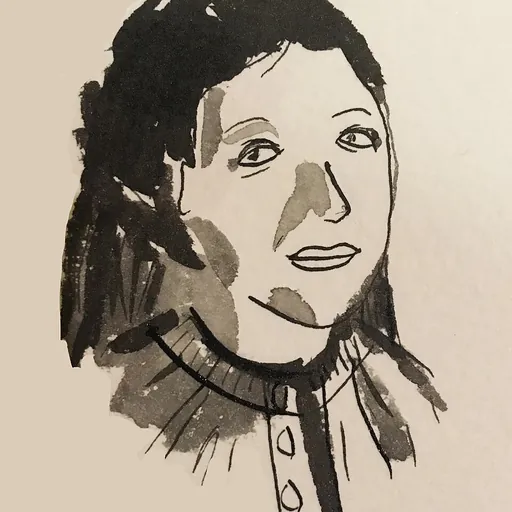
Thuraya Al-Hafez
Syrian politician and women's rights activist
About Thuraya Al-Hafez
Lived 1912 – 2000. Thuraya Al-Hafez was a Syrian politician and women's rights activist.
Thuraya al-Hafez (; 1911–2000) was a Syrian politician who campaigned against the niqab and fought for women's rights.
Life Al-Hafez was born at Damascus in 1911. In 1928, after completing her schooling in Damascus, al-Hafez became one of Syria's first female primary school teachers. The previous year, she founded the Damascene Women's Awakening Society. In the 1930s, she became a prominent women's rights activist, establishing the Women's School Alumnae Association for educated women and fighting for women's right to vote in elections.
In May 1942, al-Hafez led a protest march by one hundred women to the government headquarters in Damascus, where they all lifted their veils. She gave a speech arguing that 'the veil we wore was never mentioned in God's Holy Book or by Muhammad'. She also said about the protest: "I was exposed to the enmity of the Reactionary lass which dresses up religion as a cloth, being the first Arabic Syrian woman who went outdoors unveiled together with a hundred women and marched in a demonstration against the Reactionary class who were attacking women with spoiled eggs, musty tomatoes or with silver water unreasonably, only because they were visiting a cinema specialized for women, or because they were cutting their hair short or trimming it, the thing that makes the reactionaries claim that they are assimilating themselves to men." Although she was subsequently defeated, her endeavours were significant steps toward achieving their goal of elevating the status of the women in the Arab world. She claimed that the vote itself was tampered with and that she had in fact secured 75% of the vote.
Thuraya's husband, Munir al-Rayyes, owned the Damascus daily paper Barada, for which Thuraya began writing in 1953. In the same year, she 'launched her own literary and political salon in Damascus, which was open to both genders. The salon was convened in her own house and was named Muntada Sukaynah (Sukaynah's Salon) after Sukayna bint al-Hussein, the great-granddaughter of Muhammad, who presided over the first literary salon in Muslim history'.
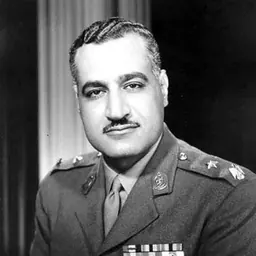
Al-Hafez supported Gamal Abdel Nasser of Egypt both during and after the United Arab Republic.
Don’t just read it —
keep it.
Full-length biographies made to live with: read them, listen on the way to work, watch them tonight.
- E-book
- Audio
- Video
Instant download · yours to keep · every purchase keeps this site free
Important facts
People in Thuraya Al-Hafez's life
Named in this biography and alive at the same time
Related people
Same field, nearest in time






Contemporaries
People whose lives overlapped Thuraya Al-Hafez's





Frequently asked questions
Who was Thuraya Al-Hafez?
Syrian politician and women's rights activist
When was Thuraya Al-Hafez born?
Thuraya Al-Hafez was born in 1912 in Damascus.
When did Thuraya Al-Hafez die?
Thuraya Al-Hafez died in 2000.
What was Thuraya Al-Hafez's occupation?
Thuraya Al-Hafez was a politician and women's rights activist.
What nationality was Thuraya Al-Hafez?
Thuraya Al-Hafez was Syrian.
Sources & further reading
Cite this page
APA: Biography.guide. (2026). Thuraya Al-Hafez. https://biography.guide/thuraya-al-hafez/
MLA: "Thuraya Al-Hafez." Biography.guide, https://biography.guide/thuraya-al-hafez/.
Chicago: "Thuraya Al-Hafez." Biography.guide. https://biography.guide/thuraya-al-hafez/.
Data last updated: 2026-09-23 · Spot an error? Report a correction.
Portrait: Wikimedia Commons · author & licence
Page generated 2026-09-27 05:05 UTC