
About Thomas William Allen
Lived 1862 – 1950 (aged 87). Thomas William Allen was a British classical philologist, hellenist and university teacher.
Thomas William Allen, (9 May 1862 – 30 April 1950) was an English classicist, scholar of Ancient Greek and palaeographer. He was a fellow of The Queen's College, Oxford, from 1890 until his death sixty years later. He is best known for his editions of Homer for Oxford Classical Texts and work on Greek palaeography.
Early life and education Allen was born on 9 May 1862 at 103 Camden Road Villas, Camden Town, London, the eldest child of Thomas Bull Allen, a wholesale tea dealer, and his wife Amelia Le Lacheur, daughter of William Le Lacheur. His sister Edith married another classicist John Percival Postgate, who was her tutor at Girton College, Cambridge. Details about Allen's upbringing are lacking, but he was educated at Amersham School and by private tutors before going up to University College London in 1880. In June of the next year he was elected to a classical scholarship at The Queen's College, Oxford, matriculating on 28 October 1881. He earned honours: first class in Mods (Honour Moderations) 1882 and first class in Literae Humaniores 1885. After receiving his B.A. in 1885 he was made a Fellow of University College London the same year, a rare honour. He began teaching, standing in as a temporary professor of Humanity in the University of Edinburgh for the 1885–6 school year. That man was Alfred Goodwin (1849–1892), Professor of Greek at University College London. Allen also dedicated his first book Notes on Abbreviations in Greek Manuscripts (1889) to him. Goodwin was much respected and was considered by many to be a remarkable and stimulating teacher. Allen became a close friend and assisted Goodwin in his work on a new edition of the Homeric Hymns by collating a number of manuscripts. Goodwin had conceived the edition as a two-volume production, with text and commentary, but after his premature death, only notes to about four hundred lines of the text could be located. Allen was asked to assume responsibility for seeing what remained through the press, a task that entailed considerable labour on his part, though out of modesty he omitted his name from the title page (Hymni Homerici, ed. Goodwin [Oxford, 1893]).
The Palazzo dei Musei in Modena, home of the famed Biblioteca Estense, which Allen visited in 1888. In the Michaelmas Term 1887 Allen was elected to a Craven Fellowship at Oxford. Under the new scheme of 1886, the Craven Fellow was to receive £200 annually for two years and was "required to spend at least eight months of each year of his tenure of the Fellowship in residence abroad for the purpose of study at some place or places approved by the electing Committee." Allen had proposed to the electors three lines of study: "a collation of MSS. of the Iliad, a collection of materials bearing upon palaeography generally, and, in cases where is seemed useful, cataloguing of manuscripts." He followed his proposal and spent the bulk of 1888 and 1889 primarily in Italy combing the libraries for relevant manuscripts. His first book Notes on Abbreviations in Greek Manuscripts (1889) offered the result of his palaeographical investigations and was well received by England's greatest expert on the subject Sir Edward Maunde Thompson. Although not a comprehensive work, it was then the best study of the topic in English and is still a useful guide for students. Not only were these trips productive in terms of providing the young scholar with a wealth of palaeographical experience, but at the end of his travels, while in Florence, he would meet his future wife Miss Laura Hope. In 1896 Monro published his Homeric text Homeri Opera et reliquiae, which included the version of the Homeric Hymns that Allen had edited three years earlier. At the start of the next year, the Delegates of Oxford University Press announced "a standard and uniform series" of "Oxford Classical Texts", with the responsibility for Homer being assigned to Monro and Allen. The fruit of their collaboration would be published five years later, a two-volume edition of the Iliad, Homeri Opera I-II (1902). During this decade Allen was struggling financially, and as a result was forced to delay his wedding four years until 1894. Even then, after they moved into their new residence at 6 Canterbury Road, his wife's aunt and sister took part of the house and contributed towards expenses. Allen twice applied for more remunerative positions, first for the chair of Humanity at the University of Edinburgh in 1891 and then for the chair of Greek at the University of Glasgow in 1899, both of which he failed to obtain.
Allen's 1912 edition of the Homeric HymnsIn the first decades of the twentieth century Allen published his editions of Homeric texts. He brought out revised versions of his Oxford Classical Text of the Iliad (2nd ed., 1908; 3rd ed. 1920), the Odyssey (1st ed. 1908; 2nd ed. 1917/1919), and the Homeric Hymns (1912). He collaborated with E. E. Sikes, M.A., Fellow and Tutor of St John's College, Cambridge, to bring out an edition of the Homeric Hymns (1904) with an English introduction and running commentary. He produced a similar edition (with commentary) of the Catalogue of Ships (1921), a catalogue in Book 2 of Homer's Iliad (2.494-759), which lists the contingents of the Achaean army that sailed to Troy. Finally, in 1931 he published his edito maior of the Iliad, a three-volume work, with the first volume containing solely introductory materials (in English). All of his editions of Homer were praised at the time and were the products of years of labour, but they have subsequently been criticized; Nigel Wilson has suggested that his "classification of the Iliad manuscripts was essentially flawed ... There is so much inaccuracy in what Allen states ... that one cannot trust him at all".
Personal Allen married Laura Charlotte Hope, the eldest daughter of William Hope, a recipient of the Victoria Cross for bravery during the Crimean War, and his wife Margaret Graham. They were engaged on 27 February 1890, a couple of months after they had met in Florence, but would not marry until 1894. They had one child, a daughter, Charlotte Allen, born in 1896. Mrs. Allen would become a devoted member of the newly formed Christian Science movement, which had only begun to hold public services in London the year that Charlotte was born. It is not clear what T. W. Allen's religious beliefs were, but apparently he was never baptized, a neglect that apparently cost him a Studentship at Christ Church, Oxford. It was a loss from which he never fully recovered. Allen was old-fashioned in tutorials, but was the patron of a dining society, a lover of fine food and wine, and a much-respected and courteous member of college life.
Works Editions [Prepared for the press by T. W. Allen from papers left by Goodwin.] [Homeric Hymns amended anew with brief notes by T. W. Allen.]
2nd ed. Oxford: Clarendon Press, 1908; 3rd ed. Oxford: Clarendon Press, 1920.
2nd ed. Oxford: Clarendon Press, 1908; 3rd ed. Oxford: Clarendon Press, 1920.
2nd ed. Oxford: Clarendon Press, 1917.
2nd ed. Oxford: Clarendon Press, 1919.
Reprint with corr. Oxford: Clarendon Press, 1946.
Books .
Notes and Articles
"The Ancient Name of Gla." The Classical Review 17 (1903): 239-40.
"Adversaria Graeca." The Classical Review 19 (1905): 197-200; 20 (1906): 5-6. "Etymologica." The Classical Review 19 (1905): 256-57. "Theognis." The Classical Review 19 (1905): 386-95. "Μυρμιδόνων Πόλις." The Classical Review 20 (1906): 193-201. "Varia Graeca." The Classical Review 20 (1906): 290-91. "Varia Graeca." The Classical Quarterly 2 (1908): 216-19; 3 (1909): 285-88. "A New Orphic Papyrus." The Classical Review 21 (1907): 97-100. "The Homeridae." The Classical Quarterly 1 (1907): 135-43. "The Epic Cycle." The Classical Quarterly 2 (1908): 64-74; 2 (1908): 81-88. "Argos in Homer." The Classical Quarterly 3 (1909): 81-98. "Dictys of Crete and Homer." The Journal of Philology 31 (1910): 207-33. "The Text of the Odyssey." Papers of the British School at Rome 5 (1910): 3–85. "The Homeric Catalogue." The Journal of Hellenic Studies 30 (1910): 292-322. "Homerica. I. The Achaeans." The Classical Review 25 (1911): 233-36. "Lives of Homer." The Journal of Hellenic Studies 32 (1912): 250-60; 33 (1913): 19-26. "Pisistratus and Homer." The Classical Quarterly 7 (1913): 33-51. "The Canonicity of Homer." The Classical Quarterly 7 (1913): 221-33. "Homerica II. Additions to the Epic Cycle." The Classical Review 27 (1913): 189-91. "Hymns (Greek and Roman)." In Hastings, James, ed. (1914). Encyclopaedia of Religion and Ethics, 7:40-42. Edinburgh: T & T Clark. "MSS of Strabo at Paris and Eton." The Classical Quarterly 9 (1915): 15-26; 9 (1915): 86-96. "The Date of Hesiod." The Journal of Hellenic Studies 35 (1915): 85-99. "The Origin of the Greek Minuscule Hand." The Journal of Hellenic Studies 40 (1920): 1-12. "Three Greek Scribes." In Miscellanea Francesco Ehrle IV (Studi e testi 40), 22–33. Roma: 1924. "Greek Abbreviation in the Fifteenth Century." Proceedings of the British Academy 12 (1926): 55-65 + 3 plates. "Miscellanea." The Classical Quarterly 22 (1928): 73–76, 203–204; 23 (1929): 28–30; 24 (1930): 40–41, 188–190; 25 (1931): 23–26, 146–150; 26 (1932): 82–87; 27 (1933): 51–53, 200–2. "The Homeric Scholia." Proceedings of the British Academy 17 (1931): 179–207. "Theognis." Proceedings of the British Academy 20 (1934): 71–89. "Adversaria." Revue de Philologie 60 (1934): 237–42; 62 (1936): 201–8; 63 (1937): 280–86; 65 (1939): 44–46; 72 (1946): 124-27 "Theognis." Revue de Philologie 66 (1940): 211–14. "Theognis, ed. Diehl 1933." Revue de Philologie 72 (1946): 128–30. "Theognis, ed. Diehl 1936." Revue de Philologie 76 (1950): 135–45.
Reviews Review of Batiffol, L'Abbaye de Rossano. The Classical Review 6 (1892): 454-57. Review of Gehring, Index Homericus. The Classical Review 9 (1895): 415-18. Review of Puntoni, L'Inno Omerico a Demetra. The Classical Review 10 (1896): 392-93. Review of Ludwich, Die homerische Batrachomachia. The Classical Review 11 (1897): 165-67. Review of Zereteli, De Compendiis script. cod. graec. praecipue Petropolitanorum et Mosquensium. The Classical Review 12 (1898): 57. Review of Ludwich, Die Homervulgata. The Classical Review 13 (1899): 39-41. Review of Leaf, The Iliad. The Classical Review 14 (1900): 360-62. Review of Grenfell and Hunt, Amherst Papyri, II. The Classical Review 15 (1901): 425-26. Review of Ludwich, Homeri Carmina. Pars prior. Ilias. The Classical Review 17 (1903): 58; 23 (1909): 17 Review of Rzach, Hesiodi Carmina. The Classical Review 17 (1903): 261-62 Review of Gardthausen, Sammlungen und Cataloge griech. Handschriften. The Classical Review 18 (1904): 177-78. Review of Hennings, Homers Odyssee. The Classical Review 19 (1905): 359. Review of Blass, Die Interpolationen in der Odyssee. The Classical Review 20 (1906): 267-71. Review of Champault, Phéniciens et Grecs en Italie d'après l'Odyssée. The Classical Review 20 (1906): 470. Review of Lang, Homer and his Age. The Classical Review 21 (1907): 16-19. Review of Martini and Bassi, Catalogus cod. graec. Bibl. Ambrosianae. The Classical Review 21 (1907): 83-85. Review of Agar, Homerica. The Classical Quarterly 3 (1909): 223-29; 4 (1910); 206-8. Review of Fick, Die Enstehung der Odyssee. The Classical Review 25 (1911): 20-22. Review of Mülder, Die Ilias und ihre Quellen. The Classical Review 25 (1911): 114-15. Review of Gerhard, Veröffentlichungen aus der Heidelberger Papyrus-Sammlung. IV. I. The Classical Review 25 (1911): 253-55. "Greek Palaeography and Textual Criticism." In Whibley, Leonard, ed. (1912). The Year's Work in Classical Studies, 1911, 127-32. London: John Murray. "Greek Palaeography and Textual Criticism." In Whibley, Leonard, ed. (1913). The Year's Work in Classical Studies, 1912, 115-22. London: John Murray. "Greek Palaeography and Textual Criticism." In Bailey, Cyril, ed. (1914). The Year's Work in Classical Studies, 1913, 85-92. London: John Murray. Review of Leaf, Troy. A Study in Homeric Geography. The Journal of Hellenic Studies 33 (1913): 114-15. Review of Belzner, Homerische Probleme. II. Die Komposition der Odyssee. The Journal of Hellenic Studies 33 (1913): 116. Review of Drerup, Das Fünfte Buch der Ilias. The Journal of Hellenic Studies 33 (1913): 380. Review of Roemer, Aristarchs Athetesen in der Homerkritik. The Classical Review 28 (1914): 141-42. Review of Smyth, The Composition of the Iliad. The Classical Review 28 (1914): 230-31. Review of Bethe, Homer, Dichtung und Sage. I. Ilias. The Journal of Hellenic Studies 34 (1914): 334. Review of Thomson, Studies in the Odyssey. The Journal of Hellenic Studies 34 (1914): 335. "Greek Palaeography and Textual Criticism." In Bailey, Cyril, ed. (1915). The Year's Work in Classical Studies, 1914, 45-50. London: John Murray. Review of Boudreaux, Le Texte d'Aristophane et ses Commentateurs. The Journal of Hellenic Studies 40 (1920): 231-32. "Greek Palaeography." In Gaselee, Stephen, ed. (1918). The Year's Work in Classical Studies, 1917, 111-14. London: John Murray. Review of Cauer, Grundfragen der Homerkritik. The Journal of Hellenic Studies 41 (1921): 298. Review of Drerup, ed., Homerische Poetik, I. and III. The Journal of Hellenic Studies 41 (1921): 298-99. "Greek Palaeography and Textual Criticism." In Robertson, D. S., ed. (1923). The Year's Work in Classical Studies, 1922-1923, 65–68. Bristol: J. W. Arrowsmith. "Greek Palaeography and Textual Criticism." In Owen, S. G., ed. (1927). The Year's Work in Classical Studies, 1926-1927, 69–74. Bristol: J. W. Arrowsmith. Review of Hurlbut, Selected Latin Vocabularies for Second-Year Reading. Classical Weekly 21 (1927): 111–12. "Greek Palaeography." In Owen, S. G., ed. (1934). The Year's Work in Classical Studies, 1934, 69–74. Bristol: J. W. Arrowsmith. Review of Lake and Lake, Dated Greek Minuscule Manuscripts to the Year 1200, I-IV The Journal of Hellenic Studies 56 (1936): 115–17. Review of Spranger, Euripidis quae in codice Veneto Marciano 471. The Journal of Hellenic Studies 57 (1937): 109. Review of Lake and Lake, Dated Greek Minuscule Manuscripts to the Year 1200, V. The Journal of Hellenic Studies 57 (1937): 109. Review of Powell, A List of Printed Catalogues of Greek MSS in Italy. The Classical Review 51 (1937): 36–37. Review of Spranger, Euripidis quae in codice Hierosolymitano rescripto Patriarchalis bibliothecae. The Journal of Hellenic Studies 58 (1938): 120. Review of Drerup, Der homerische Apollonhymnos. The Journal of Hellenic Studies 58 (1938): 121, 293. Review of Lake and Lake, Dated Greek Minuscule Manuscripts to the Year 1200, VII-IX. The Journal of Hellenic Studies 59 (1939): 178–79.
Don’t just read it —
keep it.
Full-length biographies made to live with: read them, listen on the way to work, watch them tonight.
- E-book
- Audio
- Video
Instant download · yours to keep · every purchase keeps this site free
Important facts
People in Thomas William Allen's life
Named in this biography and alive at the same time



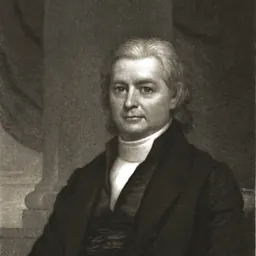

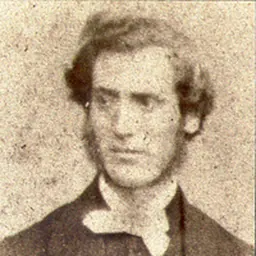
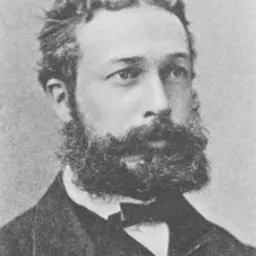
Related people
Same field, nearest in time

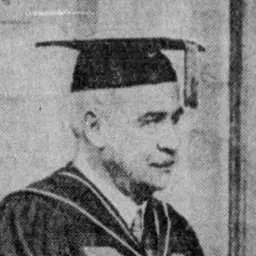
Contemporaries
People whose lives overlapped Thomas William Allen's





Frequently asked questions
Who was Thomas William Allen?
British hellenist (1862–1950)
When was Thomas William Allen born?
Thomas William Allen was born on 9 May 1862 in London.
When did Thomas William Allen die?
Thomas William Allen died on 30 April 1950 in Oxford.
What was Thomas William Allen's occupation?
Thomas William Allen was a classical philologist, hellenist and university teacher.
What nationality was Thomas William Allen?
Thomas William Allen was British.
Sources & further reading
· Wikipedia: Thomas William Allen
· DBpedia: Thomas William Allen
Cite this page
APA: Biography.guide. (2026). Thomas William Allen. https://biography.guide/thomas-william-allen/
MLA: "Thomas William Allen." Biography.guide, https://biography.guide/thomas-william-allen/.
Chicago: "Thomas William Allen." Biography.guide. https://biography.guide/thomas-william-allen/.
Data last updated: 2026-09-20 · Spot an error? Report a correction.
Page generated 2026-09-27 05:10 UTC