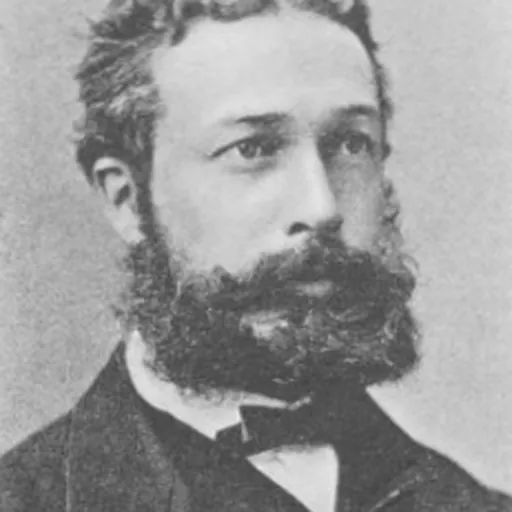
William Hope
Scottish military officer (1834–1909); recipient of the Victoria Cross
About William Hope
Lived 1834 – 1909 (aged 75). William Hope was a British military officer.
Colonel William Hope VC (12 April 1834 – 17 December 1909) was a Scottish recipient of the Victoria Cross, the highest and most prestigious award for gallantry in the face of the enemy that can be awarded to British and Commonwealth forces.
William Hope was the son of the Right Honourable John Hope, Lord Chief Justice Clerk of Scotland, and his wife Jessie Irving, and was born in Edinburgh on 12 April 1834. He was educated privately and at Trinity College, Cambridge.
William Hope married Margaret Jane, daughter of Robert Cunningham Cunninghame Graham of Gartmore and aunt of the author, politician and traveller Robert Bontine Cunninghame Graham, by whom she had six children, the eldest of which was a son, Adrian, whose granddaughter, Lauretta Hope-Nicholson, was the second wife of the artist Jean Hugo.
VC action He was 21 years old, and a lieutenant in the 7th Regiment of Foot (later The Royal Fusiliers ), British Army during the Crimean War when the following deed took place for which he was awarded the VC.
On 18 June 1855 at Sebastopol, Crimean Peninsula, Lieutenant Hope went to the assistance of the adjutant, who was lying outside the trenches badly wounded. Having found that it was impossible to move him, even with the help of four men, he ran back across the open ground under very heavy fire from the enemy batteries, and procured a stretcher to bring the wounded officer in.
He later achieved the rank of colonel. Hope invented a form of shrapnel shell for rifled guns, and later became an enthusiastic supporter of the volunteer movement, rising to the command of the 1st City of London Artillery Volunteers.
The medal His Victoria Cross is displayed at the Royal Fusiliers Museum in the Tower of London, England.
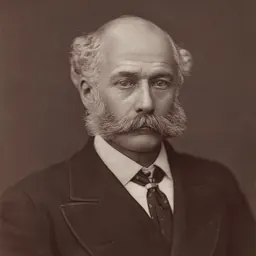
Business Following his military career, Hope was involved in a number of business ventures. In 1862 he was described as General Manager of the International Financial Society, and was also Director of the Lands Improvement Company, through which he had been involved in reclamation and irrigation work in Spain and Majorca. With William Napier, he proposed a scheme to convey sewage from the northern outfall of Joseph Bazalgette's London sewer system some across Essex to reclaim of land from Dengie Flats, and a similar area from Maplin Sands, off the shore of Foulness Island. The estimated cost of the project was £2.1 million, and although work started in 1865, a crisis in the banking system, when the Overend Gurney bank failed, made it difficult to obtain finance, and the scheme foundered.
Don’t just read it —
keep it.
Full-length biographies made to live with: read them, listen on the way to work, watch them tonight.
- E-book
- Audio
- Video
Instant download · yours to keep · every purchase keeps this site free
Important facts
People in William Hope's life
Named in this biography and alive at the same time





Related people
Same field, nearest in time


Contemporaries
People whose lives overlapped William Hope's




Frequently asked questions
Who was William Hope?
Scottish military officer (1834–1909); recipient of the Victoria Cross
When was William Hope born?
William Hope was born on 12 April 1834 in Edinburgh.
When did William Hope die?
William Hope died on 17 December 1909 in Chelsea.
What was William Hope's occupation?
William Hope was a military officer.
What nationality was William Hope?
William Hope was British.
Sources & further reading
Cite this page
APA: Biography.guide. (2026). William Hope. https://biography.guide/william-hope/
MLA: "William Hope." Biography.guide, https://biography.guide/william-hope/.
Chicago: "William Hope." Biography.guide. https://biography.guide/william-hope/.
Data last updated: 2026-09-21 · Spot an error? Report a correction.
Portrait: Wikimedia Commons · author & licence
Page generated 2026-09-27 05:01 UTC