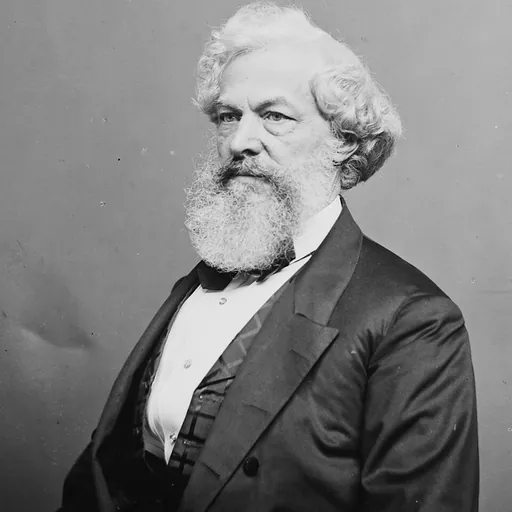
About Thomas Ustick Walter
Lived 1804 – 1887 (aged 83). Thomas Ustick Walter was an American architect.
Thomas Ustick Walter (September 4, 1804 – October 30, 1887) was an American architect. He worked on more than 400 projects, including Moyamensing Prison and Girard College in Philadelphia. He served as the fourth Architect of the Capitol, and led the addition of the north and south wings and the central dome. He retired in 1865, but financial difficulties forced him back to work in the 1870s, including a job as Chief Assistant to the Architect of Philadelphia City Hall.
A founder of the American Institute of Architects, he served as its president from 1876 to 1887.
Early life and education Walter was born on September 4, 1804, in Philadelphia. He was the son of mason and bricklayer Joseph S. Walter and his wife Deborah. His grandfather, Frederick Jacob Walter, emigrated from Germany in 1749 and arrived in Philadelphia as an orphan after both parents died at sea. Walter showed an aptitude for mathematics and drawing at an early age. He worked as a bricklayer for his father during the construction of the Second Bank of the United States and studied architecture in the office of William Strickland.
He attended the School of Mechanic Arts at the Franklin Institute in Philadelphia and studied under John Haviland.
In 1838, the building committee of Girard College funded a European trip for Walter. He visited England, Ireland, France, and Italy to study the architecture and construction of schools and other buildings and gather ideas for his work at the college.
In 1839, he was elected to the American Philosophical Society.
In 1841, a local economic downturn created financial hardship for Walter. He was forced to sell his house and most of his architectural library. The 36 Corinthian columns designed by Walter, as well as 144 cast-iron structural pillars for the dome, were supplied by the Baltimore ironworks of Poole & Hunt. Walter also rebuilt the interior of the Library of Congress' west center building after the fire of 1851. Walter continued as Capitol architect until 1865, when he resigned his position over a minor contract dispute. After 14 years in Washington, he retired to Philadelphia. He continued on that vast project until his death in 1887. He was interred at Laurel Hill Cemetery in Philadelphia.
Works
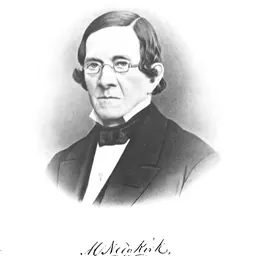
Walter worked on over 400 projects over his career, Wills Eye Hospital, Logan Square, Philadelphia (1832) Central Presbyterian Church, Philadelphia (1833) Founder's Hall, Girard College for Orphans, Philadelphia (1833–1848) Expansion of Andalusia, Bensalem Township, Pennsylvania (1833–32) St. George's Hall, residence of Matthew Newkirk (1835) Interior renovation of Christ Church, Philadelphia, (1835–36)
Bank of Chester County, West Chester, Pa. (1836) West Chester Young Ladies Seminary, West Chester (1838) St. James Episcopal Church, Wilmington, North Carolina (1839–40) Norfolk Academy Norfolk, Virginia (1840) Lexington Presbyterian Church, Lexington, Virginia (1843) Breakwater, La Guaira, Venezuela (1843–45) Chapel of the Cross, Chapel Hill, North Carolina (1843) Tabb Street Presbyterian Church, Petersburg, Virginia (1843) Winder Houses, 232-34 S. 3rd St., Philadelphia (1843) Chester County Courthouse, West Chester (1846–47) Chester County Horticultural Hall, West Chester (1848)
Inglewood Cottage, Chestnut Hill, Philadelphia Ingleside, Washington, D.C. Fifth Presbyterian Church, 500 I Street N.W., Washington, D.C. (1852) Completion of East Wing, Old Patent Office Building, Washington, D.C. (–1853) West Wing, Old Patent Office Building, Washington, D.C. (1851–54, burned 1877) First Baptist Church, Montgomery, Alabama (1854) United States Capitol dome, Washington, D.C. (1855–1866) Preliminary design for expansion of the Treasury Building, Washington, D.C. Expansion of the General Post Office, Washington, D.C. (1855–66) Marine Barracks, Pensacola, Florida (1857) Marine Barracks, Brooklyn, New York (1858–59) Garrett-Dunn House, 7048 Germantown Ave, Mt. Airy, Philadelphia (, burned 2009) Thomas Ustick Walter House, Germantown, Philadelphia (1860–61, demolished ) Eutaw Place Baptist Church, Baltimore, Maryland (1868–71)
Personal life
He married Mary Ann Elizabeth Hancocks in 1824.
Legacy For his architectural accomplishments, Walter is honored in a ceiling mosaic in the East Mosaic Corridor at the entrance to the Main Reading Room of the Library of Congress.
A historical marker highlighting the location of Walter's house in Philadelphia was erected in 2009 by the Philadelphia Historical and Museum Commission.
Gallery
Don’t just read it —
keep it.
Full-length biographies made to live with: read them, listen on the way to work, watch them tonight.
- E-book
- Audio
- Video
Instant download · yours to keep · every purchase keeps this site free
Important facts
People in Thomas Ustick Walter's life
Named in this biography and alive at the same time



Related people
Same field, nearest in time


Contemporaries
People whose lives overlapped Thomas Ustick Walter's





Frequently asked questions
Who was Thomas Ustick Walter?
American architect (1804–1887)
When was Thomas Ustick Walter born?
Thomas Ustick Walter was born on 4 September 1804 in Philadelphia.
When did Thomas Ustick Walter die?
Thomas Ustick Walter died on 30 October 1887 in Philadelphia.
What was Thomas Ustick Walter's occupation?
Thomas Ustick Walter was an architect.
What nationality was Thomas Ustick Walter?
Thomas Ustick Walter was American.
Sources & further reading
· Wikipedia: Thomas Ustick Walter
· DBpedia: Thomas Ustick Walter
Cite this page
APA: Biography.guide. (2026). Thomas Ustick Walter. https://biography.guide/thomas-ustick-walter/
MLA: "Thomas Ustick Walter." Biography.guide, https://biography.guide/thomas-ustick-walter/.
Chicago: "Thomas Ustick Walter." Biography.guide. https://biography.guide/thomas-ustick-walter/.
Data last updated: 2026-09-23 · Spot an error? Report a correction.
Portrait: Wikimedia Commons · author & licence
Page generated 2026-09-27 05:07 UTC