
About Thomas Tate
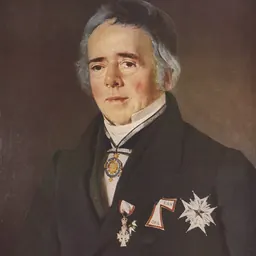
Lived 1807 – 1888 (aged 80–81). Thomas Tate was a writer and mathematician.
Thomas Turner Tate (1807–1888) was an English mathematical and scientific educator and writer. Largely self-taught, he has been described as "a remarkable pioneer of science and mathematics teaching".
Biography
After his father's death, Tate changed direction from 1830. He lectured to local evening classes. In 1835 he was the appointed lecturer on chemistry to the medical school in York.
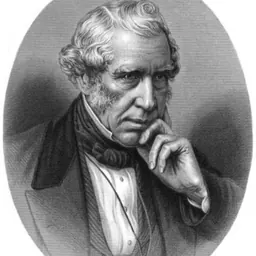
Teacher training In 1840 Tate became master of the mathematical and scientific department at the Battersea teacher training college; this was a private venture founded in 1839–40 by James Kay-Shuttleworth. Kay-Shuttleworth recruited Tate and two Scots, William Horne and Walter McLeod, to launch what was a new initiative in training, and textbook writing. Tate went on to write educational works on mathematics, mechanics, drawing, and natural science. His Principles of Geometry, Mensuration, Trigonometry, Land Surveying, and Levelling (London, 1848) was translated into Hindustani. The mission was to instruct teachers for paupers (i.e. those in workhouses). For a period Temple led discussion at Kneller Hall of radical education reform, with his friend Ralph Lingen and others. The flow of visitors there was closely linked to Balliol College, Oxford, and also literary circles.
With Temple, Tate worked to select chemical and electrical equipment for school science teaching, and a government grant was made available to subsidise its sale.
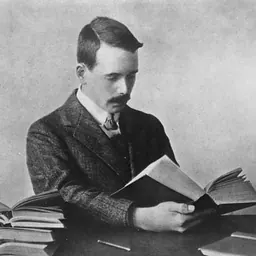
Tate was elected fellow of the Royal Astronomical Society on 14 March 1851. He had taken advice from Henry Moseley in his days at Battersea, and through Kay-Shuttleworth was influenced by the ideas of Richard Dawes. The thinking was to tackle the needs of a working-class education.
The college was closed down in 1856, and a pension was given to Tate. John Bull had called it a "godless college" and complained of the cost in 1849.
Death
Tate died at his residence, 51 Catherine Street, Liverpool, on 18 February 1888, and was buried on the eastern side of Highgate Cemetery.
Work Tate was the author of numerous educational works on mathematics, mechanics, drawing, and natural science, all tending to promote intellectual methods of instruction. His 'Principles of Geometry, Mensuration, Trigonometry, Land Surveying, and Levelling' (London, 1848, 12mo) was translated into: Hindustani.
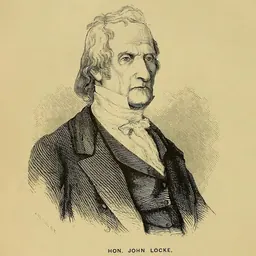
His 'Philosophy of Education' (London, 1854, 8vo) reached a third edition in 1860; it showed Tate's debts to Francis Bacon, John Locke, Johann Pestalozzi and faculty psychology; it is noted for its advocacy of the inductive method. From 1853 to 1855, with Tilliard, he edited the Educational Expositor, a work designed to assist schoolmasters and teachers.
From 1853 to 1855, in company with James Tilleard, he edited the 'Educational Expositor,' a work designed to assist schoolmasters and teachers. In 1856 he began to publish 'Mathematics for Working Men,' London, 8vo, but only one part appeared.
At York, Tate wrote a mathematical column for the York Courant.In 1856 he began to publish Mathematics for Working Men, London: only one part appeared.
In experimental science and engineering, Tate contributed to the Philosophical Magazine, With William Fairbairn, he was the author of memoirs in the Transactions of the Royal Society, on the vapour-tension of superheated steam, the strength of materials in relation to the construction of iron ships, the strength of glass tubes, and the elasticity of sulphuric acid. He was the inventor of a double-piston air-pump that was known by his name.
Selected publications Exercises in arithmetic for elementary schools, 1844 Principles of Geometry, Mensuration, Trigonometry, Land Surveying, and Levelling (London, 1848) Educational Expositor, with James Tilleard (eds.), 1853 to 1855 The principles of mechanical philosophy applied to industrial mechanics: forming a sequel to the author's "Exercises on mechanics and natural philosophy, 1853. Philosophy of Education (London, 1854) Mathematics for Working Men, London, 1956. An elementary course of natural and experimental philosophy, 1856 The principles of the differential and integral calculus, simplified, and applied to the solution of various useful problems in practical mathematics and mechanics. By Thomas Tate, 1863
Works about Thomas Tate
Don’t just read it —
keep it.
Full-length biographies made to live with: read them, listen on the way to work, watch them tonight.
- E-book
- Audio
- Video
Instant download · yours to keep · every purchase keeps this site free
Important facts
People in Thomas Tate's life
Named in this biography and alive at the same time


Related people
Same field, nearest in time



Contemporaries
People whose lives overlapped Thomas Tate's




Frequently asked questions
Who was Thomas Tate?
British mathematician
When was Thomas Tate born?
Thomas Tate was born in 1807.
When did Thomas Tate die?
Thomas Tate died in 1888.
What was Thomas Tate's occupation?
Thomas Tate was a writer and mathematician.
Sources & further reading
· DBpedia: Thomas Tate (mathematician)
Cite this page
APA: Biography.guide. (2026). Thomas Tate. https://biography.guide/thomas-tate-writer/
MLA: "Thomas Tate." Biography.guide, https://biography.guide/thomas-tate-writer/.
Chicago: "Thomas Tate." Biography.guide. https://biography.guide/thomas-tate-writer/.
Data last updated: 2026-09-20 · Spot an error? Report a correction.
Page generated 2026-09-27 05:26 UTC