
About Thomas Shaw
Lived 1752 – 1830 (aged 77–78). Thomas Shaw was a British composer and viola.
Early life The New Rooms at Bath. Publish'd March 3d 1779 & sold by T. Malton in Poland Street, & J. Gandon No. 48 Broad Street, Carnaby Market. (James Gandon, 1779, The BL King's Topographical Collection, British Library shelfmark: Maps K.Top.37.26.a.3.) There is little information about Thomas Shaw's early life and his career prior to going to London has remained obscure.
Born in 1752, Shaw was the son of Bathonian musician, concert director, and member of the Royal Society of Musicians, Thomas Shaw, and the younger brother of violinist Anthony Shaw. The majority of his career was spent at the Drury Lane theatre in London as an instrumentalist, violin soloist, band leader, musical director and in-house composer. center
Career
Early performances Shaw Jr. gave his earliest known performance in Bath in April 1769. Around this time, he led the orchestra in Thomas Linley's subscription concerts of the autumn 1769 and spring 1770, and was a member of the theatre band in 1771. In addition, his music was being performed and published; an overture composed by him was played in a concert at the end of December 1771 and by 1772 he was playing his own compositions in Bath and Bristol. During the spring of 1772, Herschel and Shaw gave a certain number of concerts together, Shaw on the violin and Herschel on the fortepiano. BRISTOL. AT the Aſſembly-Room in Princeſs-Street, on Thurſday Evening the 11th of June, under the Conduct of Mr. HERSCHEL and Mr. SHAW, jun. will be a CONCERTO SPIRITUALE Or, SACRED PERFORMANCE. Conſiſting of the famous MISERERE of Signior Gregorio Allegri, ſung at the Pope's Chapel in Rome on good Friday, with the ſolemn POPULE MEUS of Petrus Aloyſius Preneſtinus (performed but once in England). Also Part of the celebrated STABAT MATER of Signior Auriſchio and Pergoleſi. with Choruſes from the Psalms of Sig. Benedetto Marcello, with Inſtrumental Accompaniments, by Mr. Herſchell. The principal Vocal Parts by the two Signora's Farinelli; a Concerto on the Hautboy by Mr. Herſchel; the firſt Violin, and a Solo by Mr. Shaw, jun. The Chorus from Bath, Wells, Bristol, &c – To begin at Half paſt Six o'Clock. Tickets, at 5s. each, to be had at the American, Exchange, and Aſſembly Coffee-Houſes; where alſo may be had, Books of the Performance, with an English Tranſlation of the Latin Part, at 6d. each.
On Thursday 17 December 1772 the Bath Chronicle and Weekly Gazette published an advertisement for another concert by the Herschel/Shaw duo in Bath; this time, for the benefit of the 20 year old Shaw himself: AT the Old Aſſembly Rooms, on TUESDAY, Dec. 22, will be a CONCERT of Vocal and Inſtrumental Muſic, for Mr. SHAW, Jun. The Vocal Part by Signora FARINELLI, and Maſter PECK. The Firſt Violin by Mr. SHAW, Jun. The Hautboy by Mr. FISCHER. And the Harpſichord by Mr. HERSCHEL. To begin at a Quarter paſt Six o'Clock. - Particulars of the Concert will be inſerted in the Bills. Tickets to be had of Mr. SHAW, Jun. in Duke-Street, at Mr. Gydes Rooms, the Bookſellers and Coffee-Houſes, at Five Shillings each.
Around 1776, Shaw decided to seek a more promising future in London, his brother Anthony was already working there as a musician. Shaw was then still in his early 20s and had already been in contact with London audiences when he played some of his music at the Vauxhall Gardens in 1773.
The tensions and difficulties with the Linleys might have played a part in his decision to leave Bath;
His violin playing was put on show regularly there, playing, for instance, the obligato parts accompanying the singers in pieces like Handel's L'Allegro, il Penseroso ed il Moderato or executing fully fledged violin concertos in between parts of entertainments or oratorios like Messiah. used in lieu of older numbers in reprisal of works by other composers, or inserted in pasticcios.
He wrote an overture and other instrumental interludes for the revival of Michael Arne's Cymon in 1791.
The Island of St Marguerite
The various events that constitute the French Revolution, from the fall of the Bastille to the imprisonment and subsequent execution of the royal couple, as well as the contemporary Anglo-French wars, were a source of both dread and fascination in Britain, and, as such, inspired musical responses by British composers. Shaw's and John St John's The Island of Saint Marguerite (aka The Island of St Marguerite or The Island of Marguerite ) may have been one of the first such works as it premiered on 13 November 1789, barely four months after the storming of the Bastille which is the event that inspired it.
This perſormance, we are told, was originally deſigned for a repreſentation oſ the aſſault and deſtruction oſ the Baſtile, with which was blended the ſtory of the Iron Maſk; but when it came beſore the Licencer, every part oſ the piece that bore immediate reſemblance to the late popular events in Paris, was from political conſiderations forbidden, and therefore is unavoidably brought forward a maimed and mutilated ſtate.
In response to the censorship the authors seem to have resorted to selecting a less obvious, if not less known, reference to French prisons and to the Prisoner in the Iron Mask and fixed their choice on Sainte-Marguerite whose Fort Royal was one of the State prisons where the very man was held prisoner from 1687 to 1698 before being transferred to the Bastille. Not much, if anything at all, remained of the original idea as is shown by the synopsis written by the European Magazine and London Review. And the review concludes by stating: and the Act I finale ("My love, from hour to hour", duet between the Commandant and Carline) borrowed from Mozart's Le nozze di Figaro (Act III opening duet "Crudel! perché finora" between the Count and Susanna). Role Singer/Actor Mask (i.e. the prisoner in the iron mask) Michael Kelly Commandant Mr Barrymore Turnkey Mr Suett Lawyer Mr Waldron Officer Mr Sedgewick Thomas Mr Banks Jonas Mr Bannister jun. Carline Anna Maria Crouch Nannette Miss Romanzini (aka Maria Bland) Abbess Mrs Eliza Edwards Teresa Mrs Fox Nuns Miss Hagley, Miss Stageldoir, Miss Barnes Mob Mr Hollingsworth, Mr Jones, Mr Phillimore, Mr Maddocks, Mr Lyons, Mr Fairbrother, Mr Webb Extras Mr Fawcett, Mr Wilson, Mr Alfred, Mr Danby, Mr Shaw, Mr Vincent, Mr Boyer, Mr Stageldoir, Mr Horsfall, Mr Dorion, Mr Capon.Mrs Edwin, Miss Palmer, Mrs Shaw, Mrs Davies, Mrs Butler, Mrs Gawdry Narrator Mr Bannister Jun.
The piece must have had some success as it was at the Drury Lane during 3 seasons and had a total of 38 performances (12 in 1789, 20 in 1790, 4 in 1791, and finally 2 in 1793). he obviously did not keep his word as, at some point, Shaw was arrested for his debts. Ten years later, in July 1808, Shaw was still owed £7983.00 by Sheridan,
When the Drury Lane theatre burned down in 1809, Sheridan, who had still not settled his debt with Shaw, was financially ruined. To deal with the theatre's complex debts (Shaw was in fact one of the many claimants against the management of the Drury Lane Theatre), Sheridan turned to politician Samuel Whitbread. Whitbread would head the company's management, deal with the theatre's debts and oversee the rebuilding.
In May 1810, Sheridan, maybe seeking investors or trying to lure Shaw back, offered him a £3000 share in the proprietorship of Drury Lane, in addition to the renter's share of £500 Shaw already own, advising him that he "could do well" with it. offered Shaw the post of "President of the Orchestra", adding that his responsibilities in this role would need clarification since there had been misunderstandings in the past. There is no evidence that Shaw accepted the offer.
In the Autumn of 1811, Shaw applied for the post of leader of the band at the Lyceum Theatre in Wellington Street off the Strand but was unsuccessful. Writing to Samuel Whitbread in October 1811, he expresses how he feels that "[...] Calumnies [...are being] spread abroad against [his] Name and Character [...]". Without naming them openly in his letter, Shaw directly accuses Thomas Sheridan (son of the Sheridan manager of Drury Lane referred to earlier in this article) and Samuel James Arnold who were both involved in the Lyceum's management at the time. played at the funeral service given on 16 November 1817 at the Eglise de l'Oratoire Saint-Honoré ou du Louvre, upon request of the British citizens living in Paris, for the memory for Princess Charlotte of Wales who had died 10 days earlier giving birth to a still born son. The title of the piece in its published version of 1817 leaves no doubt about the identity of its composer ("composed by Thomas Shaw, late Leader of the Band at the Theatre Royal Drury Lane and Vauxhall.") or the place where it was performed (in the Church of the Oratoire, Rue St-Honoré à Paris).
A few years later, a young Fanny Kemp, who had been sent to school in Paris, found him teaching music there in the 1820s. but most of those are lacking information paramount in successfully identifying the individuals mentioned in them.
Yet, there exists one very tantalising death registration among the reconstructed civil records of the Paris archives:
The act is backdated to 29 June 1827 and states that on the previous day (28 June 1827) at 5 pm, at number 21 avenue de Lowendal, died a 74 year old individual named Shaw. His activity, indicated as "rentier".
The date of birth of Shaw (our musician and composer) is unknown but is estimated to be around 1752, which would have made him about 74 or 75 years old in June 1827, depending on the month of his birth. This makes him a very plausible candidate for being the Thomas Shaw in the Paris Archives death certificate mentioned above.
The only additional information the death certificate gives us about the individual is that he was a "rentier". However, "rentier" was a rather unprecise term that encompassed about everyone who lived off money that did not come from wages per se but who may have owned some property or received some sort of annuity (from very modest pensioners to big freeholders). Because we know next to nothing about Shaw's life and state of affairs after he left England (he could well have kept shares in Drury Lane, Margate, etc., and received money for them), the additional information of "rentier" neither validates nor invalidates the hypothesis that the Paris death certificate might be our Thomas Shaw's.
Frustratingly, because of the state of the Paris civil records dating prior to 1860, there does not seem to be other surviving documents to enlighten us further about the Shaw mentioned in the death certificate.
Thomas Shaw (the musician and composer) and the Thomas Shaw who died in Paris in 1827 may well have been one and the same, the little we know about the both of them makes it tantalisingly plausible, but unfortunately we will never be able to ascertain it.
Private life Reported 1786 death In their edition of July–December 1786, The European Magazine and London Review erroneously list in their obituaries "Mr. Thomas Shaw, muſician at Drury-Lane Theatre" as deceased on 16 October 1786. A namesake may have passed away on that day and may have been identified as or assumed to be the composer by mistake.
Haydn In his second London notebook, Haydn recounts his visit for lunch at Shaw's on 17 September 1791. It seems Shaw would have been quite a fan of Haydn, welcoming him directly at the door wearing a coat with the name Haydn "worked into the very ends of both his collars in the finest steel beads".
Margate Upon the death of his brother Anthony in August 1792, Shaw received an eighth interest in the Margate theatre. According to Cecil Price, his association with it continued until 1813. Solo for flute op.12 (1819)
Music for keyboard Three Sonatas for the Harpsichord or the Piano Forte, 1787 3 Keyboard Sonatas, 1790 3 Pianoforte Sonatas op.13 (1805–14)
Stage works
The Island of St Marguerite (1789) Two-act afterpiece comic opera. Libretto by John St. John and Sheridan. Music by Thomas Shaw, with some borrowed from Cymon (1792) Libretto by David Garrick. Original music by Michael Arne, but with new overture and additional music by Stephen Storace, Thomas Shaw, Charles Dibdin, "and other Eminent Masters." Shaw wrote the overture and some instrumental interludes, including the Marches in the Procession.The Merchant of Venice (1792–9) Duet In Vows of Everlasting Truth (Lorenzo & Jessica) composed by Thomas Shaw. THE MERCHANT OF VENICE as 16 Dec. 1796, but omitted: Gobbo, Leo- Saturday 11 nardo, Balthazar, Pietro, Stephano. Also A FRIEND IN NEED. As 9 Feb. SINGING. In Act III of mainpiece a new Duett (composed by Shaw;) [In rows of everlasting truth (BUC, 942)] by Dignum and Mrs Bland; In afterpiece, as 10 FebThe Mariners (1793) Music principally composed by Thomas Attwood, with selections from Mozart, Martin y Soler, Ferrari, Linley Sen., Dittersdorf. Thomas Shaw composed the overture and I Have a Silent Sorrow Here (full authorship of the music to this last song is disputed as it is likely to be an adaptation of a melody attributed to Georgiana Cavendish) Cambro-Britons (1798) The end of the 2nd act borrows the song I Have a Silent Sorrow Here, originally from The Stranger.The Shipwreck (1798) This work borrows the song There Stood Jonas, originally from The Island of St Marguerite.De Montfort (1800): The Camp The Four Saints (1801)
Sacred music "Heavenly choir, assist our strain", An Anthem on the lamented Death of Her Royal Highness, The Princess Charlotte of Wales. As performed at the Funeral Service in the Church of the Oratoire, Rue St-Honoré à Paris.The words by W. H. Ireland, and composed by Thomas Shaw, late Leader of the Band at the Theatre Royal Drury Lane and Vauxhall. London, 1817.
Discography
The overture to The Island of St. Marguerite is available on:
Great Britain Triumphant! Stefanie True, Caroline Schiller, Zoltán Megyesi, Mária Zádori, Reid Spencer. Capella Savaria, Mary Térey-Smith. (Centaur Records, CRC3073, 2011).
The Violin Concerto in G is available on:
English Classical Violin Concertos, Elizabeth Wallfisch, The Parley of Instruments, Peter Holman (Helios, CDH55260, 2008)
Don’t just read it —
keep it.
Full-length biographies made to live with: read them, listen on the way to work, watch them tonight.
- E-book
- Audio
- Video
Instant download · yours to keep · every purchase keeps this site free
Important facts
Family & relationships
People in Thomas Shaw's life
Named in this biography and alive at the same time
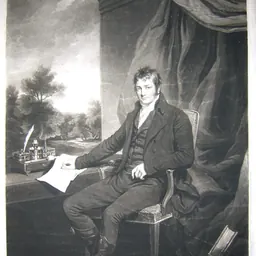

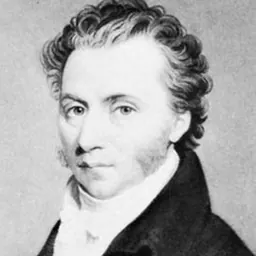
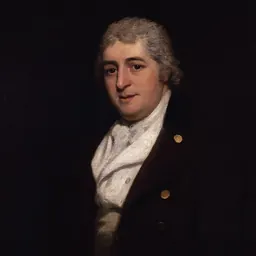
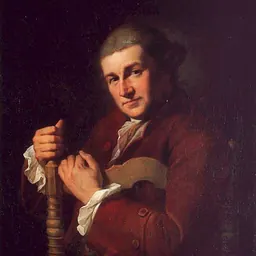

Related people
Same field, nearest in time



Contemporaries
People whose lives overlapped Thomas Shaw's





Frequently asked questions
Who was Thomas Shaw?
British composer
When was Thomas Shaw born?
Thomas Shaw was born in 1752 in Bath, Somerset.
When did Thomas Shaw die?
Thomas Shaw died in 1830 in Paris.
What was Thomas Shaw's occupation?
Thomas Shaw was a composer and viola.
What nationality was Thomas Shaw?
Thomas Shaw was British.
Sources & further reading
· DBpedia: Thomas Shaw (composer)
Cite this page
APA: Biography.guide. (2026). Thomas Shaw. https://biography.guide/thomas-shaw-composer/
MLA: "Thomas Shaw." Biography.guide, https://biography.guide/thomas-shaw-composer/.
Chicago: "Thomas Shaw." Biography.guide. https://biography.guide/thomas-shaw-composer/.
Data last updated: 2026-09-22 · Spot an error? Report a correction.
Page generated 2026-09-27 05:24 UTC