
Thomas Scales
Leading British abolitionist
About Thomas Scales
Lived 1786 – 1860 (aged 73–74). Thomas Scales was a British.
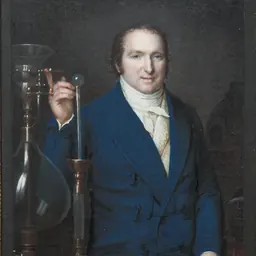
Thomas Scales (1786–1860) was a leading British abolitionist. He was the first minister of Queen Street Chapel in Leeds and he founded the Silcoates School.
Life Scales was born in Leeds in Yorkshire, in December 1786. His father was an innkeeper and later a farmer and his mother was a keen follower of Rev. Edward Parsons of the Salem Independent Chapel. Scales was educated at the Moravian Institution at Fulneck, then with Rev. Dr Fawcett of Ewood Hall, and at Leeds Grammar School.
Scales left school at age 15 and was apprenticed to a draper in Halifax for three years. After a year in Wakefield, he returned to his home in Leeds where he decided to become a dissenting preacher. In 1806 he was admitted as a student to the Hoxton Academy
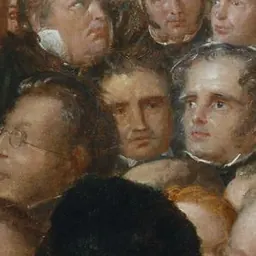
Thomas Scales was a leader in the community, a founder of Silcoates School for the education of sons of Independent ministers and missionaries, He returned to Exeter Hall in 1840 where he appears [in spectacles] in Benjamin Robert Haydon's painting of The Anti-Slavery Society Convention 1840, beside Captain Charles Stuart.
Scales was also involved in the foundation of the Independent Ministerial Provident Society of the West Riding of Yorkshire, administration of Balme's charity which was established by Mary Bacon and the management of Airedale and Rotherham Colleges.
He edited and published numerous pamphlets and sermons, and his book Principles of Dissent ran to three editions. He was editor of Protestant Dissenters' Juvenile Magazine from 1833–36 and left a manuscript on the life of Rev. James Scott (1710–1783), founder of Heckmondwike Academy, and materials for the History of Nonconformity in the West Riding of Yorkshire, which was used as a basis for James Miall's Congregationalism in Yorkshire (London, 1868). His detailed knowledge of nonconformist history made him a valuable witness in the Lady Hewley Case.
With failing eyesight, he resigned around January 1850 after 30 years, and became chaplain and secretary at Silcoates Congregational School, later moving to Gomersal and Cleckheaton. He died suddenly in June 1860 at Low Moor, while travelling to preach a funeral sermon for a fellow minister and friend Reverend John Paul.
Don’t just read it —
keep it.
Full-length biographies made to live with: read them, listen on the way to work, watch them tonight.
- E-book
- Audio
- Video
Instant download · yours to keep · every purchase keeps this site free
Important facts
People in Thomas Scales's life
Named in this biography and alive at the same time

Contemporaries
People whose lives overlapped Thomas Scales's


Frequently asked questions
Who was Thomas Scales?
Leading British abolitionist (1786-1860)
When was Thomas Scales born?
Thomas Scales was born in 1786 in Leeds.
When did Thomas Scales die?
Thomas Scales died in 1860.
What nationality was Thomas Scales?
Thomas Scales was British.
Sources & further reading
Cite this page
APA: Biography.guide. (2026). Thomas Scales. https://biography.guide/thomas-scales/
MLA: "Thomas Scales." Biography.guide, https://biography.guide/thomas-scales/.
Chicago: "Thomas Scales." Biography.guide. https://biography.guide/thomas-scales/.
Data last updated: 2026-09-20 · Spot an error? Report a correction.
Page generated 2026-09-27 05:21 UTC