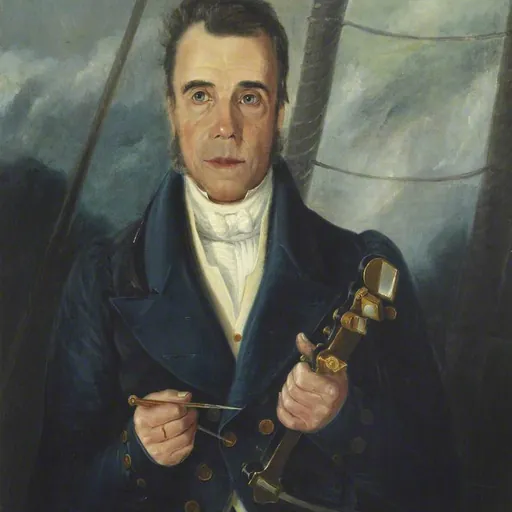
About James Scott
Lived 1790 – 1872 (aged 81). James Scott was a British military officer.
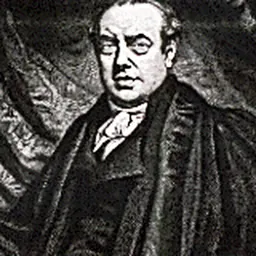
Admiral Sir James Scott, KCB (18 June 1790 – 2 March 1872), was a British Royal Navy officer. He served in the Napoleonic Wars, the War of 1812, and the First Opium War.
Early career Scott was born in London, the son of Thomas Scott of Glenluce, Wigtownshire, Scotland. He joined the Navy in August 1803 as a first-class volunteer on board the frigate , under the command of Captain George Cockburn. After taking the British Minister Plenipotentiary, Anthony Merry and his suite, to the United States, Phaeton sailed to the Cape of Good Hope, for operations against the French on the Isle de France. Scott was rated as a midshipman from September 1804. He returned to England in January 1806 with Captain Cockburn in the frigate , with Marquess Wellesley aboard, returning from his time as Governor-General in India.
In February 1806m Scott joined the frigate Blanche, under Captain Thomas Lavie, and was present, on 19 July, at the capture of the off the Faroe Islands. He rejoined Captain Cockburn in September to serve aboard , cruising among the Western Islands and off Rochefort. From July 1807 to April 1808 he served aboard the 74-gun , commanded by Captain Sir Richard King off Ferrol. He then rejoined Cockburn again to serve as master's mate aboard , which sailed to the Caribbean in late 1808, and took part in the reduction of Martinique in early 1809,
He returned to England with Cockburn in carrying the captive governor and garrison. Scott then took part in the Walcheren Campaign, commanding a gun-boat during the attack upon Flushing, and for his conduct he received a letter of thanks from Rear-Admiral Sir Richard Goodwin Keats, and on 16 November 1809 was appointed lieutenant aboard the sloop , Captain George Hewson. in the destruction of Commodore Joshua Barney's Chesapeake Bay Flotilla on the Patuxent River, and served on shore as aide-de-camp to Rear Admiral Cockburn during the battle of Bladensburg, the burning of Washington, and at the failed attack on Baltimore. then to vice admiral on 4 June 1861. He was made a Knight Commander of the Order of the Bath on 10 November 1862. Scott was finally promoted to admiral on 20 February 1865, but was then, against his own wishes, placed on the retired list under the terms of the Order in Council of 24 March 1866.
Admiral Scott died at Cheltenham on 2 March 1872.
Don’t just read it —
keep it.
Full-length biographies made to live with: read them, listen on the way to work, watch them tonight.
- E-book
- Audio
- Video
Instant download · yours to keep · every purchase keeps this site free
Important facts
People in James Scott's life
Named in this biography and alive at the same time


Related people
Same field, nearest in time

Contemporaries
People whose lives overlapped James Scott's



Frequently asked questions
Who was James Scott?
Royal Navy officer, born 1790
When was James Scott born?
James Scott was born on 18 June 1790 in Cheltenham.
When did James Scott die?
James Scott died on 2 March 1872 in Cheltenham.
What was James Scott's occupation?
James Scott was a military officer.
What nationality was James Scott?
James Scott was British.
Sources & further reading
· DBpedia: James Scott (Royal Navy officer)
Cite this page
APA: Biography.guide. (2026). James Scott. https://biography.guide/james-scott-military-officer/
MLA: "James Scott." Biography.guide, https://biography.guide/james-scott-military-officer/.
Chicago: "James Scott." Biography.guide. https://biography.guide/james-scott-military-officer/.
Data last updated: 2026-09-20 · Spot an error? Report a correction.
Portrait: Wikimedia Commons · author & licence
Page generated 2026-09-27 04:57 UTC