
About Thomas Rogers
Lived 1735 – 1793 (aged 57–58). Thomas Rogers was a British politician, businessperson and banker.
Thomas Rogers (1735–1793) was an English merchant and banker. He served as Member of Parliament for Coventry from late 1780 to early 1781.
Early life He was the son of Thomas Rogers of Amblecote, Staffordshire, and his wife Martha Knight, daughter of the ironmaster Richard Knight of Downton Hall in Shropshire. He went into commerce working in Cheapside, London, for Daniel Radford of Stoke Newington, in a warehouse of which his father was joint owner with Radford.
Amblecote, not far north of Stourbridge, was then a hamlet. Thomas Rogers the elder, who died in 1775, lived there at "The Hill". He was in business as a manufacturer of glass. The elder Thomas Rogers was the son of Paul Rogers, a glassmaker at Amblecote, as his father and grandfather had been. He left his son Thomas land at Kingswinford.
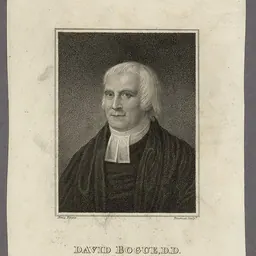
Rogers went into business with the Cornhill bankers George and Thomas Welch, with Welch & Rogers trading in 1765 or 1766. The bank traded from 1785 as Welch, Rogers, Olding & Rogers. Olding, the principal clerk, was a salaried partner from 1771, and a named partner from 1778. Two sons of Rogers, Thomas Jr. and Samuel, were brought in from 1784. His major partner George Welch (died 1796) was an nonconformist activist with connections to Poole, and Harbour Grace in Newfoundland, who supported the dissenting academy run by David Bogue at Gosport.
Rogers adopted the Presbyterian views of his wife. The Rogers house was No. 52 Newington Green, and Price lived at No. 54; the numbering in those days was not consecutive, since in 1767 Rogers joined his house to No. 55 which was adjacent.
1780 election Rogers opposed British policy in the American Revolutionary War. In April 1780, Price and Rogers were founding members of the Society for Constitutional Information. Carl Cone comments that while Rogers and associates desired parliamentary reform, and Rogers was averse to the landed nobility, they were not believers in democracy in the modern sense. Price adopted John Horne Tooke as a close ally from this time, but Rogers distrusted him.
With Sir Thomas Hallifax, Rogers stood in the 1780 general election as parliamentary candidate for Coventry, a two-member constituency. Edward Roe Yeo and John Baker Holroyd, their opponents, were supporters of the North administration, while Hallifax and Rogers had the backing of the Coventry corporation. Opponents dubbed Rogers the "Dismal Squire", to Hallifax's "Dumb Knight". The first poll held was marred by continual rioting around the polling booth, and was abandoned after eight days without a significant proportion of potential votes cast. In the second poll, held over 24 days and ending 29 December, Hallifax and Rogers were declared narrow winners. The result was overturned in parliament on 27 February 1781. In 1787 an anonymous pamphlet Salutary Admonitions attacking the college was addressed to Rogers; David Williams is now identified as its author. In 1791 Rogers was chairing the college's committee.
In 1790, Rogers was, according to Price, a prime mover with friends of the dinner held at the Crown and Anchor, Strand, to celebrate the first Bastille Day anniversary, coinciding with the Fête de la Fédération held in France. It was reported that 600 people attended, with cockades. Rogers in 1792 was a signatory to a resolution of the Society of the Friends of the People on political reform.
Family Rogers married in 1760 Mary Radford, daughter of Daniel Radford. He married Martha Bowles, daughter of Sampson Bowles, and they had six sons and four daughters. Thomas Rogers (1761–1788). Samuel Rogers, third son, was left a stake in the family bank and an income of £5,000 per year by his father, who disapproved of Daniel's marriage. Samuel sold the family house on Newington Green in 1797. Henry Rogers (died 1833, unmarried). Maria, married in 1795 Sutton Sharpe, the brewer, and was mother of the banker Samuel Sharpe, died in childbirth 1806.
John Towgood's father Matthew Towgood III, son of Michaijah Towgood, was in early life a Presbyterian minister. He then moved to London where he was a banker, and a trustee of Hackney New College. His mother Mary Mills was sister of the banker John Mills (died 1759). D. C. Coleman has suggested the reason Towgood became a partner in Bloxham & Fourdrinier c.1808 may have been a loan extended by Langston, Towgood & Co.
Don’t just read it —
keep it.
Full-length biographies made to live with: read them, listen on the way to work, watch them tonight.
- E-book
- Audio
- Video
Instant download · yours to keep · every purchase keeps this site free
Important facts
People in Thomas Rogers's life
Named in this biography and alive at the same time




Related people
Same field, nearest in time


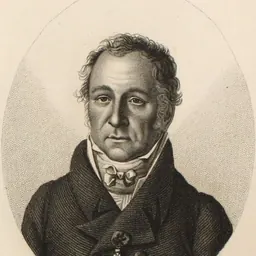

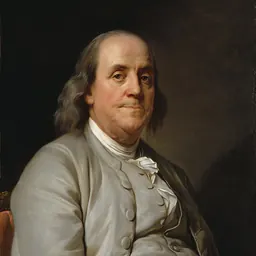
Contemporaries
People whose lives overlapped Thomas Rogers's


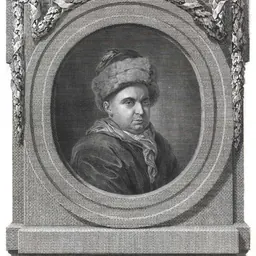



Frequently asked questions
Who was Thomas Rogers?
British Member of Parliament (1735-1793)
When was Thomas Rogers born?
Thomas Rogers was born in 1735.
When did Thomas Rogers die?
Thomas Rogers died on 1 June 1793.
What was Thomas Rogers's occupation?
Thomas Rogers was a politician, businessperson and banker.
What nationality was Thomas Rogers?
Thomas Rogers was British.
Sources & further reading
Cite this page
APA: Biography.guide. (2026). Thomas Rogers. https://biography.guide/thomas-rogers-politician/
MLA: "Thomas Rogers." Biography.guide, https://biography.guide/thomas-rogers-politician/.
Chicago: "Thomas Rogers." Biography.guide. https://biography.guide/thomas-rogers-politician/.
Data last updated: 2026-09-20 · Spot an error? Report a correction.
Page generated 2026-09-27 05:17 UTC