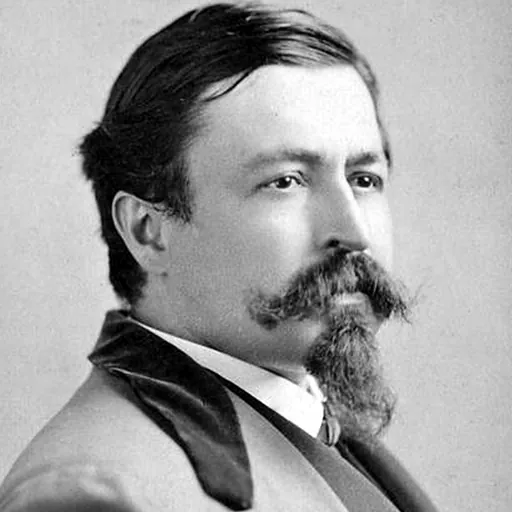
About Thomas Nast
Lived 1840 – 1902 (aged 62). Thomas Nast was an American and German caricaturist, artist, journalist, illustrator, painter and draftsperson.
Nast was deeply involved in the political issues of the day, often as a member of the Republican party. He promoted the platform of the Radical Republicans against President Andrew Johnson and supported Republican presidential candidates Ulysses S. Grant, Rutherford B. Hayes, and Benjamin Harrison. Despite his attachment to the Republican party, Nast prominently and repeatedly criticized 1884 nominee James G. Blaine, informally joining the Mugwump faction of Republicans who supported Democrat Grover Cleveland's candidacy.
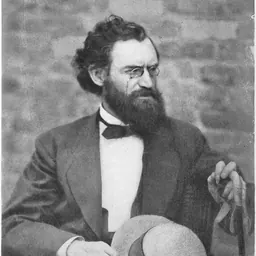
Nast was a sharp critic of "Boss" Tweed and the Tammany Hall Democratic Party political machine. He also focused his critical attention on the unreconstructed South as it fought measures to establish civil rights for black Southerners following the surrender of the Confederacy. Concerned with civil service reform and good governance, Nast made repeated mockery of political figures he felt were corrupt or otherwise deserving of scorn, including Senator Carl Schurz, Liberal Republican press magnate Horace Greeley, and Stalwart leader Roscoe Conkling.
In 1863, in the midst of the US Civil War, Nast published a picture of "Santa Claus" as a Union soldier holding a puppet of "Jeff" (Jefferson Davis) with a noose around its neck. This is generally recognized as the first depiction of the modern Santa Claus (based on the traditional German figures of Saint Nicholas and Weihnachtsmann). Nast has also been credited for being the first to depict the Republican Party using an elephant.
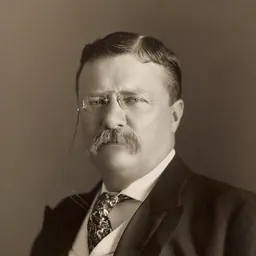
Contrary to popular belief, Nast did not create Uncle Sam (the male personification of the United States Federal Government), Columbia (the female personification of American values), or the Democratic donkey, although he did popularize those symbols through his artwork. Nast was associated with the magazine Harper's Weekly from 1859 to 1860 and from 1862 until 1886. Nast's influence was so widespread that Theodore Roosevelt once said, "Thomas Nast was our best teacher."
Early life and education Nast was born in military barracks in Landau, Bavaria, Germany (now in Rhineland-Palatinate), as his father was a trombonist in the Bavarian 9th regiment band. Nast was the last child of Appolonia (née Abriss) and Joseph Thomas Nast. He had an older sister Andie; two other siblings had died before he was born. His father held political convictions that put him at odds with the Bavarian government, so in 1846, Joseph Nast left Landau, enlisting first on a French man-of-war and subsequently on an American ship. He sent his wife and children to New York City, where they arrived in June 1846, In 1856, he started working as a draftsman for Frank Leslie's Illustrated Newspaper. His drawings appeared for the first time in Harper's Weekly on March 19, 1859, when he illustrated a report exposing police corruption; Nast was 18 years old at that point.
Career
In February 1860, he went to England for the New York Illustrated News to depict one of the major sporting events of the era, the prize fight between the American John C. Heenan and the English Thomas Sayerssponsored by George Wilkes, publisher of Wilkes' Spirit of the Times. A few months later, as artist for The Illustrated London News, he joined Garibaldi in Italy. Nast's cartoons and articles about the Garibaldi military campaign to unify Italy captured the popular imagination in the U.S. In February 1861, he arrived back in New York. In September of that year, he married Sarah Edwards, whom he had met two years earlier.
He left the New York Illustrated News to work again, briefly, for Frank Leslie's Illustrated News. In 1862, he became a staff illustrator for Harper's Weekly. In his first years with Harper's, Nast became known especially for compositions that appealed to the sentiment of the viewer. An example is "Christmas Eve" (1862), in which a wreath frames a scene of a soldier's praying wife and sleeping children at home; a second wreath frames the soldier seated by a campfire, gazing longingly at small pictures of his loved ones. One of his most celebrated cartoons was Compromise with the South (1864), directed against those in the North who opposed the prosecution of the American Civil War. He was known for drawing battlefields in border and southern states. These attracted great attention, and Nast was referred to by President Abraham Lincoln as "our best recruiting sergeant".
After the war, Nast strongly opposed the anti-Reconstruction policy of President Andrew Johnson, whom he depicted in a series of trenchant cartoons that marked "Nast's great beginning in the field of caricature".
Style and themes Schurz, Belmont, Fenton, Trumbull, Tipton, and others lie before a vengeful Columbia (representing the U.S.) while Uncle Sam (also representing the U.S.) waves his hat beside the victorious Ulysses S. Grant, 1872.
Nast's cartoons frequently had numerous sidebars and panels with intricate subplots to the main cartoon. A Sunday feature could provide hours of entertainment and highlight social causes. After 1870, Nast favored simpler compositions featuring a strong central image. Nast was baptized a Catholic at the Saint Maria Catholic Church in Landau, and for a time received Catholic education in New York City.
When Nast converted to Protestantism remains unclear, but his conversion was likely formalized upon his marriage in 1861. (The family were practicing Episcopalians at St. Peter's in Morristown.) Nast considered the Catholic Church to be a threat to American values. According to his biographer, Fiona Deans Halloran, Nast was "intensely opposed to the encroachment of Catholic ideas into public education". When Tammany Hall proposed a new tax to support parochial Catholic schools, he was outraged.
His 1871 cartoon The American River Ganges, depicts Catholic bishops, guided by Rome, as crocodiles moving in to attack American school children as Irish politicians prevent their escape. He portrayed public support for religious education as a threat to democratic government. The authoritarian papacy in Rome, ignorant Irish Americans, and corrupt politicians at Tammany Hall figured prominently in his work. Nast favored nonsectarian public education that mitigated differences of religion and ethnicity. However, in 1871 Nast and Harper's Weekly supported the Republican-dominated board of education in Long Island in requiring students to hear passages from the King James Bible, and his educational cartoons sought to raise anti-Catholic and anti-Irish fervor among Republicans and independents.
Nast expressed anti-Irish sentiment by depicting them as violent drunks. He used Irish people as a symbol of mob violence, machine politics, and the exploitation of immigrants by political bosses. Nast's emphasis on Irish violence may have originated in scenes he witnessed in his youth. Nast was physically small and had experienced bullying as a child. In the neighborhood in which he grew up, acts of violence by the Irish against black Americans were commonplace.
In 1863, he witnessed the New York City draft riots in which a mob composed mainly of Irish immigrants burned the Colored Orphan Asylum to the ground. His experiences may explain his sympathy for black Americans and his "antipathy to what he perceived as the brutish, uncontrollable Irish thug". An 1876 Nast cartoon combined a caricature of Charles Francis Adams Sr with anti-Irish sentiment and anti-Fenianship.
In general, his political cartoons supported American Indians and Chinese Americans. He advocated the abolition of slavery, opposed racial segregation, and deplored the violence of the Ku Klux Klan. In one of his more famous cartoons, the phrase "Worse than Slavery" is printed on a coat of arms depicting a despondent black family holding their dead child; in the background is a lynching and a schoolhouse destroyed by arson. Two members of the Ku Klux Klan and White League, paramilitary insurgent groups in the Reconstruction-era South, shake hands in their mutually destructive work against black Americans.
Despite Nast's championing of minorities, Morton Keller writes that later in his career "racist stereotypy of blacks began to appear: comparable to those of the Irish—though in contrast with the presumably more highly civilized Chinese."
During Nast's era, William Shakespeare's plays were an inherent part of the school curriculum. He introduced into American cartoons the practice of modernizing scenes from Shakespeare for a political purpose, referencing 23 of his 37 plays in more than 100 cartoons — sometimes with just a recognizable line or two, but generally with pictorial content.
Thomas Nast Award The Thomas Nast Award has been presented each year since 1968 by the Overseas Press Club to an editorial cartoonist for the "best cartoons on international affairs." Past winners include Signe Wilkinson, Kevin (KAL) Kallaugher, Mike Peters, Clay Bennett, Mike Luckovich, Tom Toles, Herbert Block, Tony Auth, Jeff MacNelly, Dick Locher, Jim Morin, Warren King, Tom Darcy, Don Wright and Patrick Chappatte.
Thomas Nast Prize The Thomas Nast Prize for editorial cartooning has been awarded by the Thomas Nast Foundation (located in Nast's birthplace of Landau, Germany) since 1978 when it was first given to Jeff MacNelly. The prize is awarded periodically to one German cartoonist and one North American cartoonist. Winners receive 1,300 Euros, a trip to Landau, and the Thomas Nast medal. The American advisory committee includes Nast's descendant Thomas Nast III of Fort Worth, Texas.
Supposed connection to the word "Nasty" The word "nasty" is erroneously thought to derive from Nast's name, due to the cynical tone of many of his cartoons. In reality, the word's origins are unclear, but it is ancient, with written evidence that dates to the 1400s. Chief etymological theories prominently include derivation from Old Norse, Old French and/or some relation to a Dutch term.
Don’t just read it —
keep it.
Full-length biographies made to live with: read them, listen on the way to work, watch them tonight.
- E-book
- Audio
- Video
Instant download · yours to keep · every purchase keeps this site free
Important facts
People in Thomas Nast's life
Named in this biography and alive at the same time


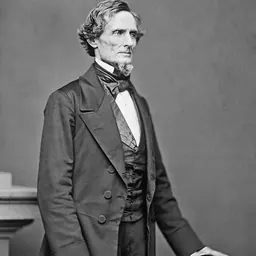
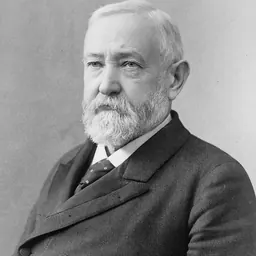
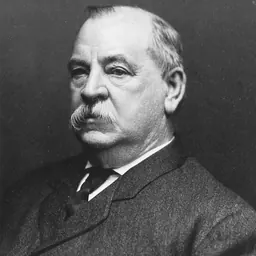

Related people
Same field, nearest in time

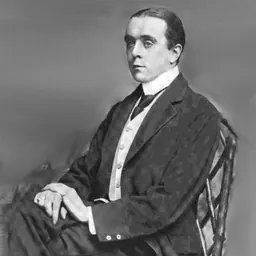


Contemporaries
People whose lives overlapped Thomas Nast's
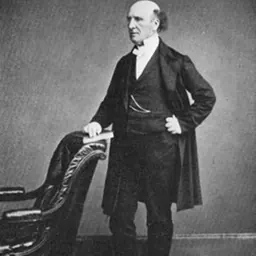
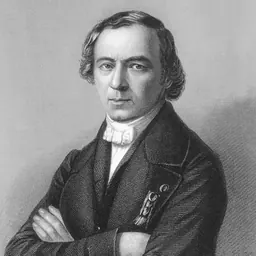

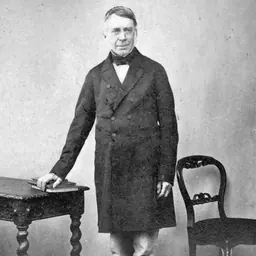
Frequently asked questions
Who was Thomas Nast?
American cartoonist (1840–1902)
When was Thomas Nast born?
Thomas Nast was born on 27 September 1840 in Landau in der Pfalz.
When did Thomas Nast die?
Thomas Nast died on 7 December 1902 in Guayaquil.
What was Thomas Nast's occupation?
Thomas Nast was a caricaturist, artist, journalist, illustrator, painter and draftsperson.
What nationality was Thomas Nast?
Thomas Nast was American and German.
Sources & further reading
Cite this page
APA: Biography.guide. (2026). Thomas Nast. https://biography.guide/thomas-nast/
MLA: "Thomas Nast." Biography.guide, https://biography.guide/thomas-nast/.
Chicago: "Thomas Nast." Biography.guide. https://biography.guide/thomas-nast/.
Data last updated: 2026-09-20 · Spot an error? Report a correction.
Page generated 2026-09-27 05:09 UTC