
About Thomas Manby
Lived 1769 – 1834 (aged 64–65). Thomas Manby was a naval officer.
Rear-Admiral Thomas Moore Manby (1 January 1769 – 13 June 1834) was a Royal Navy officer who served in the French Revolutionary and Napoleonic Wars. He sailed with George Vancouver on his voyages of exploration, captained HMS Bordelais, HMS Africaine and HMS Thalia, and was the chief suspect in the "delicate investigation" into the morals of Caroline of Brunswick.
Early life
Manby was born in the village of Hilgay on the edge of the Norfolk Fens. His father, Matthew Pepper Manby, was lord of the manor of Wood Hall in Hilgay and a former soldier and aide-de-camp to Lord Townshend. Manby's eldest sister Mary Jane (1763-1773), younger brother John (1773-1783) and two other siblings died as children. His eldest brother was George William Manby (1765-1854), the inventor of life-saving devices including the Manby Mortar. Townshend arranged a position for the young Manby in the stationers of the ordnance department, but Manby dreamt of a life at sea and at the age of 14 resigned his post and embarked as a midshipman on board the 24-gun . After two years on the Irish station he joined and sailed to the Caribbean, returning on , and then served on the 74-gun .
Voyage with Vancouver
In 1790, when he was 21, Manby was appointed as the master's mate on George Vancouver's ship . The British Admiralty had ordered Vancouver to complete a survey of the Pacific Northwest and take possession of disputed land at Nootka Sound on the island that is now named after him. Discovery was fitted out for exploration, complete with a plant frame on the quarterdeck to bring back specimens. Together with the brig , Discovery left Plymouth 1 April 1791. The two ships called at New Zealand, Tahiti and Hawaii before reaching the starting point for the American survey, the Strait of Juan de Fuca, almost exactly a year after setting out. Manby recorded his first impressions of the coast:
It had more the aspect of enchantment than reality, with silent admiration each discerned the beauties of Nature, and nought was heard on board but expressions of delight murmured from every tongue. Imperceptibly our Bark skimmed over the glassy surface of the deep, about three Miles an hour, a gentle breeze swelled the lofty Canvass whilst all was calm below.
Discovery and Chatham spent the next three summers surveying the north-west coast of America, passing the winters in Hawaii. They arrived at Nootka Sound in the autumn of 1792 and, when disputes arose with the Spanish, several officers were sent back to England to request instructions from the Admiralty. Manby was promoted to fill vacant places: firstly as master of Chatham and then as a lieutenant on Discovery. The relationship between Manby and Vancouver was not however a harmonious one. Manby wrote that Vancouver had "grown Haughty Proud Mean and Insolent, which has kept himself and his Officers in a continual state of wrangling". Back in Plymouth, George underwent an operation to remove slugs and rotting hat from his skull (he had been shot by his wife's lover some years previously). Afterwards he appeared to be dying and decided that he "preferred to die at sea among sailors (a consoling and compassionate class of man) rather than be left in the care of a mistress of lodgings, to be hurried to my grave unnoticed and unknown".
Napoleonic Wars
Manby was not out of commission for long. In October 1802 the Earl of St Vincent, first Lord of the Admiralty, sent for him and said 'I don't like to see an active officer idle on shore; I therefore give you the Africaine, one of the finest frigates in the British navy'. Manby was called before the commissioners of the inquiry and swore on oath that he never did "at Montagu House, Southend, Ramsgate, East Cliff, or anywhere else, ever sleep in any house occupied by, or belonging to, HRH the Princess of Wales". The commissioners concluded that the main accusation against Caroline was unfounded, but nevertheless they criticised her behaviour. Caroline was defended by former attorney general and future prime minister Spencer Perceval, who dismissed the evidence of Caroline's servants as 'hearsay representations'. The gifts and letters from Caroline to Manby were evidence only of her gratitude for Manby having taken two of her charity boys on board Africaine, and his frequent visits were to keep Caroline informed of their progress. If jugs of water and towels were left in the passage when Manby visited it was proof, Perceval argued, of the servants' slovenliness and not of high treason. He was promoted, by seniority, to rear admiral in 1825.
An inquest at the George Hotel, Southampton on 14 June 1834 was held by G. B. Corfe, Esq. The jury were told it appeared that the deceased had been a long time in a dejected way, and that he had purchased a large quantity of opium, and from the quantity left it is supposed the unfortunate gentleman must have taken 134 grains. The jury deliberated some time and returned a verdict of "Died of taking incautiously an over-dose of opium." The body was taken from the George Hotel, and was interred in South Stoneham.
Don’t just read it —
keep it.
Full-length biographies made to live with: read them, listen on the way to work, watch them tonight.
- E-book
- Audio
- Video
Instant download · yours to keep · every purchase keeps this site free
Important facts
People in Thomas Manby's life
Named in this biography and alive at the same time
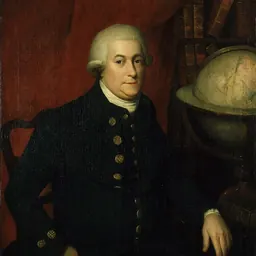
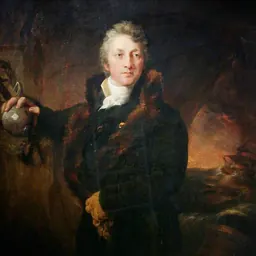
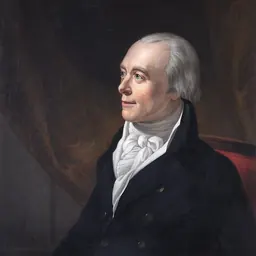


Related people
Same field, nearest in time



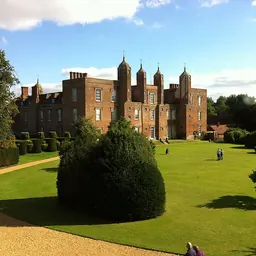
Contemporaries
People whose lives overlapped Thomas Manby's





Frequently asked questions
Who was Thomas Manby?
British naval officer
When was Thomas Manby born?
Thomas Manby was born in 1769.
When did Thomas Manby die?
Thomas Manby died on 13 June 1834.
What was Thomas Manby's occupation?
Thomas Manby was a naval officer.
Sources & further reading
Cite this page
APA: Biography.guide. (2026). Thomas Manby. https://biography.guide/thomas-manby/
MLA: "Thomas Manby." Biography.guide, https://biography.guide/thomas-manby/.
Chicago: "Thomas Manby." Biography.guide. https://biography.guide/thomas-manby/.
Data last updated: 2026-09-20 · Spot an error? Report a correction.
Page generated 2026-09-27 05:10 UTC