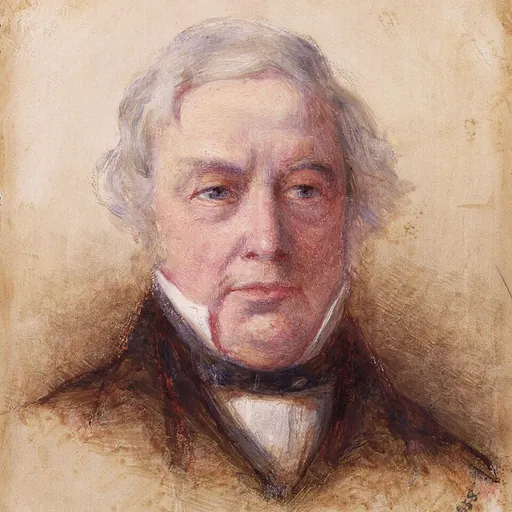
About Thomas Love Peacock
Lived 1785 – 1866 (aged 80). Thomas Love Peacock was a British poet, novelist, writer, prose writer, translator and playwright.
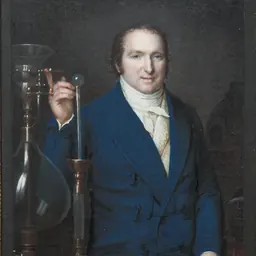
Thomas Love Peacock (18 October 1785 – 23 January 1866) was an English novelist, poet, and official of the East India Company. He was a close friend of Percy Bysshe Shelley, and they influenced each other's work. Peacock wrote satirical novels, each with the same basic setting: characters at a table discussing and criticising the philosophical opinions of the day.
Background and education
Peacock was born in Weymouth, Dorset, the son of Samuel Peacock and his wife Sarah Love, daughter of Thomas Love, a retired master of a man-of-war in the Royal Navy. His father was a glass merchant in London, partner of a Mr Pellatt, presumed to be Apsley Pellatt (1763–1826). Peacock went with his mother to live with her family at Chertsey in 1791 and in 1792 went to a school run by Joseph Harris Wicks at Englefield Green where he stayed for six and a half years.
Peacock's father died in 1794 in "poor circumstances" leaving a small annuity. Peacock's first known poem was an epitaph for a school fellow written at the age of ten, and another on his Midsummer Holidays was written when he was thirteen. Around that time in 1798 he was abruptly taken from school and from then on was entirely self-educated. His journey included Aberystwyth and Devil's Bridge, Ceredigion. Later in 1811, his mother's annuity expired and she had to leave Chertsey and moved to Morven Cottage Wraysbury near Staines with the help of some friends. In 1812 they had to leave Morven Cottage over problems paying tradesmen's bills.
In 1814 Peacock published a satirical ballad, Sir Proteus, which appeared under the pseudonym "P. M. O'Donovan, Esq." Shelley resorted to him during the agitation of mind which preceded his separation from Harriet. After Shelley deserted Harriet, Peacock became an almost daily visitor throughout the winter of 1814–15 of Shelley and Mary Godwin (later Mary Shelley), at their London lodgings. In 1815 Peacock shared their voyage to the source of the Thames. "He seems", writes Charles Clairmont, Mary Godwin's stepbrother and a member of the party, "an idly-inclined man; indeed, he is professedly so in the summer; he owns he cannot apply himself to study, and thinks it more beneficial to him as a human being entirely to devote himself to the beauties of the season while they last; he was only happy while out from morning till night". By September 1815 when Shelley had taken up residence at Bishopsgate, near Windsor, Peacock had settled at Great Marlow. Peacock wrote Headlong Hall in 1815, and it was published the following year. With this work Peacock found the true field for his literary gift in the satiric novel, interspersed with delightful lyrics, amorous, narrative, or convivial. a claim which provoked Shelley's Defence of Poetry. The official duties of the India House delayed the completion and publication of Maid Marian, begun in 1818, until 1822, and as a result of the delay it was taken for an imitation of Ivanhoe although its composition had, in fact, preceded Scott's novel. It was soon dramatised with great success by Planché, and was translated into French and German. Peacock's salary was now £1000 a year, and in 1823 he acquired a country residence at Lower Halliford, near Shepperton, Middlesex, constructed out of two old cottages, where he could gratify the love of the Thames, which was as strong as his enthusiasm for classical literature. In the winter of 1825–26 he wrote Paper Money Lyrics and other Poems "during the prevalence of an influenza to which the beautiful fabric of paper-credit is periodically subject." In his "Letter to Maria Gisborne", Shelley referred to Jane as "the milk-white Snowdonian Antelope." Peacock had four children, a son Edward who was a champion rower, and three daughters. One of them, Mary Ellen, married the novelist George Meredith as her second husband in August 1849. Only his son survived him, and he for less than a year, but he left several grandchildren.
Essays The Four Ages of Poetry (1820) Recollections of Childhood: The Abbey House (1837) Memoirs of Shelley (1858–62) The Last Day of Windsor Forest (1887) [composed 1862] Prospectus: Classical Education
Plays The Three Doctors The Dilettanti Gl'Ingannati, or The Deceived (translated from the Italian, 1862)
Unfinished tales and novels Satyrane (c. 1816) Calidore (c. 1816) The Pilgrim of Provence (c. 1826) The Lord of the Hills (c. 1835) Julia Procula (c. 1850) A Story Opening at Chertsey (c. 1850) A Story of a Mansion among the Chiltern Hills (c. 1859) Boozabowt Abbey (c. 1859) Cotswald Chace (c. 1860)
Don’t just read it —
keep it.
Full-length biographies made to live with: read them, listen on the way to work, watch them tonight.
- E-book
- Audio
- Video
Instant download · yours to keep · every purchase keeps this site free
Important facts
Family & relationships
People in Thomas Love Peacock's life
Named in this biography and alive at the same time


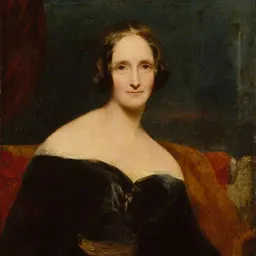
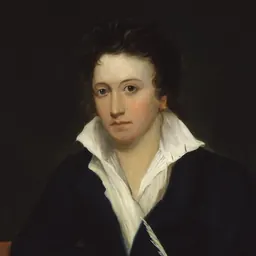


Related people
Same field, nearest in time
Contemporaries
People whose lives overlapped Thomas Love Peacock's

Frequently asked questions
Who was Thomas Love Peacock?
English novelist, poet, and official of the East India Company (1785–1866)
When was Thomas Love Peacock born?
Thomas Love Peacock was born on 18 October 1785 in Weymouth.
When did Thomas Love Peacock die?
Thomas Love Peacock died on 23 January 1866 in Shepperton.
What was Thomas Love Peacock's occupation?
Thomas Love Peacock was a poet, novelist, writer, prose writer, translator and playwright.
What nationality was Thomas Love Peacock?
Thomas Love Peacock was British.
Sources & further reading
· Wikipedia: Thomas Love Peacock
· DBpedia: Thomas Love Peacock
Cite this page
APA: Biography.guide. (2026). Thomas Love Peacock. https://biography.guide/thomas-love-peacock/
MLA: "Thomas Love Peacock." Biography.guide, https://biography.guide/thomas-love-peacock/.
Chicago: "Thomas Love Peacock." Biography.guide. https://biography.guide/thomas-love-peacock/.
Data last updated: 2026-09-23 · Spot an error? Report a correction.
Portrait: Wikimedia Commons · author & licence
Page generated 2026-09-27 05:07 UTC