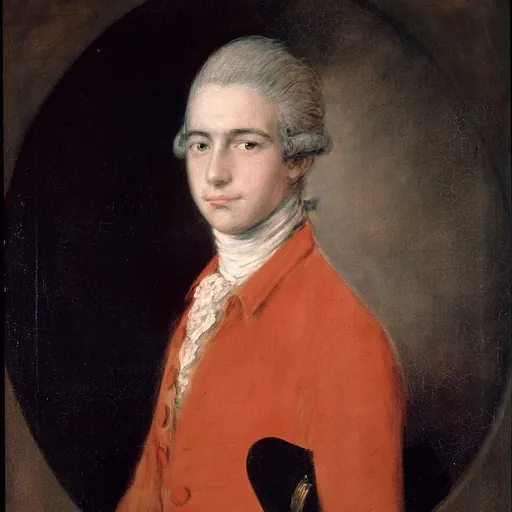
About Thomas Linley
Lived 1756 – 1778 (aged 22). Thomas Linley was a British composer, violinist and writer.
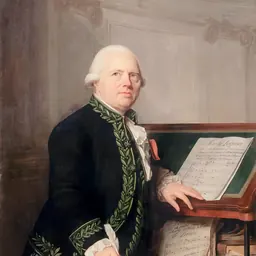
Thomas Linley the younger (7 May 1756 – 5 August 1778), also known as Thomas Linley, Junior or Tom Linley, was the eldest son of the composer Thomas Linley and his wife Mary Johnson. He was one of the most precocious composers and performers that have been known in England. He is sometimes referred to as the "English Mozart". His early promise was cut short when he drowned in a boating accident, aged just 22 years.
Early life Outside London, Bath was the most fashionable city in late 18th-century England and, in Bath, the Linleys were the most influential musical family. Originally from Gloucestershire and of a modest background (Tom's grandfather was a carpenter/builder whose business later flourished thanks to Bath's urban development), the Linleys quickly became the most prominent artists among the community of musicians providing entertainment to the wealthy tenants of the elegant city. Charles Burney famously described them as "a Nest of Nightingales".
Tom's father, Thomas Linley the elder, who worked as a music and singing teacher, took over the management of the musical performances held at the Assembly rooms in Bath in 1766 and then became musical director of the New Bath Assembly Rooms in 1771. He soon put his children, whose musical education he supervised, to work. First, in 1762, Tom and his sister Elizabeth Ann were selling tickets to the concerts and soon after, as early as 1763, they were performing in front of full houses with their other siblings. Anything earned by the children was commandeered by Linley the elder and the talented youngsters quickly became a major source of income allowing the family finances to prosper and raising their social standing.
Tom's sisters – Elizabeth Ann (born 1754), Mary (born 1758) and Maria (born 1763) – were accomplished singers and actresses. His brother Samuel (born 1760) was a talented oboist before becoming a sailor. His youngest brother, William (born 1771) would also be a musician and, later in his life, a composer.
Tom, whose abilities were apparent from a very young age, played a violin concerto at a concert in Bristol on 29 July 1763 at the age of only 7. The Bath Journal thus advertised on 25 July 1763: For the Benefit of Mr. Linley. At Loggan's Room at the Hot Wells on the 29th Inſt. Will be perform'd A Concert of Vocal and Instrumental Music. The Vocal Parts by Mr. Linley, Mr. Higgins and Maſter Linley. The Firſt Violin by Mr Richards of Bath. End of the Iſt Act a Concerto on the Violin by Maſter Linley, a child of ſeven years old. End of the 2nd Act an Elegy of Jackson's by Mr. and Maſter Linley and Mr. Higgins Tom started to compose soon after.
From then on, their father always asking for higher fees for them, Tom and his siblings started to appear further afield, notably in charity concerts and oratorios, including in London.
In 1767, Tom appeared at Covent Garden, along with his sister Elizabeth, in Thomas Hull's The Fairy Favour, a masque written for the entertainment of the Prince of Wales, in which Tom sang the part of Puck, danced a hornpipe and played the violin. He must have made quite an impression as the Lloyds Evening Post of 3 February 1767 said of his performance that "[not] enough [could] be said of the little boy [whose] singing, playing on the violin, and dancing [...were] all beyond expectation, and discover extraordinary abilities in one, who must be considered a child".
In Florence, Tom meets Wolfgang Amadeus Mozart in April 1770 and Charles Burney in September of the same year. In reference to Linley, Burney later wrote, "The Tommasino, as he is called, and the little Mozart, are talked of all over Italy as the most promising geniuses of this age." They would never meet again.
About Tom, "der kleine Tomaso", Leopold Mozart writes in one of his letters to his daughter Anna Maria, that he is "ein allerliebster Knab [...] welcher wunderschön spielt" (a very dear boy [...] who plays beautifully). He thus details the whole episode between Tom and Wolfgang: Mozart, at the keyboard, and Tom Linley, playing the violin, in Florence (c. 1770) English translationGermanOriginal textBefore closing, I must tell you of a charming little occurrence. In Florence we found a young Englishman who is a pupil of the famous violinist Nardini. This boy, who plays beautifully and is of Wolfgang's size and age, came to the house of the learned poetess Sgra. Corilla, where we had come on the recommendation of Herr Laugier. These two boys performed in alternation during the whole evening, constantly embracing each other. The next day, the little Englishman, a very dear boy, had his violin brought to us and played the whole afternoon; Wolfgang accompanied him on the violin. The day after, we dined with Msr. Gavard, the Grand Duke's financial administrator, and these two boys played in alternation the whole afternoon, not as boys, but as men! Little Thomas accompanied us home and cried the most bitter tears because we were leaving the next day.
But when he learned that our departure had been fixed for midday, he came at 9 o'clock in the morning and gave Wolfgang, amidst many embraces, the following piece of poetry, which Sgra. Corilla had had to write for him just the previous evening, and then accompanied our coach as far as the city gate. I wished that you had seen this scene.Bevor ich schlüsse, muß ich dir eine artige Begebenheit schreiben. In Florenz fanden wir einen jungen Engelländer, welcher ein Schüler des Berühmten Violinisten Nardini ist. dieser knab, welcher wunderschön spielt, in des Wolfg: Grösse und alter ist, kam in das Hauß der gelehrten Poetin Sgra Corilla, wo wir uns aus recommendation des Mr: Laugier befanden. diese 2 knaben producierten sich wechselweise den ganzen abend unter beständigen umarmungen. den anderen tag Ließ der kleine Engelländer, ein allerliebster Knab, seine Violin zu uns bringen, und spielte den ganzen nachmittag, der Wolfg. accompagnierte ihm auf der Violin. den tag darauf speisten wir beÿ Mr: Gavard dem Administratore der Grossherzogl: Finanzen, und diese 2 knaben spielten den ganzen nachmittag wechselsweise, nicht als knaben, sondern als männer! der kleine Tomaso begleitete uns nach Hause, und weinte die bittersten Thrännen, weil wir den tag Darauf abreiseten.
da er aber vernahm, daß unsere Abreise erst auf den Mittag vestgestellt seye, so kamm er morgens um 9 uhr, und gab dem Wolfg: unter vielen Umarmungen folgende Poesie, die die Sgra Corilla den Abend vorhero ihm noch machen muste, und dann begleitete er unsern wagen bis zum Stattthore. Ich wünschte, daß du diese Scene gesehen hättest.Bevor ich schlüsse, muß ich dir eine artige Begebenheit schreibς. In Florenz fandς wir einς jungς Engelländς, welcher ein Schüler des Berühmtς Violinisten Nardini ist. dieser knab, welcher wunderschön spielt, in des Wolfgς: Grösse und alter ist, kam in das Hauß der gelehrtς Poetin Sgra Corilla, wo wir uns aus recomendation des Mr: Laugier befandς. diese 2 knabς produciertς sich wechselweise den ganzς abend unter beständigen umarmungς. den andςς tag Ließ der kleine Engelländς, ein allerliebster Knab, seine Violin zu uns bringς, und spielte den ganzς nachmittag, der Wolfgς. accompagnierte ihm auf dς Violin. den tag darauf speistς wir beÿ Mr: Gavard dem Administratore der Grossherzogl: Finanzen, und diese 2 knabς spieltς den ganzς nachmittag wechselsweise, nicht als knabς, sondς als mäner! der kleine Tomaso begleitete uns nach Hause, und weinte die bitterstς Thränς, weil wir den tag Darauf abreisetς.
da er aber vernahm, daß unsere Abreise erst auf den Mittag vestge= stellt seye, so kam er morgens um 9 uhr, und gab dem Wolfgς: unter vielς Umarmungς folgende Poesie, die die Sgra Corilla den Abend vorhero ihm noch machς muste, und dan begleitete er unsern wagς bis zum Stattthore. Ich wünschte, daß du diese Scene gesehς hättest.
According to the Mozart-Linley-Kraus 250th Anniversary Festival press release, Linley kept a letter he received from Mozart for the rest of his life.
Career as a musician and composer Upon his return from Italy in 1771 Tom was soon recognised as one of the best violin virtuosos in Britain and quickly became a leading figure in London's musical life, in a review of a concert given on 10 September 1774 in Winchester at the occasion of a three day musical festival. The composer Matthew Cooke, states that "[Tom's] industry and perseverance made him indefatigable. [and that he] was one of the most eminent Violin Performers of the age."
In 1773, one of Tom's cantatas ("In Yonder Grove") was performed at his benefit concert at the Haymarket by his sister Elizabeth and his brother Samuel. In Jackson's Oxford Journal of 26 August 1775 an advertising for that prestigious event shows that Tom, who had only just turned 19, was reckoned to have his rightful place among the greatest names, his anthem sitting in the program between Handel's Coronation Anthem and Giardini's new oratorio: The New Rooms at Bath. Publish'd March 3d 1779 & sold by T. Malton in Poland Street, & J. Gandon No. 48 Broad Street, Carnaby Market. (James Gandon, 1779, The BL King's Topographical Collection, British Library shelfmark: Maps K.Top.37.26.a.3.) BATH. AT the NEW ROOMS, on Friday March 17, will be performed the celebrated ODE of ALEXANDER's FEAST Set to muſic by Mr. HANDEL. The firſt violin by Mr. Linley, jun. The principal vocal parts by Miſs Linley, Miſs M. Linley, Mr. Linley, Mr. Brett, Mr. Matthews, and Maſter Samuel. Between the Iſt and 2d parts, a Miſcellaneous Act.- Organ Concerto.- Song, Miſs Linley.- Concerto Violin, Linley, jun.- Duetto Sacchini. To Subſcribers five tickets for one guinea. Single tickets at 5s. each, to be had at the Upper and Lower Rooms, the Pump-Room, and Rookfellers, where Books of the performance may be had at 6d. each. To begin at half paſt ſix o'clock. At Mr. Gyde's Rooms on Friday March 24, the celebrated Entertainment of ACIS and GALATEA.- With additional pieces, as will be expreſſed in the bills. But Tom also occasionally "led the band", as stated by the Bath Chronicle and Weekly Gazette of 29 February 1776 in a glowing review of the representation of Handel's Acis and Galatea. The Duenna or the Double Elopement was a collaboration between Sheridan, who wrote the play, and Tom Linley who produced the majority of the music, composing some (for instance the overture), and, in a pasticcio manner, adapting and arranging famous airs from contemporary operas and other tunes selected by Sheridan and Elizabeth Ann. Its popularity was such that King George III brought his family to see it several times and Garrick allegedly lost most of his audience at the nearby Drury Lane Theatre.
In 1777 he composes what is usually viewed as his master-piece: an oratorio about the crossing of the Red Sea, ), the works that survived attest to "his fluent and congenial melody, his contrapuntal facility, and his imaginative orchestration."
The list of music and composers below was established by Andrew Edwards based on "the volumes of Tom's music which Thomas Senior and George III commissioned after his death and on [...] the manuscript sources by Roger Friske [sic.] and [...] William Davies."
Works Stage works The Duenna (comic opera, libretto by R. B. Sheridan). 1775. (Overture, songs, ensembles, etc.) The Tempest (libretto by Sheridan, after Shakespeare). 1777. (Ariel's first air "O Bid Your Faithful Ariel Fly", "Come Unto These Yellow Sands" and "Hark, hark, the watch-dogs bark" and the Storm chorus) The Triumph of Mirth, or Harlequin's Wedding (pantomime, libretto by Thomas King). Created posthumously to Tom Linley's death, in 1782. (Overture) A Lyric Ode (libretto by French Laurence) for 2 sopranos, tenor, bass, chorus and orchestra. 1776. (Also known as: A Lyric Ode on the Fairies, Aerial Beings, and Witches of Shakespeare or The Shakespeare Ode) The Song of Moses (oratorio, libretto by John Hoadly, after Exodus). 1777. Verses to the Memory of Garrick (libretto by R. B. Sheridan), recited with musical sections for solo voices and chorus. ca. 13 cantatas, madrigals, glees, elegies and songs etc, published in The Posthumous Vocal Works of Mr. Linley and Mr. T. Linley (London, ca.1798) and other separate songs, madrigals etc.
Instrumental works 6 violin sonatas, 1768.
The press reported the circumstances of his death as follows: Drewry's Derby Mercury, Friday 14 August 1778: On the 5th Inſtant a melancholy Accident happened at Grimſthorpe in Lincolnſhire, the Seat of his Grace the Duke Ancaſter:- Mr. Thomas Linley, eldeſt Son of Mr. Linley, one of the Proprietors of Drury-lane Theatre, Mr. Olivarez, an Italian Maſter, and another Perſon, agreed to go on the Lake in his Grace's Park, in a Sailing Boat, which Mr. Linley ſaid he could manage very well; but no ſooner had they ſailed into the Middle, than a ſudden Squall of Wind ſprung up, and overſet the Boat; however, they all hung by the Maſt and Rigging for ſome Time, till Mr. Linley ſaid, he found it was in vain to wait for Aſſiſtance, and therefore, though he had his Boots and Great Coat on, he was determined to ſwim to Shore, for that purpoſe he quitted his Hold, but had not ſwam above 100 Yards before he ſank to the Bottom, and was unfortunately drowned. Her Grace of Ancaſter ſaw the Whole from her Dreſſing-Room Window, and immediately diſpatched ſeveral Servants off to take another Boat to their Aſſiſtance, which unfortunately came only Time enough to save Mr. Olivarez.- Mr Linley remained under Water near 40 Minutes, ſo that every Effort made uſe of to resſtore him to Life proved ineffectual. – This Accident has deprived the Profeſſion to which he belonged of one of its Principal Ornaments, and Society of a very accompliſhed and valuable Member.
Jackson's Oxford Journal, Saturday 15 August 1778: On Wedneſday the 5th Inſtant, Mr. Thomas Linley, eldeſt Son of Mr. Linley, one of the Proprietors of Drury-lane Theatre, fell out of a Boat into a Lake belonging to his Grace the Duke Ancaſter, at Grimſthorpe in Lincolnſhire, and was unfortunately drowned. The Circumſtances of his Death are thus related by a Perſon just arrived from Grimſthorpe: Mr. Linley and Mr. Olivarez, Italian Maſter, and another Perſon, agreed to go on the Lake in a Sailing Boat, which Mr. Linley ſaid he could manage; but no ſooner had they ſailed into the Middle of the Lake, than a ſudden Gale of Wind ſprang up, and overſet the Boat; however, they all hung by the Maſt and Rigging for ſome Time, till Mr. Linley ſaid he found it was in vain to wait for Aſsiſtance, and therefore, though he had his Boots and Great Coat on, was determined to ſwim to Shore, for which Purpoſe he quitted his Hold, but had not ſwam above a hundred Yards before he ſunk. Her Grace the Ducheſs of Ancaſter ſaw the whole from her Dreſsing-room Window, and immediately ordered ſeveral Servants to take another Boat, and go to their Aſsiſtance, but they unfortunately only came early enough to take up Mr. Olivarez, his Companion, not being able to find the Body of Mr. Linley for more than forty Minutes.— Miſs M. Linley came up to Town with the melancholy Tidings of the Diſaster, and now lies dangerously ill at the Duke of Ancaſter's in Berkeley-ſquare; Mrs Sheridan is likewiſe inconfortable [sic.] for the Loſs of ſo valuable a Brother; and Yeſterday Mr. Linley his father whoſe Sufferings on the Occaſion no Language can expreſs, went down to pay the laſt Tribute to a beloved Son. Ipswich Journal, Saturday 15 August 1778 On Wednesday laſt a moſt melancholy accident happened at Grimſthorpe, the Duke of Ancaſter's ſeat in Lincolnſhire. As Mr. Linley, jun. (who with his ſiſter was ſpending the ſummer there with the Duke and Ducheſs) was in a veſſel uppon a large piece of water in the park, by some unſkilful management, the wind being high, the veſſel ſunk, and Mr. Linley, in endeavouring to ſwim on ſhore, was unfortunately drowned. His body was taken up in about 40 minutes, and every poſſible method (according to Mr. Hawes's plan) uſed for his recovery; but unfortunately without ſucceſs.
Tom's funeral was held at Edenham parish church but parish records seem to indicate that he was not buried there. Local rumour has it that his body may have been taken to Bath to be interred.
Tom's death was a shock to his contemporaries and was immediately recognised as both a human tragedy and a tragedy for the Arts and for English music in particular. A memorial edition of his works was commissioned by King George III.
Discography Despite its remarkable quality and idiosyncrasies, the music of Tom Linley is not widely known. There are however a few commercial recordings in existence, most of them published by the independent British classical label Hyperion and its subsidiary label Helios. A Lyric Ode on the Fairies, Aerial Beings and Witches of Shakespeare, The Parley of Instruments, Paul Nicholson (Helios, CDA66613, 2005) Cantatas & Theatre Music (Music for The Tempest, Overture to The Duenna and the three cantatas: In Yonder Grove, Ye Nymphs of Albion's beauty-blooming isle and Daughter of Heav'n fair art though) Julia Gooding, The Parley of Instruments, Paul Nicholson (Helios, CDA66767, 2006) The Song of Moses & Let God arise, The Parley of Instruments, Peter Holman (Helios, CDA67038, 2008) The song "To heal the wound a bee had made" is available on Enchanting Harmonist – A soirée with the Linleys of Bath, Rufus Müller, Invocation (Hyperion, CDA66698, 1993) A Violin Sonata in A major is available on English 18th-century Violin Sonatas, The Locatelli Trio (Hyperion, CDA66583, 1992) His only surviving violin concerto (Violin Concerto in F major) is available on English Classical Violin Concertos, Elizabeth Wallfisch, The Parley of Instruments, Peter Holman (Helios, CDH55260, 2008)
Another recording of Linley's Violin Concerto in F major is available on the label Oehms Classics: Mozart in Italien, Mirjam Contzen, , Reinhard Goebel (Oehms Classics, OC 753, 2010)
Another recording of the Lyric Ode is available on the label Philips Classics: A Shakespeare Ode on the Witches and Fairies, Musicians of the Globe, Philip Pickett (Philips Classics, 446–689–2, 1998)
Two arias from The Tempest ("Come Unto these Yellow Sands" and "Faithful Ariel") – wrongly attributed by the publisher to Thomas Linley the elder – are available on the label Navona Records: The Shakespeare Concerts Series, Vol. 5: Full Fathom Five, Andrea Chenoweth, Stephen Hammer, Arcadia Players, Ian Watson (Navona Records, NV5996, 2015)
The aria "O bid your faithful Ariel fly" from The Tempest is also available on the label Eloquence: Eighteenth-Century Shakespearean Songs, April Cantelo, English Chamber Orchestra, Raymond Leppard (Eloquence, ELQ4824765, Decca 4824765, 1961)
Don’t just read it —
keep it.
Full-length biographies made to live with: read them, listen on the way to work, watch them tonight.
- E-book
- Audio
- Video
Instant download · yours to keep · every purchase keeps this site free
Important facts
Family & relationships
People in Thomas Linley's life
Named in this biography and alive at the same time


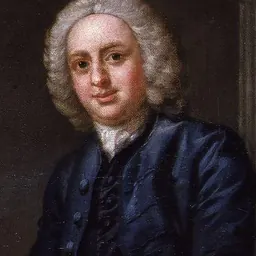
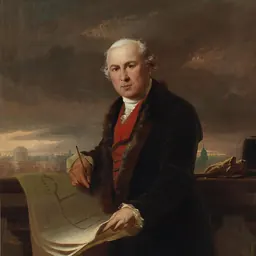
Related people
Same field, nearest in time
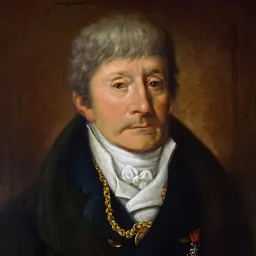

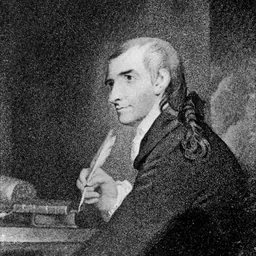


Contemporaries
People whose lives overlapped Thomas Linley's





Frequently asked questions
Who was Thomas Linley?
English singer, violinist and composer (1756-1788)
When was Thomas Linley born?
Thomas Linley was born on 7 May 1756 in Bath.
When did Thomas Linley die?
Thomas Linley died on 5 August 1778 in Grimsthorpe Castle.
What was Thomas Linley's occupation?
Thomas Linley was a composer, violinist and writer.
What nationality was Thomas Linley?
Thomas Linley was British.
Sources & further reading
· DBpedia: Thomas Linley the younger
Cite this page
APA: Biography.guide. (2026). Thomas Linley. https://biography.guide/thomas-linley/
MLA: "Thomas Linley." Biography.guide, https://biography.guide/thomas-linley/.
Chicago: "Thomas Linley." Biography.guide. https://biography.guide/thomas-linley/.
Data last updated: 2026-09-22 · Spot an error? Report a correction.
Portrait: Wikimedia Commons · author & licence
Page generated 2026-09-27 05:03 UTC