
About Thomas Leiper
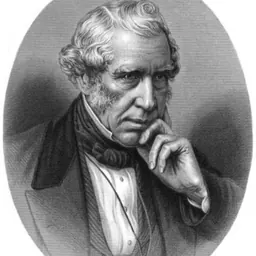
Lived 1745 – 1825 (aged 79). Thomas Leiper was an American civil engineer and engineer.
Thomas Leiper (15 December 1745 – 6 July 1825) was a Scottish American businessman, banker and politician who owned a successful tobacco exportation business as well as several mills and stone quarries. He served as a lieutenant in the Philadelphia City Troop during the American Revolutionary War. He built one of the first railways in America and the first in Pennsylvania. The Leiper Railroad was a three-quarter-mile long track on his property in Nether Providence Township, Pennsylvania, used to ship quarry stone to market with animal-powered carts.
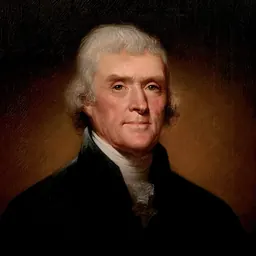
Leiper rented a house in Philadelphia to Thomas Jefferson when he served as Secretary of State. They became close friends and a correspondence of over 100 letters between the two was exchanged.
He was a founder of the Bank of North America and served as a director for the Bank of Pennsylvania and the Second Bank of the United States. His grand house, named Strathaven Hall, was listed on the National Register of Historic Places in 1971.
Early life and tobacco exportation Leiper was born on 15 December 1745, in Strathaven, Lanark, Scotland. He was educated at schools in Glasgow and Edinburgh. He emigrated to Virginia in 1763 after his brother inherited the family estate and entered the tobacco trade. In 1765, Leiper moved to Philadelphia, Pennsylvania, and opened a tobacco shop. He purchased tobacco from his Virginia colleagues including Thomas Jefferson and James Madison, and exported it overseas. When the American Revolution began, the leading tobacco house in the community was legally prohibited from trading. Leiper seized the opportunity, expanded his business and became the principal tobacco agent in Philadelphia, then the capital of the United States.
Military service Leiper was a founder of the Philadelphia City Troop, a city-based light cavalry, and served with them as lieutenant during the Revolution at the battles of Princeton, Trenton, Brandywine, and Germantown. As treasurer of the troop, he carried the last subsidies of the French to the Americans at Yorktown. His quarries provided stones for bridge and building construction. Granite from the Leiper quarry was cut for Philadelphia curbstones and door steps as well as in the construction of Girard College, Swarthmore College and the Chestnut Street Bridge in Philadelphia.
Railway and canal construction
Leiper struggled to get stone from his quarries to market since Crum Creek was not navigable and local roads could not handle wagons carrying heavy stone in all seasons. industrial railway was also built on Beacon Hill in Boston in 1795 and a replacement one in 1807 The experiment was deemed a success when a single horse was able to haul a four-wheeled cart loaded with over 10,000 pounds of weight. The results of the experiment prompted Leiper to create a track three quarters of a mile long that extended from his quarries on Crum Creek to a landing on Ridley Creek.
Strathaven Hall
Leiper's enterprises generated a large fortune, which enabled him to build a grand estate on 414 acres in Nether Providence Township, known as Strathaven Hall after his place of birth. His property contained what may be the first private bank in America. He built a "safety" which was used to hold federal funds after the British invaded Washington, D.C. during the War of 1812. The building was also used to keep payroll for his mill operations and important papers. The house was occupied by his descendants until 1974 when it was sold to Nether Providence Township. He was a director of the Bank of Pennsylvania and the Second Bank of the United States.
Correspondence with Jefferson In 1791, Leiper rented a large four-story house with stables in Philadelphia to Thomas Jefferson when he worked as Secretary of State. They became good friends and a correspondence of more than one hundred letters occurred between the two men. During the first few years of correspondence, the letters concerned the rental house, building construction and their tobacco business. Later letters discuss political issues, including the men's mutual distrust of England. The correspondence continued after Jefferson became President of the United States and ended in 1825 with Leiper's death.
Death and legacy
Leiper died in Philadelphia, on 6 July 1825 and was interred in Laurel Hill Cemetery. His daughter Jane Duval Leiper married John Kintzing Kane, a U.S. district judge; their children (Leiper's grandchildren) included naval officer, physician, and explorer Elisha Kent Kane
Don’t just read it —
keep it.
Full-length biographies made to live with: read them, listen on the way to work, watch them tonight.
- E-book
- Audio
- Video
Instant download · yours to keep · every purchase keeps this site free
Important facts
Family & relationships
People in Thomas Leiper's life
Named in this biography and alive at the same time

Related people
Same field, nearest in time

Contemporaries
People whose lives overlapped Thomas Leiper's




Frequently asked questions
Who was Thomas Leiper?
American businessman
When was Thomas Leiper born?
Thomas Leiper was born on 15 December 1745 in Strathaven.
When did Thomas Leiper die?
Thomas Leiper died on 6 July 1825 in Delaware County.
What was Thomas Leiper's occupation?
Thomas Leiper was a civil engineer and engineer.
What nationality was Thomas Leiper?
Thomas Leiper was American.
Sources & further reading
Cite this page
APA: Biography.guide. (2026). Thomas Leiper. https://biography.guide/thomas-leiper/
MLA: "Thomas Leiper." Biography.guide, https://biography.guide/thomas-leiper/.
Chicago: "Thomas Leiper." Biography.guide. https://biography.guide/thomas-leiper/.
Data last updated: 2026-09-22 · Spot an error? Report a correction.
Page generated 2026-09-27 05:23 UTC