
Elisha Kent Kane
American explorer and military medical officer
About Elisha Kent Kane
Lived 1820 – 1857 (aged 36). Elisha Kent Kane was an American explorer, military officer, physician, writer, botanical collector and naval surgeon.
Elisha Kent Kane (February 3, 1820 – February 16, 1857) was a United States Navy medical officer and Arctic explorer. He served as assistant surgeon during Caleb Cushing's journey to China to negotiate the Treaty of Wangxia and in the Africa Squadron. He was assigned as a special envoy to the United States Army during the Mexican–American War and as a surveyor in the United States Coast Survey.
He was senior medical officer in the First Grinnell expedition to rescue or discover the fate of the explorer Sir John Franklin. He led the Second Grinnell expedition to the Arctic which was unsuccessful in discovering the fate of Franklin's expedition. His explorations of the Arctic went further North than any other expeditions at the time and led to the eventual path to the North Pole taken by subsequent explorers.
He spoke frequently to large audiences about his Arctic expeditions. He published two books chronicling his explorations; The United States Grinnell Expedition in Search of Sir John Franklin: A Personal Narrative in 1856 and Arctic explorations: The Second Grinnell Expedition in Search of Sir John Franklin, 1853,'54, '55 in 1857. Two United States Navy ships, a lunar crater and a waterway in the Arctic were named in his honor.
Early life and education Kane was born in Philadelphia, on February 3, 1820, the first son of John Kintzing Kane, a U.S. district judge, and Jane Duval Leiper. His maternal grandfather was Thomas Leiper, American Revolutionary War patriot and a founder of the Philadelphia City Troop. His brother was attorney, diplomat, abolitionist, and Civil War general, Thomas L. Kane.
In 1837, Kane entered the University of Virginia to study civil engineering. He worked closely with geology Professor William Barton Rogers and participated in several outings into the Blue Ridge Mountains to map geological formations. He served in the China Commercial Treaty mission on the USS Brandywine under Caleb Cushing. While Cushing negotiated the Treaty of Wangxia with the Chinese, Kane and the crew of the USS Brandywine explored the island of Luzon in the Philippines. He descended into the Taal Volcano to obtain water samples, was almost overcome by the toxic fumes and in February 1847 contracted "coast fever" (most likely a strain of malaria) Kane was present along with Edwin de Haven and William Penny at the discovery of an encampment and three graves from the Franklin expedition on Beechey Island. He began to write the book The U.S. Grinnell expedition in search of Sir John Franklin. He convinced Grinnell and several scientific organizations to fund a second expedition to continue to explore the Arctic and search for Franklin.
Kane finally abandoned the icebound brig on May 20, 1855, and made an 83-day march to Upernavik on the west coast of Greenland. The party, carrying the invalids, lost only one man. Kane and his men were saved by a sailing ship. Kane returned to New York on October 11, 1855, and the following year published his two-volume Arctic Explorations. Although in poor health, Kane completed his second book Arctic explorations, the second Grinnell expedition in search of Sir John Franklin.
Personal life In 1852, Kane met the Fox sisters, famous for their spirit rapping séances, and he became enamored with the middle sister, Margaretta. Kane was convinced that the sisters were frauds, and sought to reform Margaretta and paid for her education. She would later claim that they were secretly married in 1856 – she changed her name to Margaretta Fox Kane – and engaged the family in lawsuits over his will. After Kane's death, Margaretta converted to the Roman Catholic faith, but would eventually return to spiritualism.
Death and legacy
After visiting England to fulfill his promise to deliver his report personally to Lady Jane Franklin, he sailed to Havana in an attempt to recover his health, after being advised to do so by his doctor. He died there on February 16, 1857.
Kane received medals from Congress, the Royal Geographical Society, and the Société de géographie. The Geographical Society of Philadelphia created the Elisha Kent Kane Medal in his honor. In 1851, Kane was elected as a member of the American Philosophical Society. He was also elected to the American Antiquarian Society in 1855.
The Anoatok historic manor at Kane, Pennsylvania, was named to honor Kane's Arctic expeditions. The destroyer was named for him, as was a later oceanographic research ship, the . A lunar crater, Kane, was also named for him. In 1986, the U.S. Postal Service issued a 22 cent postage stamp in his honor, depicting his route to the Arctic. The waterway between Greenland and the northernmost Canadian islands, previously named Peabody Bay, was renamed Kane Basin in his honor.
In popular culture The 2010 young adult book Tombstone Tea by Joanne Dahme is set in Laurel Hill Cemetery and has Kane as one of its characters.
Don’t just read it —
keep it.
Full-length biographies made to live with: read them, listen on the way to work, watch them tonight.
- E-book
- Audio
- Video
Instant download · yours to keep · every purchase keeps this site free
Important facts
People in Elisha Kent Kane's life
Named in this biography and alive at the same time

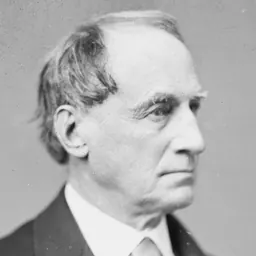
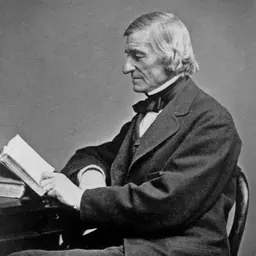
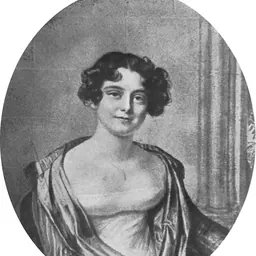


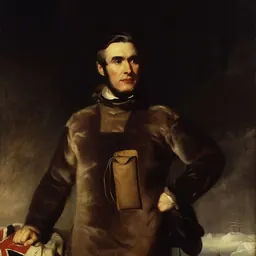
Related people
Same field, nearest in time


Contemporaries
People whose lives overlapped Elisha Kent Kane's




Frequently asked questions
Who was Elisha Kent Kane?
American explorer and military medical officer (1820–1857)
When was Elisha Kent Kane born?
Elisha Kent Kane was born on 28 February 1820 in Philadelphia.
When did Elisha Kent Kane die?
Elisha Kent Kane died on 16 February 1857 in Havana.
What was Elisha Kent Kane's occupation?
Elisha Kent Kane was an explorer, military officer, physician, writer, botanical collector and naval surgeon.
What nationality was Elisha Kent Kane?
Elisha Kent Kane was American.
Sources & further reading
Cite this page
APA: Biography.guide. (2026). Elisha Kent Kane. https://biography.guide/elisha-kent-kane/
MLA: "Elisha Kent Kane." Biography.guide, https://biography.guide/elisha-kent-kane/.
Chicago: "Elisha Kent Kane." Biography.guide. https://biography.guide/elisha-kent-kane/.
Data last updated: 2026-09-25 · Spot an error? Report a correction.
Page generated 2026-09-27 05:10 UTC