
About Thomas Holley Chivers
Lived 1809 – 1858 (aged 49). Thomas Holley Chivers was an American poet and writer.
Thomas Holley Chivers (October 18, 1809 – December 18, 1858) was an American medical doctor-turned-poet from the state of Georgia. He is best known for his friendship with Edgar Allan Poe and his controversial defense of the poet after his death.
Born into a wealthy Georgia family, Chivers became interested in poetry at a young age. After he and his first wife separated, he received a medical degree from Transylvania University but focused his energy on publishing rather than medicine. In addition to submitting poems to various magazines and journals, Chivers published several volumes of poetry, including The Lost Pleiad in 1845, as well as plays. Edgar Allan Poe showed an interest in him and encouraged his work. Chivers spent the last few years of his life defending the reputation of Poe, who had died in 1849, though he also thought Poe had been heavily influenced by his own poetry. Chivers died in Georgia in 1858.
As a literary theorist, Chivers believed in divine inspiration. He encouraged the development of a distinctive American style of literature and especially promoted young writers. His poems were known for religious overtones with an emphasis on death and reunions with lost loved ones in the afterlife. Though he built up a small reputation in his day, he was mostly forgotten after his death.
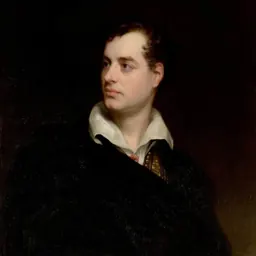
Life and work Chivers was born on October 18, 1809, at Digby Manor, his father's plantation near Washington, Georgia. At age seven, he was introduced to poetry when he read William Cowper's "The Rose". In 1827, Chivers married his 16-year-old cousin Frances Elizabeth Chivers. The two soon separated due to alleged meddling by Frances Chivers Albert, the wife of the poet's uncle, prior to the birth of their daughter in 1828. It has also been suggested their separation was due to abuse, though these rumors originated from the same uncle. After this incident, Chivers compared himself to Lord Byron, whose wife had also left him. Chivers went on to receive a degree in medicine in 1830 from Transylvania University in Kentucky. His thesis was titled "Intermittent and Remittent Fevers". On November 21, 1834, Chivers married Harriet Hunt of Springfield, Massachusetts and the couple had four children, though all died young. Chivers and his first wife never legally divorced—one such suit was dismissed in court in 1835—but Georgia law invalidated marriage after a spouse's absence of five years or more. Though Chivers contributed to various newspapers and magazines, his poetry was turned down for publication by the Southern Literary Messenger in March 1835, which suggested he return to medicine and the "lancet and pill-box". The Lost Pleiad was self-published in New York in 1845 to initial success, though sales rapidly declined. In 1837, Chivers self-published Nacoochee; or, the Beautiful Star, With Other Poems. The volume was dedicated to his mother, who died a year later.
Relationship with Edgar Allan Poe
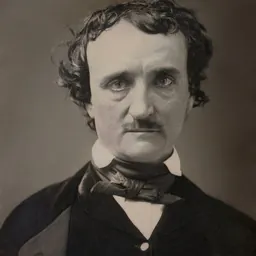
Chivers is best known for his association with Edgar Allan Poe and, in fact, it is through this relationship that Chivers and his work was rediscovered in the 20th century. The first interaction between the two was in 1840 though they did not meet until 1845 in New York. The two became friends and Chivers was willing to give Poe lifetime financial support if he moved to the South. Chivers appreciated Poe's ability and wrote that George Rex Graham was seriously underpaying Poe for his work on Graham's Magazine. "He ought to give you ten thousand dollars a year... It is richly worth it... [Graham] is greatly indebted to you. It is not my opinion that you have ever been, or ever will be, paid for your intellectual labours. You need never expect it, until you establish a Magazine of your own", he wrote, referring to Poe's plans to begin The Stylus. Even so, Chivers was concerned about Poe's reputation as a severe literary critic, cautioning him about "when you tomahawk people". Poe, in fact, had been hoping Chivers would lend his wealth as a financial backer for The Stylus and possibly even serve as a co-editor in its early planning stages. Chivers considered Poe's proposal but was not able to accept because of the death of his three-year-old daughter just over a week later.
Poe had written about Chivers in the second part of his "Autography" series, published in Graham's Magazine in December 1841. Poe said:
The two had corresponded through letters but finally met in June or July 1845. Chivers visited Poe when Poe was sick and bedridden and when Poe's wife Virginia was in an especially difficult period of her struggle with tuberculosis. Chivers later recalled that Poe's voice was "like the soft tones of an Aeolian Harp when the music that has been sleeping in the strings is awakened by the Breezes of Eden laden with sweet Spices from the mountains of the Lord".
After Poe's death After Poe's death, Chivers accused Poe of plagiarizing both "The Raven" and "Ulalume" from his own work though other critics suggested Chivers's Eonchs of Ruby were a "mediocre restatement" of Poe's poems. The first poem of the collection, "The Vigil of Aiden", was an homage to Poe, using names like "Lenore" and the refrain "forever more!" On July 30, 1854, Chivers published an essay called "Origin of Poe's Raven" under the pseudonym Fiat Justitia, claiming that he inspired Poe to use trochaic octameter and the word "nevermore" in "The Raven". Chivers also suggested in the Georgia Citizen that Poe learned to write poetry from him. As literary scholar Randy Nelson wrote: "anybody who's read both Poe and Thomas Holley Chivers can see that one of them 'influenced' the other, but just who took what from whom isn't clear."
Even so, Chivers continued to praise and admire Poe (albeit careful to point out Poe's literary debt to him) and was one of the first to present a picture of the "real Poe" in the face of the sustained attacks on Poe's reputation by the Reverend Rufus Wilmot Griswold, the poet's literary executor. This correction took the form of a memoir now titled Chivers' Life of Poe, not published until 1952. Chivers continued to defend Poe's reputation until the end of his life.
Final years and death From 1845 to 1850, Chivers had been living with his wife in Georgia, then spent the next five years in the North. His poetry collection Eonchs of Ruby, A Gift of Love was published in 1851 with a subtitle meant to capitalize on the gift book trend. Chivers explained the title: "The Word Eonch is the same as Concha Marina—Shell of the Sea. Eonch is used... merely for its euphony." Throughout the collection, Chivers experiments with the sonic effects of words rather than their literal meaning. Atlanta: or the True Blessed Island of Poesy: A Paul Epic in Three Lustra was first published in three installments in the Georgia Citizen beginning in January 1853. Later that year, Memoralia; or, Philas of Amber Full of the Tears of Love was printed in Philadelphia, Pennsylvania and generally received unfavorably. Very shortly after, the same publisher brought out Virginalia; or, Songs of My Summer Nights, a collection made up of poems that were generally under 200 lines each, about half of which had previously been published in magazines.
By 1855, Chivers and his wife had moved back to Georgia and he predicted that the slavery issue would soon force his home state to break from the United States. A slaveholder himself, Chivers did not believe that slaves should be abused, though he still defended the institution against abolitionists. Struck with sudden illness, Chivers wrote his will before dying on December 18, 1858, in Decatur, Georgia. His last words were, "All is perfect peace with me." His last published work, a drama titled The Sons of Usna, had been published earlier that year. In his will, he left one dollar for his first wife and their daughter.
Poetic theory and literary reputation In his poetry, Chivers made use of legends and themes from Native American culture, particularly the Cherokee, though often with Christian overtones. He was also heavily influenced by the work of François-René de Chateaubriand and Emanuel Swedenborg. Many of Chivers's poems included themes of death and sorrow, often using images of shrouds, coffins, angels, and reunions with lost loves in the afterlife. Religious conventions at the time made discussion of death popular, as was reflected in poetry. Because of his background as a doctor, Chivers was able to graphically depict the last moments before someone's death. He also wrote: "Poetry is the power given by God to man of manifesting... the wise relations that subsist between him and God", and it "is that crystal river of the soul which runs through all the avenues of life, and after purifying the affections of the heart, empties itself into the Sea of God". In Nacoochee, the preface states: "Poetry is that crystal river of the soul which runs through all the avenues of life, and after purifying the affections of the heart, empties itself into the Sea of God." He also experimented with blank verse as early as 1832 and his 1853 collection, Virginalia, included mostly poems using blank verse.
At least for a time, he considered Elizabeth Barrett Browning the best contemporary English poet. Like many from his time, Chivers called for the development of a distinctive American literature and he especially encouraged young writers. Poe called the 1845 poetry collection The Lost Pleiad "the honest and fervent utterance of an exquisitely sensitive heart." William Gilmore Simms offered conditional praise of Chivers's poetry as well: "He possesses a poetic ardor sufficiently fervid, and a singularly marked command of language. But he should have been caught young, and well-bitted, and subjected to the severest training... As an artist, Dr. Chivers is yet in his accidence."
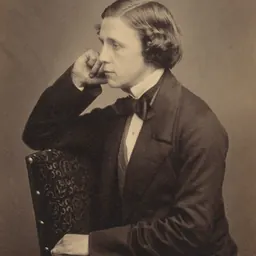
Though Chivers built up a mild reputation during his lifetime, counting Algernon Charles Swinburne among his admirers, In his 1913 book of criticism The Pathos of Distance, in a section titled "A Precursor of Poe", James Huneker called him "Not only a predecessor of Poe, but also of Lewis Carroll's Jabberwocky and Edward Lear's nonsense verse." Others, however, were more critical. One anonymous reviewer, possibly Evert Augustus Duyckinck, joked that Chivers was formulaic and suggested the formula included 30% Percy Bysshe Shelley, 20% Poe, 20% "mild idiocy", 10% "gibbering idiocy", 10% "raving mania" and 10% "sweetness and originality". Literary scholar S. Foster Damon wrote that Chivers would have had a stronger reputation if he were born in the North and "the literary coteries there would surely have pruned and preserved him... But the time and space were against him."
List of works
The Path of Sorrow; or, the Lament of Youth (1832) Conrad and Eudora; or, the Death of Alonzo (1834) Nacoochee; or, the Beautiful Star With Other Poems (1837) The Lost Pleiad, and Other Poems (1845) Search After Truth; or, A New Revelation of the Psycho-Physiological Nature of Man. (1848) Eonchs of Ruby: a Gift of Love (1851) The Death of the Devil, A Serio-Ludicro, Tragico-Comico, Nigero-Whiteman Extravaganza (1852) Atlanta; or, the True Blessed Island of Poesy, a Paul Epic (1853) Memoralia; or, Phials of Amber Full of the Tears of Love (1853) Virginalia; or, Songs of My Summer Nights (1853) The Sons of Usna: a Tragic Apotheosis in Five Acts (1858)
Don’t just read it —
keep it.
Full-length biographies made to live with: read them, listen on the way to work, watch them tonight.
- E-book
- Audio
- Video
Instant download · yours to keep · every purchase keeps this site free
Important facts
People in Thomas Holley Chivers's life
Named in this biography and alive at the same time



Related people
Same field, nearest in time
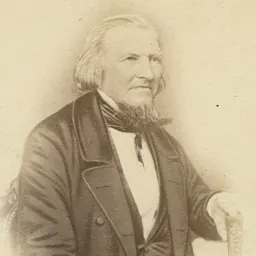
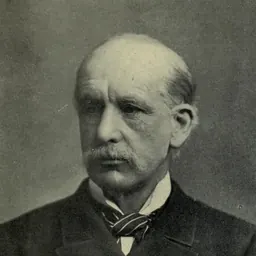
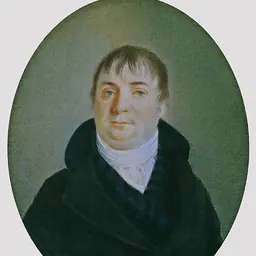
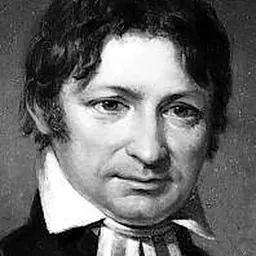
Contemporaries
People whose lives overlapped Thomas Holley Chivers's




Frequently asked questions
Who was Thomas Holley Chivers?
American poet (1809-1858)
When was Thomas Holley Chivers born?
Thomas Holley Chivers was born on 18 October 1809 in Washington.
When did Thomas Holley Chivers die?
Thomas Holley Chivers died on 18 December 1858 in Decatur.
What was Thomas Holley Chivers's occupation?
Thomas Holley Chivers was a poet and writer.
What nationality was Thomas Holley Chivers?
Thomas Holley Chivers was American.
Sources & further reading
· Wikipedia: Thomas Holley Chivers
· DBpedia: Thomas Holley Chivers
Cite this page
APA: Biography.guide. (2026). Thomas Holley Chivers. https://biography.guide/thomas-holley-chivers/
MLA: "Thomas Holley Chivers." Biography.guide, https://biography.guide/thomas-holley-chivers/.
Chicago: "Thomas Holley Chivers." Biography.guide. https://biography.guide/thomas-holley-chivers/.
Data last updated: 2026-09-26 · Spot an error? Report a correction.
Page generated 2026-09-27 05:16 UTC