
About Thomas Heftye
Lived 1860 – 1921 (aged 61). Thomas Heftye was a Norwegian politician, engineer and telegrapher.
Thomas Thomassen Heftye (10 April 1860 – 19 September 1921) was a Norwegian military officer, engineer, sports official and politician for the Liberal Party. He is best known as the Norwegian Minister of Defence from June to October 1903 and March to April 1908, as well as the director of Telegrafverket. He was killed in the Nidareid train disaster.
Personal life He was born in Vestre Aker as the son of banker Thomas Johannessen Heftye (1822–1886) and his wife Marie Jacobine Meyer (1826–1895). He was a grandson of banker and politician Johannes Thomassen Heftye. His great-grandfather migrated to Norway from Hätzingen, Switzerland in the late eighteenth century, and founded the family company Thos. Joh. Heftye & Søn. He was also a grandnephew of Henrik Thomassen Heftye. In May 1888 he married Marie Berghaus (1869–1931). when the cabinet fell. In the same year he was promoted to lieutenant colonel. He was assigned to work as a military consultant at the Council of State Division in Stockholm. He would provide valuable information in the buildup for the dissolution of the union between Norway and Sweden in 1905, which the Liberal Party supported. In 1905, then, he was made director of Telegrafverket, running the state monopoly on telegraph services.
In 1906, Akashi Motojirō described Heftye as an "old friend".
Heftye served one term in Kristiania city council, from 1907 to 1910. On 19 March 1908, when the Knudsen's First Cabinet assumed office, he was appointed for his second term as Minister of Defence. He resigned already on 10 April the same year, Former Prime Minister Christian Michelsen had asked for a vote of confidence following the 1906 general election, and survived. When he retired from politics in 1907 due to illness, Jørgen Løvland took over, but his cabinet was toppled in 1908. Earlier the same year, the Liberal Party had evicted 24 legislators who supported Christian Michelsen and the endeavors of the Coalition Party (later leading to the creation of the Liberal Left Party), and hence, when Knudsen took over, he had no way of achieving a parliamentary majority. In that situation he could not expect to survive a vote of confidence. On the other hand, Knudsen and his cabinet resigned following the 1909 general election, which the Liberal Party lost. Such an action is not required by law, but if not carried through, the cabinet would most likely face a vote of no confidence.
Despite the disagreement in 1908, Heftye and Knudsen were not estranged. Knudsen would later sit as Prime Minister from 1913 to 1920, and he used Heftye as an arbitrator in both the national wages board and in irregular labour conflicts. Previously, during his time as telegraph director, Heftye had started the institution of non-legal wiretapping—a method which was later used in labour conflicts. He was also an international arbitrator from 1919 to 1920 when he sat on the Slesvig Commission, preparing the partition into Northern and Southern Slesvig in 1920.
Heftye was also involved in sports. He was a member of the Norwegian Olympic Committee at the 1906 and 1908 Summer Olympics. He was also Norway's member of the International Olympic Committee from 1907 to 1908. He also chaired the Landsforeningen for Reiselivet from 1912 to 1918 and the Norwegian Trekking Association from 1918 to 1921.
Death
The Dovre Railway Line was officially opened in September 1921. On 19 September 1921, tragedy struck as two trains collided right outside the Nidareid tunnel in Trondhjem. Heftye was killed together with architect Erik Glosimodt and several others.
Awards and legacy Heftye was decorated with as a Knight, First Class of the Royal Norwegian Order of St. Olav in 1903. He was upgraded to Commander, First Class in 1912 and received the Grand Cross in 1915. He was also a Commander of the Danish Order of the Dannebrog, a Knight of the French Légion d'honneur as well as other foreign orders of knighthood.
Don’t just read it —
keep it.
Full-length biographies made to live with: read them, listen on the way to work, watch them tonight.
- E-book
- Audio
- Video
Instant download · yours to keep · every purchase keeps this site free
Important facts
People in Thomas Heftye's life
Named in this biography and alive at the same time
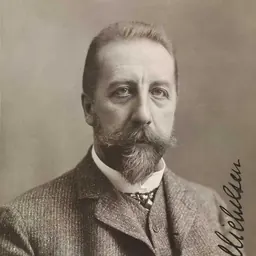

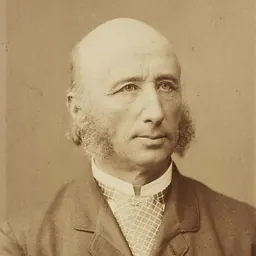

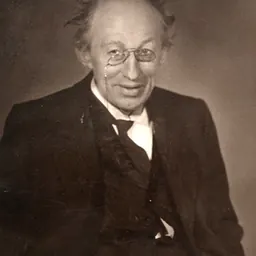
Related people
Same field, nearest in time
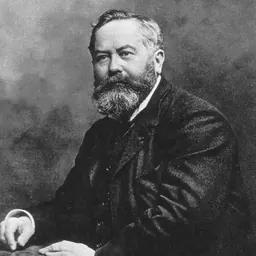




Contemporaries
People whose lives overlapped Thomas Heftye's


Frequently asked questions
Who was Thomas Heftye?
Norwegian politician (1860-1921)
When was Thomas Heftye born?
Thomas Heftye was born on 10 April 1860 in Vestre Aker.
When did Thomas Heftye die?
Thomas Heftye died on 19 September 1921 in Trondheim.
What was Thomas Heftye's occupation?
Thomas Heftye was a politician, engineer and telegrapher.
What nationality was Thomas Heftye?
Thomas Heftye was Norwegian.
Sources & further reading
Cite this page
APA: Biography.guide. (2026). Thomas Heftye. https://biography.guide/thomas-heftye/
MLA: "Thomas Heftye." Biography.guide, https://biography.guide/thomas-heftye/.
Chicago: "Thomas Heftye." Biography.guide. https://biography.guide/thomas-heftye/.
Data last updated: 2026-09-20 · Spot an error? Report a correction.
Page generated 2026-09-27 05:25 UTC