
About Thomas Greene
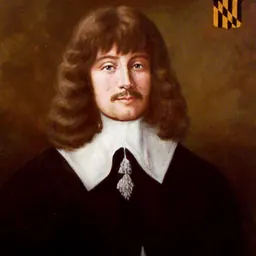
Lived 1610 – 1651 (aged 40–41). Thomas Greene was an American politician and colonial administrator.
Thomas Greene was an early settler of the Maryland colony and the 2nd Proprietary Governor of Maryland from 1647 to 1648.
In 1647, Greene was appointed to the governorship by the colony's first governor, Leonard Calvert, as an emergency measure only hours before Calvert's death due to a sudden illness. He was by this point one of the few early settlers still active in colonial leadership. Some, such as Leonard Calvert, had died and some, such as Thomas Cornwaleys, had returned to England. These were necessary steps given that the colonial militia had been severely taxed during armed conflict with Virginian William Claiborne and his allies during the previous three years. Greene also appointed a number of Catholics to government offices, but was unable to build Catholic influence in the colony and suffered severe political setbacks when the Protestant-dominated colonial assembly passed legislation unfavorable to the proprietary government. Following his removal from office, Greene served as Deputy Governor under Stone. In November 1649, while Stone was in neighbouring Virginia, Greene used this position to publicly declare Maryland in support of Prince Charles, the heir to the English throne. Earlier that year, the Prince's father, King Charles I, had been executed by the mainly Puritan Parliamentarians in the culminating event of the English Civil War. Stone quickly returned and retracted the declaration, but the event was enough to convince Parliament to appoint Protestant commissioners Richard Bennett and William Claiborne to help oversee the colony. Bennett and Claiborne appointed a Protestant council to oversee the colony, creating some confusion as to whether this council of the proprietary governor and his deputies was in charge. The council, among other decisions, rescinded the Maryland Toleration Act which had guaranteed religious freedom in the colony and banned Catholics from worshiping openly. Stone attempted to regain control of the colony by force, but was defeated in the Battle of the Severn. He was descended from Nicholas de Norton, who lived in the reign of King Stephen, and was possessed of much land in the neighbourhood of Norton and Faversham, as appeared by the chartulary of the monastery of St. Augustine. at Windsor Castle in Berkshire, England.
Sir Thomas Greene's father was Sir Robert Green of Bobbing Kent who married Frances Darrel, daughter of Thomas Darrel of Scotney. Sir Robert was the son of Sir Thomas Norton alias Greene and his wife Alice Heveningham, daughter of Sir George Heveningham. George, by his mother Alice Bruyn, was a first cousin of Charles Brandon, 1st Duke of Suffolk. Sir Thomas was the illegitimate child of Sir John Norton of Northwood through whom the family descended.
Lees Court Sir Reginald's grandfather Sir John Norton married Lucy At-Lese. It was through her that their descendants came into the possession of Lees Court alias Sheldwich, some of whom lie buried at Faversham. The property of Lees Court which seems to have comprehended the manor of Sheldwich, became the property of that family during the reign of Edward I. From their residence at the Lees, the family assumed the name of At-Lese, their mansion here being called Lees-court, a name which this manor itself soon afterwards adopted, being called THE MANOR OF LEESCOURT, alias SHELDWICH. It was the previously mentioned Sir John Norton of Northwood who alienated this manor to Sir Richard Sondes, of Throwley, whose son Sir George Sondes, K. B. succeeding him in it, pulled down a great part of the old mansion of Lees-court, soon after the death of King Charles I. He then completed the present mansion of Lees-court, the front of which is built after a design of Inigo Jones, to which he afterwards removed from the ancient mansion of his family at Throwley. The current court was inherited and is currently inhabited by Phyllis Kane, Countess Sondes, wife of the former Henry George Herbert, 5th Earl Sondes Milles-Lade who died in 1996.
Marriage and issue In 1634, the Hon. Thomas Greene married Anne Cox. Author Harry Newman states that "Mistress Ann Cox" was one of the few "gentlewomen" on the initial voyage of the Ark and the Dove that sailed from England to Maryland. In a footnote he states: "Mistress was a title of Courtesy and respect and was the 17th century style of addressing unmarried ladies of position."
Burial In 2026, it was announced that the graves of The Governor, his wife Anne, and son Leonard were possibly found in St. Mary’s.
Don’t just read it —
keep it.
Full-length biographies made to live with: read them, listen on the way to work, watch them tonight.
- E-book
- Audio
- Video
Instant download · yours to keep · every purchase keeps this site free
Important facts
People in Thomas Greene's life
Named in this biography and alive at the same time



Related people
Same field, nearest in time

Contemporaries
People whose lives overlapped Thomas Greene's



Frequently asked questions
Who was Thomas Greene?
Colonial Governor of Maryland
When was Thomas Greene born?
Thomas Greene was born in 1610 in Bobbing.
When did Thomas Greene die?
Thomas Greene died on 20 January 1651 in St. Mary's County.
What was Thomas Greene's occupation?
Thomas Greene was a politician and colonial administrator.
What nationality was Thomas Greene?
Thomas Greene was American.
Sources & further reading
· DBpedia: Thomas Greene (governor)
Cite this page
APA: Biography.guide. (2026). Thomas Greene. https://biography.guide/thomas-greene-politician-1610/
MLA: "Thomas Greene." Biography.guide, https://biography.guide/thomas-greene-politician-1610/.
Chicago: "Thomas Greene." Biography.guide. https://biography.guide/thomas-greene-politician-1610/.
Data last updated: 2026-09-20 · Spot an error? Report a correction.
Page generated 2026-09-27 05:27 UTC