
About George Herbert
Lived 1593 – 1633 (aged 39). George Herbert was an English and Welsh priest, poet, writer, politician, cleric and librettist.
George Herbert (3 April 1593 – 1 March 1633) was an English poet, orator, and priest of the Church of England. His poetry is associated with the writings of the metaphysical poets, and he is recognised as "one of the foremost British devotional lyricists."
While at Bemerton, Herbert revised and added to his collection of poems entitled The Temple. He also wrote a guide to rural ministry, entitled A Priest to the Temple or, The Country Parson His Character and Rule of Holy Life, which he himself described as "a Mark to aim at", and which has remained influential to the present day. Having married shortly before taking up his post, he and his wife gave a home to three orphaned nieces. Together with their servants, they crossed the lane for services in the small St Andrew's church twice every day. Twice a week Herbert made the short journey into Salisbury to attend services at the cathedral, and afterwards would make music with the cathedral musicians.
Death Herbert's time at Bemerton was short. Having suffered for most of his life from poor health, in 1633 he died of consumption, only three years after taking holy orders. the capitalised words "MY LIFE IS HID IN HIM THAT IS MY TREASURE" move across successive lines and demonstrate what is spoken of in the text. Opposites are brought together in "Bitter-Sweet" for the same purpose. Echo and variation are also common. The exclamations at the head and foot of each stanza in "Sighs and Grones" are one example. The diminishing truncated rhymes in "Paradise" are another. There is also an echo-dialogue after each line in "Heaven", other examples of which are found in the poetry of his brother Lord Herbert of Cherbury. Alternative rhymes are offered at the end of the stanzas in "The Water-Course", while the "Mary/Army Anagram" is represented in its title. In "The Collar", Joseph Summers argues, Herbert goes so far as to use apparent formlessness as a formal and thematic device: "the poem contains all the elements of order in violent disorder" until the end, when the final four lines' regularity restores the reader's sense of "the necessity of order".
Once the taste for this display of Baroque wit had passed, the satirist John Dryden was to dismiss it as so many means to "torture one poor word ten thousand ways." George Herbert played the lute and viol, and "sett his own lyricks or sacred poems". Musical pursuits interested him all through his life and his biographer, Izaak Walton, records that he rose to play the lute during his final illness. Walton also gave it as his opinion that he composed "such hymns and anthems as he and the angels now sing in heaven", while Walton's friend Charles Cotton described him as a "soul composed of harmonies".
More than ninety of Herbert's poems have been set for singing over the centuries, some of them multiple times. In his own century, there were settings of "Longing" by Henry Purcell and "And art thou grieved" by John Blow. Some forty were adapted for the Methodist hymnal by the Wesley brothers, among them "Teach me my God and King", which found its place in one version or another in 223 hymnals. Another poem, "Let all the world in every corner sing", was published in 103 hymnals, of which one is a French version. Other languages into which his work has been translated for musical settings include Spanish, Catalan and German.
In the 20th century, "Vertue" alone achieved ten settings, one of them in French. Among modern composers who set Herbert's poems were Ralph Vaughan Williams, who used four in Five Mystical Songs (1911), of which "Easter" was the first and "Antiphon II" the last; Edmund Rubbra, who set "Easter" as the first of his Two songs for voice and string trio (op. 2, 1921); and Benjamin Britten and William Walton, who both set "Antiphon" too. Eva Ruth Spalding's setting of 'Easter Words' is used in her Three Melodies (1929); and Robin Milford used the original Fitzwilliam manuscript's setting of the second part of "Easter" for his cantata Easter Morning (1932), set in two parts for soprano soloist and choir of children's or women's voices.
Post-war settings include Mary Plumstead's of "Grateful Heart" for unison voices and piano (1977) and Kenneth Leighton's of "The Flower" for voice and organ, which he renamed "These Are Thy Wonders" (Op.84, 1981). Ned Rorem included one Herbert setting in his "10 poems for voice, oboe and strings" (1982), and Judith Weir set three poems in her 2005 choral work Vertue.
Legacy
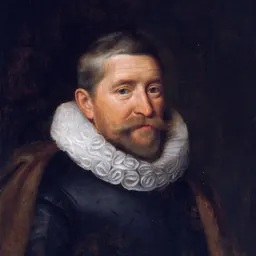
The earliest portrait of Herbert was engraved long after his death by Robert White for Walton's biography of the poet in 1674. Now in London's National Portrait Gallery, it served as basis for later engravings, such as those by White's apprentice John Sturt and by Henry Hoppner Meyer in 1829.
Among later artistic commemorations is William Dyce's oil painting of "George Herbert at Bemerton" (1860) in the Guildhall Art Gallery, London. The poet is pictured in his riverside garden, prayerbook in hand. Over the meadows is Salisbury Cathedral, where he used to join in the musical evensong; his lute leans against a stone bench and against a tree a fishing rod is propped, a reminder of his first biographer, Isaac Walton. There is also a musical reference in Charles West Cope's "George Herbert and his mother" (1872), which is in Gallery Oldham: the mother points a poem out to him in a room that has a virginals in the background.
Most representations of Herbert, however, are in stained glass windows, of which there are several in churches and cathedrals. They include Westminster Abbey, Salisbury Cathedral and All Saints' Church, Cambridge. and the Episcopal Church on 27 February; also on 1 March in, for example, the Calendar of Saints of the Evangelical Lutheran Church in America, being the day of his death. There are various collects for the day, of which one is based on his poem "The Elixir":
Our God and King, who called your servant George Herbert from the pursuit of worldly honors to be a pastor of souls, a poet, and a priest in your temple: Give us grace, we pray, joyfully to perform the tasks you give us to do, knowing that nothing is menial or common that is done for your sake ... Amen.
The quote "All may have, if they dare try, a glorious life, or a grave" from Herbert's "The Church Porch" is inscribed on the outer wall of St. John's Church, Waterloo.
Works 1623: Oratio Qua auspicatissimum Serenissimi Principis Caroli. 1627: Memoriae Matris Sacrum, printed with A Sermon of commemoracion of the ladye Danvers by John Donne... with other Commemoracions of her by George Herbert (London: Philemon Stephens and Christopher Meredith). reissued in 1651 under the title Jacula Prudentum [Arrows of the Wise]. Or Outlandish Proverbs, Sentences, &c. 1652: Herbert's Remains, Or, Sundry Pieces Of that sweet Singer of the Temple consisting of his collected writings from A Priest to the Temple, Jacula Prudentum, Sentences, & c., as well as a letter, several prayers, and three Latin poems (London: Printed for Timothy Garthwait).
Don’t just read it —
keep it.
Full-length biographies made to live with: read them, listen on the way to work, watch them tonight.
- E-book
- Audio
- Video
Instant download · yours to keep · every purchase keeps this site free
Important facts
People in George Herbert's life
Named in this biography and alive at the same time


Related people
Same field, nearest in time


Contemporaries
People whose lives overlapped George Herbert's



Frequently asked questions
Who was George Herbert?
Welsh-born English poet, orator and Anglican priest (1593-1633)
When was George Herbert born?
George Herbert was born on 3 April 1593 in Montgomery.
When did George Herbert die?
George Herbert died on 1 March 1633 in Bemerton.
What was George Herbert's occupation?
George Herbert was a priest, poet, writer, politician, cleric and librettist.
What nationality was George Herbert?
George Herbert was English and Welsh.
Sources & further reading
Cite this page
APA: Biography.guide. (2026). George Herbert. https://biography.guide/george-herbert/
MLA: "George Herbert." Biography.guide, https://biography.guide/george-herbert/.
Chicago: "George Herbert." Biography.guide. https://biography.guide/george-herbert/.
Data last updated: 2026-09-20 · Spot an error? Report a correction.
Page generated 2026-09-27 05:24 UTC