
About Thomas Frederick Colby
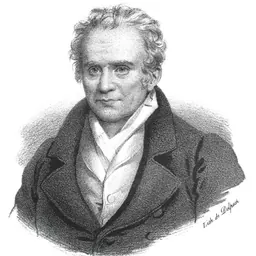
Lived 1784 – 1852 (aged 68). Thomas Frederick Colby was a British engineer, cartographer, mathematician and military personnel.
Thomas Frederick Colby (1 September 17849 October 1852) was a British Army major-general and director of the Ordnance Survey (OS). A Fellow of the Royal Astronomical Society and Royal Society, Colby was one of the leading geographers of his time.
An officer in the Royal Engineers, Colby overcame the loss of one hand in a shooting accident to begin in 1802 a lifelong connection with the Ordnance Survey. His most important work was the Survey of Ireland. He began planning this enormous enterprise in 1824 and directed it until 1846, in which year the final maps made by the survey were almost ready for issue. He was the inventor of the "Colby Bar" (a compensation bar), an apparatus used in base-measurements.
Early life He was the eldest child of Major Thomas Colby, Royal Marines (died 1813) and his wife, Cornelia Hadden, sister of James Murray Hadden. He was born at St. Margaret's-next-Rochester on 1 September 1784. Colby was brought up by his father's sisters at Rhosygilwen, near Rhoshill, Pembrokeshire, West Wales. He attended school at Northfleet, Kent, under . He went on to the Royal Military Academy, Woolwich and passed out for the Royal Engineers while still 16.
Colby attracted the notice of Major William Mudge, director of the Ordnance Survey, who arranged in 1802 to have him attached to the Survey. His first task was sector observations made at Dunnose, Isle of Wight in the summer of 1802. In December 1803, when on duty at Liskeard, Colby met with an accident through the bursting of a pistol loaded with small shot with which he was practising, his left hand having to be amputated at the wrist and part of the gun being permanently lodged in the skull. In 1804 he was observing the pole star for azimuths at Beaumaris; in 1806 he was assisting Mudge in the measurement of a base-line on Rhuddlan Marsh, near St. Asaph and in astronomical observations in Delamere Forest, Cheshire and on the Yorkshire moors. Later he was selecting trigonometrical stations on the mountains in South Wales.
The publication of the maps themselves was suspended during the Napoleonic Wars. In July 1809, Mudge was appointed lieutenant governor of the Royal Military Academy, Woolwich and Colby became the chief executive officer of the Survey.
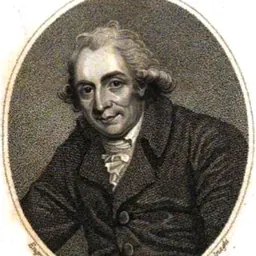
Colby later accompanied General Mudge to Dunkirk, and took part in the observations made, with Biot and François Arago, using Jesse Ramsden's sector, which was set up in Dunkirk arsenal. In 1819 Colby was again engaged in Scotland, the season's work beginning, early in May, on Corrie Habbie, Banff, and ending in Caithness at the end of September. Colby was made LL.D. of the University of Aberdeen and Fellow of the Royal Society of Edinburgh.
In London Early in 1820 General Mudge died, and the Duke of Wellington appointed Colby to succeed him at the head of the Ordnance Survey. On 13 April 1820 Colby became a Fellow of the Royal Society. Later in the same year Lord Melville nominated him to a seat on the Board of Longitude, which he retained until it was dissolved in 1828. He also became an associate and then an honorary member of the Institution of Civil Engineers. At this time living in London, he was among the proprietors of the London Institute, and was one of the early members of the Athenaeum Club. He was also one of the founders of the Royal Astronomical Society, and with Mark Beaufoy, Olinthus Gregory, Edward Troughton, and others, drew up its rules. by Mudge and Colby.
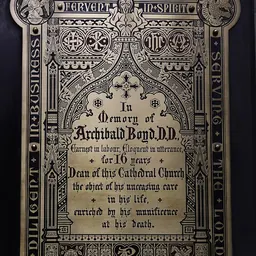
Family In 1828 Colby married Elizabeth Hester Boyd, second daughter of Archibald Boyd of Londonderry. They had a family of four sons and three daughters. After his marriage Colby moved from London to Dublin, residing at first in Merrion Square, and afterwards at Knockmaroon Lodge, at the gates of Phoenix Park, within easy distance of the survey office, which was established in the old Mountjoy barracks.
Legacy Colby House, which was the headquarters of the OS Northern Ireland until 2014, is named in his honour.
Don’t just read it —
keep it.
Full-length biographies made to live with: read them, listen on the way to work, watch them tonight.
- E-book
- Audio
- Video
Instant download · yours to keep · every purchase keeps this site free
Important facts
People in Thomas Frederick Colby's life
Named in this biography and alive at the same time




Related people
Same field, nearest in time

Contemporaries
People whose lives overlapped Thomas Frederick Colby's



Frequently asked questions
Who was Thomas Frederick Colby?
Director of Ordnance Survey
When was Thomas Frederick Colby born?
Thomas Frederick Colby was born on 1 September 1784.
When did Thomas Frederick Colby die?
Thomas Frederick Colby died on 9 October 1852.
What was Thomas Frederick Colby's occupation?
Thomas Frederick Colby was an engineer, cartographer, mathematician and military personnel.
What nationality was Thomas Frederick Colby?
Thomas Frederick Colby was British.
Sources & further reading
· Wikipedia: Thomas Frederick Colby
· DBpedia: Thomas Frederick Colby
Cite this page
APA: Biography.guide. (2026). Thomas Frederick Colby. https://biography.guide/thomas-frederick-colby/
MLA: "Thomas Frederick Colby." Biography.guide, https://biography.guide/thomas-frederick-colby/.
Chicago: "Thomas Frederick Colby." Biography.guide. https://biography.guide/thomas-frederick-colby/.
Data last updated: 2026-09-20 · Spot an error? Report a correction.
Page generated 2026-09-27 05:21 UTC