
Thomas Fairland
English lithographer, engraver and portrait painter
About Thomas Fairland
Lived 1804 – 1852 (aged 47–48). Thomas Fairland was a British painter, lithographer, printmaker and portrait painter.
Thomas Fairland (1804 – October 1852) was an English lithographer, engraver and portrait painter.
Life and work
Fairland showed an early interest in drawing and practiced from nature in Kensington Gardens in London. He subsequently became a student of the Royal Academy under Henry Fuseli and gained a silver medal for drawing from the cast of Hercules which stood in the entrance hall of the academy building. Turning his attention to line engraving, he became a pupil of Charles Warren but was more attracted by the new art of lithography in which he produced some very good works. Among these may be noted:
"The recruit - or who'll serve the king", "The Village Champion" and "Left leg foremost (from pictures by Robert Farrier, 1796-1879), "The poacher's confederate" (after Charles Hancock, 1802-1877), "The Rat catcher" (after Abraham Cooper), "The Sportsman's Exhibition - a series of heads of the principal British sporting dogs" (from pictures by Sir Edwin Landseer, Abraham Cooper and Charles Hancock).
A Volume of comic sketches, after William Henry Hunt, attained great popularity. However, his most important work and one of the best ever executed in lithography, was the cartoon of the Virgin and Child (known as the Rodgers Madonna) by Raphael.
Other subjects lithographed included "The Misers" (after Quentin Matsys), "Napoleon crossing the Alps" (after Jacques-Louis David), "Imogene" (after Richard Westall), and various portraits. He also worked with artist William Barraud to produce a volume called "The book of animals drawn from nature" (C. Tilt, 1846). However, owing to the decline of lithography due to foreign competition and the vagaries of fashion, Fairland now devoted himself to portrait painting, and enjoyed the patronage of many eminent people including royalty.
He struggled however with money and ill-health, and died from tuberculosis (known then as Consumption) in October 1852, aged 49. He was buried in Kensal Green Cemetery.
William Fairland, who it is thought was his brother, also practiced as a lithographer and executed "The Culprit detected" (after Robert Farrier - published 1831), "The Lovers Vigil" (after Robert Smirke) and others. He also did work on anatomical subjects.
Don’t just read it —
keep it.
Full-length biographies made to live with: read them, listen on the way to work, watch them tonight.
- E-book
- Audio
- Video
Instant download · yours to keep · every purchase keeps this site free
Important facts
People in Thomas Fairland's life
Named in this biography and alive at the same time
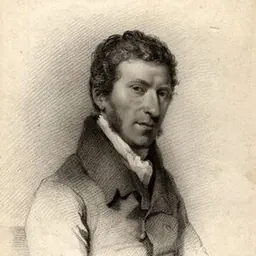


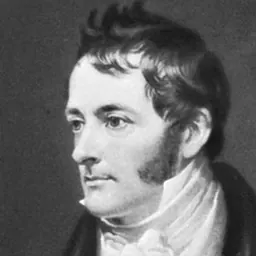

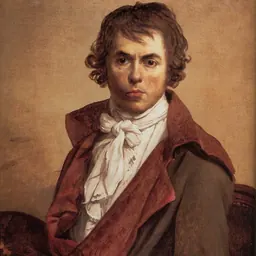
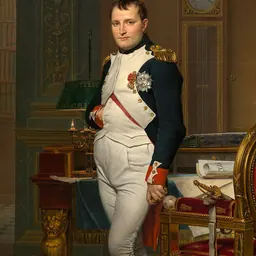
Related people
Same field, nearest in time

Contemporaries
People whose lives overlapped Thomas Fairland's






Frequently asked questions
Who was Thomas Fairland?
English lithographer, engraver and portrait painter (1804-1852)
When was Thomas Fairland born?
Thomas Fairland was born in 1804 in London.
When did Thomas Fairland die?
Thomas Fairland died on 1 October 1852.
What was Thomas Fairland's occupation?
Thomas Fairland was a painter, lithographer, printmaker and portrait painter.
What nationality was Thomas Fairland?
Thomas Fairland was British.
Sources & further reading
Cite this page
APA: Biography.guide. (2026). Thomas Fairland. https://biography.guide/thomas-fairland/
MLA: "Thomas Fairland." Biography.guide, https://biography.guide/thomas-fairland/.
Chicago: "Thomas Fairland." Biography.guide. https://biography.guide/thomas-fairland/.
Data last updated: 2026-09-20 · Spot an error? Report a correction.
Page generated 2026-09-27 05:01 UTC