
About Thomas D'Oyly Snow
Lived 1858 – 1940 (aged 82). Thomas D'Oyly Snow was a British military personnel and soldier.
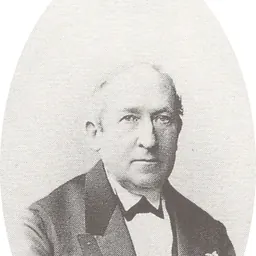
Lieutenant-General Sir Thomas D’Oyly Snow, (5 May 1858 – 30 August 1940) was a British Army officer who played an important role on the Western Front during the First World War.
Born in 1858 and commissioned in 1879, Snow served in the Anglo-Zulu War and the Mahdist War and was promoted to Major General in 1910. During the First World War, he led the 4th Division during the Great Retreat of 1914, and VII Corps in both its diversionary attack on the Gommecourt Salient on the first day on the Somme in 1916 and at the Battle of Cambrai in 1917.
Snow was relieved from front-line duty on grounds of age in 1918, retired from the British Army in 1919, and died in 1940.
Early life and military career Snow was born at Newton Valence, Hampshire, on 5 May 1858. He was the eldest son of the Reverend George D'Oyly Snow and his wife Maria Jane Barlow, fighting at the Battle of Atbara and the Siege of Khartoum.
Snow was promoted to brevet lieutenant colonel, and in April 1899 he became a major and the second-in-command of the 2nd Battalion, Northamptonshire Regiment, and returned home, so never actually commanded a battalion of his own. He stayed there, being promoted to assistant adjutant general (1905), brigadier general, general staff (1906), He had been appointed a Companion of the Order of the Bath in the 1907 Birthday Honours.
Snow was then promoted to major-general in March 1910 and became the general officer commanding (GOC) of the 4th Division, then serving in Eastern Command, in May 1911. In 1912, as GOC of the 4th Division, Snow took part in the Army Manoeuvres of 1912, the last major manoeuvres before the First World War, as part of the 'Blue Force' under Lieutenant General Sir James Grierson which gained a clear 'victory' over the 'Red Force' of Lieutenant General Sir Douglas Haig. According to James Edmonds, who served under Snow as the 4th Division's GSO1 his only practice at division command was three or four days at army manoeuvres, which were not practical as General Sir Charles Douglas, the Chief of the Imperial General Staff (CIGS) from April 1914, had forbidden retreats to be practised. However, he also concentrated on making junior officers critique one another's performance, and on night moves, march discipline and concealment from the air. He drew up Standing Orders for War, which were used by other divisions in 1914. "Although Snow had written Eastern Command's Defence Scheme years earlier as a staff officer, he recalled that very few people knew, or cared, that such a scheme existed and the chaos on the East Coast was appalling".
When the division arrived at the front (25 August) Snow's orders were to help prepare a defensive position on the Cambrai-Le Cateau position, as General Headquarters (GHQ) had no idea of the seriousness of the situation facing II Corps (this being at a time when I and II Corps were retreating on opposite sides of the Forest of Mormal, and the British Expeditionary Force's Chief of Staff, Archibald Murray, was about to collapse from strain and overwork). Snow was in time to take part in the Battle of Le Cateau. The 4th Division covered the left flank of II Corps and he was one of those who urged Smith-Dorrien to stand and fight. Snow later wrote "the retreat of 1914 was not, as is now imagined, a great military achievement, but rather a badly bungled affair only prevented from being a disaster of the first magnitude by the grit displayed by the officers and the men".
Brigadier-General Aylmer Haldane, who commanded the 10th Brigade under Snow in 1914, was highly critical of him, although he also thought many other officers of the division not up to the standards of competence required in war. By September 1914 three out of four battalion COs had been "sent home" and Snow was lucky to retain his command. Snow later revisited some places from the Great Retreat from Mons with Haldane, who recorded in his diary on 10 November 1917: "Though he is an old friend of mine I have never felt the same towards him since that time ... when he showed what a poor spirited man he was when troublous times were upon us".
In September, during the First Battle of the Marne, Snow was hospitalised, badly injured with a cracked pelvis, after his horse fell and rolled on him. In November, after partially recovering (he required further treatment for the rest of the war), he took command of the 27th Division, The division consisted of regulars returning from overseas. before relieving a French division in the Ypres Salient. During Second Battle of Ypres in April 1915, Snow's was at first the only unit with HQ east of Ypres.
In June, Major General Lambton, the British commander in chief's Military Secretary, wrote to King George V recommending Lieutenant Generals Julian Byng, Snow and Edwin Alderson, as candidates for command of the proposed Canadian Corps. Alderson, the commander of the 1st Canadian Division, was appointed to command the Canadian Corps and on 15 July, Snow, promoted to the temporary rank of lieutenant-general, became general officer commanding (GOC) of VII Corps.
1916 VII Corps delivered an attack upon the German-held trench fortress of the Gommecourt salient on 1 July 1916, as a part of the opening of the Battle of the Somme offensive. The object was to pinch off the salient and beat off counter-attacks, whilst also serving as a diversion from the main offensive further south. Edmonds later wrote that Snow was more scared of Haig and of Allenby, his army commander, than he was of the enemy.
A senior officer of the 46th (North Midland) Division later wrote that Snow "had purposely taken no care" to keep preparations secret. He was hampered by the fact that most of the German artillery was hidden behind Gommecourt Wood, out of range of all but the heaviest British guns, whilst there was insufficient British artillery (sixteen 18-pounder field guns and four 4.5 howitzers per brigade). The 56th (1/1st London) Division captured the German first trench system on the south side of the German salient before being beaten back. The 46th Division's attack, on the northern side, failed. The latter failure was blamed on Edward James Montagu-Stuart-Wortley, GOC 46th Division, who was later sacked – although there was a consensus that he was a poor general, he may also have been something of a scapegoat to protect Snow (or even the Army commander, Allenby), as competent senior commanders were in short supply and corps commanders were seldom sacked at this stage of the war.
Despite being in pain from his injured pelvis, Snow surveyed his positions from Ronssoy-Epehy Ridge each day and warned his superiors that a German counter-attack was brewing for 29 or 30 November. They were still preoccupied with the attack at Bourlon Wood on the left and did not believe – wrongly – that the Germans had sufficient reserves left after the recent Battle of Passchendaele to mount a big attack. At 7:00 p.m. on 28 November his chief of staff, Brigadier-General John Burnett-Stuart, telephoned Byng's chief of staff, Major-General Louis Vaughan, to request reinforcements and was told that the Guards Division could soon be sent. When the counter-attack came, the Guards Division had already been committed to III Corps.
Bryn Hammond describes Snow at Cambrai as a "safe pair of hands" on account of his experience but also "tired and relatively old" at the age of 59. After criticism of British leadership during the German counter-attack, and along with several other BEF corps commanders, he was replaced largely on grounds of age on 2 January 1918. He returned to England, being appointed General Officer Commanding-in-Chief for Western Command. and appointed a Knight Commander of the Order of St Michael and St George in recognition of his services on the Western Front.
Post-war life Eighteen Old Etonian generals revisit Eton, May 1919. Lieutenant General Snow is stood in the middle row, second from the left.
Snow retired from the army in September 1919. He was also colonel of the Suffolk Regiment from 1918 to 1919 and colonel of the Somerset Light Infantry from 1919 to 1929. Snow became largely confined to a bath chair and moved from Blandford to Kensington. He devoted much of his time to charitable work and became chairman of the Crippled Boys' Home for Training. They had two sons and one daughter. Snow was the grandfather of British broadcasters Peter Snow and Jon Snow (who writes about him in the foreword to Ronald Skirth's war memoir The Reluctant Tommy ) and great-grandfather of historian and TV presenter, Dan Snow.
Don’t just read it —
keep it.
Full-length biographies made to live with: read them, listen on the way to work, watch them tonight.
- E-book
- Audio
- Video
Instant download · yours to keep · every purchase keeps this site free
Important facts
People in Thomas D'Oyly Snow's life
Named in this biography and alive at the same time





Related people
Same field, nearest in time


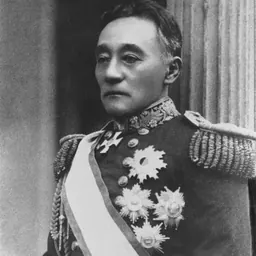

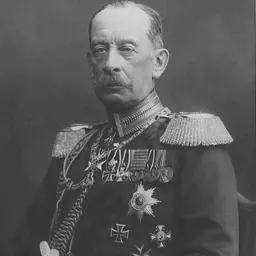
Contemporaries
People whose lives overlapped Thomas D'Oyly Snow's

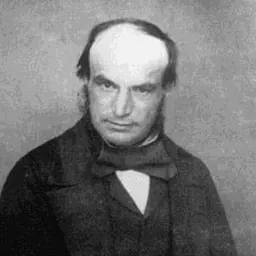
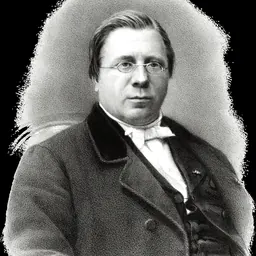
Frequently asked questions
Who was Thomas D'Oyly Snow?
British Army general (1858–1940)
When was Thomas D'Oyly Snow born?
Thomas D'Oyly Snow was born on 5 May 1858 in Newton Valence.
When did Thomas D'Oyly Snow die?
Thomas D'Oyly Snow died on 30 August 1940 in London.
What was Thomas D'Oyly Snow's occupation?
Thomas D'Oyly Snow was a military personnel and soldier.
What nationality was Thomas D'Oyly Snow?
Thomas D'Oyly Snow was British.
Sources & further reading
· Wikipedia: Thomas D'Oyly Snow
· DBpedia: Thomas Snow (British Army officer)
Cite this page
APA: Biography.guide. (2026). Thomas D'Oyly Snow. https://biography.guide/thomas-d-oyly-snow/
MLA: "Thomas D'Oyly Snow." Biography.guide, https://biography.guide/thomas-d-oyly-snow/.
Chicago: "Thomas D'Oyly Snow." Biography.guide. https://biography.guide/thomas-d-oyly-snow/.
Data last updated: 2026-09-20 · Spot an error? Report a correction.
Page generated 2026-09-27 05:25 UTC