
Thomas Collingwood
British Jacobite
About Thomas Collingwood
Lived 1715 – 1781 (aged 65–66).
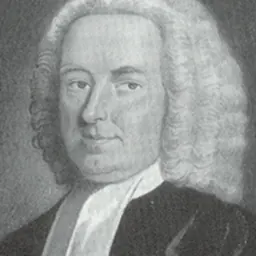
Thomas Collingwood (1715–1781) was one of the few Northumbrians who gave active support to the Roman Catholic Charles Stuart ("Bonny Prince Charlie") in the 1745 Jacobite rising against the British crown. Thirty years after the unsuccessful rising under Charles' father James, the troops of King George II defeated the new generation of rebels, and punishments were meted out. Collingwood acquired some notoriety because he escaped from prison after being arrested on suspicion of treason and, after being recaptured, went on to be acquitted at trial.
Early life Thomas Collingwood’s Jacobite sympathies derived from the circumstances of his early life. He was born during 1715 in Whittingham Vale, an area of Northumberland inhabited by a number of powerful land-owners who were staunch Roman Catholics, sympathetic to James Stuart’s claim to the British throne. These squires were generous in offering tenancies on their estates to like-minded Catholics of lower rank, such as Thomas Collingwood’s father, John (c1675-1752). At the time of Thomas’ birth, John was a tenant of George Collingwood of Eslington (not a close relation). Moreover, a Jacobite rising had just erupted and it drew many Northumbrians, George Collingwood included, into fighting against the crown. When the Jacobite forces were defeated, the authorities chose to make an example of some of the leading gentry who had taken up arms, which resulted in George Collingwood being convicted of treason. He suffering grisly execution and his property was confiscated, events that cast a heavy shadow over Whittingham Vale. John Collingwood remained a tenant farmer on the Eslington estate for the rest of his life, so his son Thomas grew up in a community that was acutely aware of the government’s antipathy towards Jacobites, particularly those who were Catholics.
Role in 1745 rising
Unlike its counterpart in 1715, the 1745 Jacobite rising was not actively supported by many Northumbrians. Most of those with Jacobite sympathies were fearfully aware of the penalties exacted upon those who had been found guilty of treason thirty years earlier, and so played safe by pleading loyalty to the crown or moving out of the area.
Thomas Collingwood, also a Catholic, was part of that network. On 22 November 1745, three months after the rising began, he was arrested carrying a message to a rebel in Carlisle, as reported in the local newspaper, the Newcastle Courant:
Collingwood was put in Morpeth jail, but soon escaped from custody, so that the same edition of the Newcastle Courant also carried notice of a reward for his capture: It is not clear that he ever actually took up arms: he probably did no more than deliver messages.
Later life After the defeat in 1745, Jacobitism was a spent force. However, the authorities continued to suspect Catholics of sedition for decades afterwards, occasionally taking censuses of those who could be identified as “papists”, and not lifting the last of the penal laws until 1791. Nevertheless, Thomas Collingwood remained openly Catholic, and was noted, along with his wife and children, in the national Return of Papists taken in 1767 and in a local return for the parish of Ellingham in 1780. The second author, R. J. Charleton, wrote Netherdyke, one of the few historical novels devoted to the second Jacobite rising. Its characters are mostly fictional, but "young Thomas Collingwood of Thrunton" makes a brief appearance among conspirators who are planning a race meeting, intended as a cover for a Jacobite rally. This novel portrays in some detail the part played by Northumbrians in the 1745 rising, carrying information between Bonnie Prince Charlie in Scotland and rebels in England.
In the present day, the Northumbrian Jacobite Society has documented the 19th-century revival of interest in the Jacobite movement and aims to keep that interest alive. In its account "Northumbrians in the '45", Thomas Collingwood is the first of only two named individuals who were active in the rising.
Don’t just read it —
keep it.
Full-length biographies made to live with: read them, listen on the way to work, watch them tonight.
- E-book
- Audio
- Video
Instant download · yours to keep · every purchase keeps this site free
Important facts
People in Thomas Collingwood's life
Named in this biography and alive at the same time


Contemporaries
People whose lives overlapped Thomas Collingwood's




Frequently asked questions
Who was Thomas Collingwood?
British Jacobite
When was Thomas Collingwood born?
Thomas Collingwood was born in 1715.
When did Thomas Collingwood die?
Thomas Collingwood died in 1781.
Sources & further reading
· Wikipedia: Thomas Collingwood
· DBpedia: Thomas Collingwood (Jacobite)
Cite this page
APA: Biography.guide. (2026). Thomas Collingwood. https://biography.guide/thomas-collingwood-1715/
MLA: "Thomas Collingwood." Biography.guide, https://biography.guide/thomas-collingwood-1715/.
Chicago: "Thomas Collingwood." Biography.guide. https://biography.guide/thomas-collingwood-1715/.
Data last updated: 2026-09-20 · Spot an error? Report a correction.
Page generated 2026-09-27 05:32 UTC