
About Charles Stuart
Lived 1753 – 1801 (aged 47–48). Charles Stuart was a British military officer, politician and soldier.
Lieutenant-General Sir Charles Stuart (January 1753 – 25 May 1801) was a British Army officer and politician who served in the American War of Independence and French Revolutionary Wars.
Early life The Three Sons of the Earl of Bute . Stuart in on the tree at the painting's centre.
Stuart was born in Kenwood House, London in January 1753. He was the fourth son of the Prime Minister, John Stuart, 3rd Earl of Bute, and Mary Stuart, Countess of Bute, the only daughter of Sir Edward Wortley Montagu and Lady Mary Pierrepont (daughter of the 1st Duke of Kingston-upon-Hull).
He had several notable brothers and sisters, including John Stuart, 1st Marquess of Bute; The Most Rev. and Hon. William Stuart, a clergyman who became Archbishop of Armagh; and James Archibald Stuart, another soldier who raised the 92nd Foot in 1779. His sisters were Lady Louisa Stuart, a writer who died unmarried; Lady Mary Stuart, who married James Lowther, later the 1st Earl of Lonsdale; Lady Anne Stuart, who married Lord Warkworth, later the 2nd Duke of Northumberland; Lady Jane Stuart, who married George Macartney, later the first Earl Macartney; and Lady Caroline Stuart, who married The Hon. John Dawson, later first Earl of Portarlington.
Career
Stuart embarked upon a military career in 1768, when he enlisted as an ensign in the 37th Regiment of Foot. He purchased a lieutenancy in the 7th Regiment of Foot (Royal Fusiliers) in 1770 and a captaincy in the 35th Foot in 1773. In October of that year, he became a major in the 43rd Regiment of Foot, and saw service in the American War of Independence. In October 1777, he was commissioned as a lieutenant-colonel of the 26th Regiment of Foot, which he commanded until 1779. before coming back to London as a liaison to the ministry. A harsh critic of the Army's conduct, he was, however, highly favored by Sir Henry Clinton, with whom he corresponded regularly. His two sons were born after his return from America.
He was promoted to colonel in 1782, but his criticisms and the disfavor of George III towards his father prevented further military commands. He had been elected MP for Bossiney in 1776, succeeding his elder brother Lord Mount Stuart, who had been created Baron Cardiff. Stuart continued an MP for the remainder of his life, except the years 1794–1796, but showed little interest in politics. However, his pride and violent temper led him to quarrel with Lord Hood, commanding the Mediterranean Fleet, and with the civilian viceroy of Corsica, Sir Gilbert Elliot, Bt. His partiality for Pasquale Paoli against Elliot, and other conflicts, led Stuart to resign in February 1795.
Stuart died at his home in Richmond Park on 25 March 1801. He was buried in the family vault at St Peter's Church, Petersham. There are monuments to Stuart in Westminster Abbey, this by Joseph Nollekens,
Descendants Through his eldest son Charles, he was a grandfather of Hon. Charlotte Stuart, who married Charles Canning, 1st Earl Canning, and Hon. Louisa Anne Stuart, who married Henry Beresford, 3rd Marquess of Waterford.
Through his second son John James, he was a grandfather of Gen. Charles Stuart (1810–1892), was British Army general and MP.
Don’t just read it —
keep it.
Full-length biographies made to live with: read them, listen on the way to work, watch them tonight.
- E-book
- Audio
- Video
Instant download · yours to keep · every purchase keeps this site free
Important facts
People in Charles Stuart's life
Named in this biography and alive at the same time




Related people
Same field, nearest in time
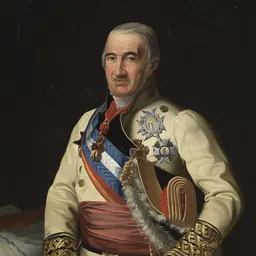
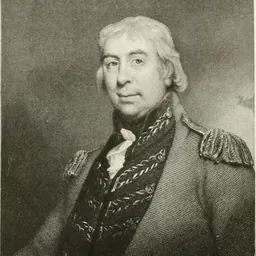

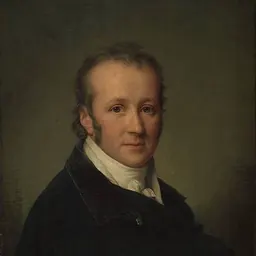
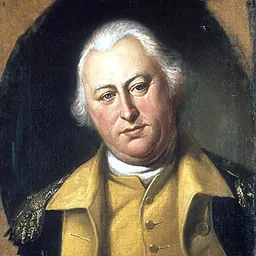
Contemporaries
People whose lives overlapped Charles Stuart's




Frequently asked questions
Who was Charles Stuart?
British Army general (1753-1801)
When was Charles Stuart born?
Charles Stuart was born in 1753 in Kenwood House.
When did Charles Stuart die?
Charles Stuart died on 25 May 1801 in London.
What was Charles Stuart's occupation?
Charles Stuart was a military officer, politician and soldier.
What nationality was Charles Stuart?
Charles Stuart was British.
Sources & further reading
· DBpedia: Charles Stuart (British Army officer, born 1753)
Cite this page
APA: Biography.guide. (2026). Charles Stuart. https://biography.guide/charles-stuart-military-officer/
MLA: "Charles Stuart." Biography.guide, https://biography.guide/charles-stuart-military-officer/.
Chicago: "Charles Stuart." Biography.guide. https://biography.guide/charles-stuart-military-officer/.
Data last updated: 2026-09-20 · Spot an error? Report a correction.
Page generated 2026-09-27 05:23 UTC