
About Thomas Bott
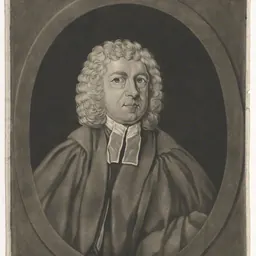
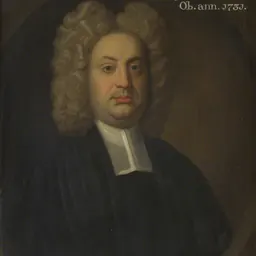
Lived 1688 – 1754 (aged 66). Thomas Bott was an English and British cleric.
Thomas Bott (1688–1754) was an English cleric of the Church of England, known as a controversialist.
Life Born at Derby, Bott was the son of a mercer; his grandfather had been a major in the parliamentary army. He was trained for the dissenting ministry. He was a Presbyterian minister at Spalding; but then, after some experience of preaching, he went to London to study medicine. He obtained the rectory of Whinburgh in Norfolk, through Lord Macclesfield's interest. The CCEd database makes Bott rector from 1729, the year in which Longe died. He held Spixworth, with the neighbouring parish of Crostwick, for the rest of his life. In 1747 Rebecca Harbord presented him to the living of Edgefield, Norfolk, in gratitude for his hindering an unacceptable marriage in the family.
Bott's health broke in 1750, and he died 23 September 1751 at Norwich. He was a Whig in politics, a follower of Benjamin Hoadly, and a friend of Samuel Clarke. In 1724 he published a discourse to prove that "peace and happiness in this world" was "the immediate design of Christianity"; and a defence of this work followed in 1730. In 1725 he attacked William Wollaston's personal way of deducing morality from truth, in an anonymous work The principal and peculiar notion advanc'd in a late book, intitled, The religion of nature delineated; consider'd and refuted; he is considered, however, to have misinterpreted Wollaston, as an anonymous opponent pointed out. In 1730 he published a sermon, Morality founded in the Reason of Things, and the Ground of Revelation.
In 1738 Bott preached a sermon, on 30 January (anniversary of the execution of Charles I), on the duty of doing as we would be done by. He observed by the way that if both parties had fulfilled this duty, Charles would not have lost his head. In the same year he attacked Joseph Butler's Analogy, as the pseudonymous Philanthropus, in Remarks upon Dr. Butler's sixth chapter of the Analogy of Religion. The criticism has been taken as from an "extreme libertarian" stance, but not of any substance.
In 1743 Bott published his major work, An Answer to the Rev. Mr. Warburton's Divine Legation. He criticised William Warburton's Divine Legation of Moses, for making morality dependent on the command of a superior being. and 'author of a valuable Work on the Poor Laws'.
Don’t just read it —
keep it.
Full-length biographies made to live with: read them, listen on the way to work, watch them tonight.
- E-book
- Audio
- Video
Instant download · yours to keep · every purchase keeps this site free
Important facts
People in Thomas Bott's life
Named in this biography and alive at the same time


Related people
Same field, nearest in time


Contemporaries
People whose lives overlapped Thomas Bott's



Frequently asked questions
Who was Thomas Bott?
Church of England clergyman
When was Thomas Bott born?
Thomas Bott was born on 17 January 1688.
When did Thomas Bott die?
Thomas Bott died on 17 January 1754.
What was Thomas Bott's occupation?
Thomas Bott was a cleric.
What nationality was Thomas Bott?
Thomas Bott was English and British.
Sources & further reading
Cite this page
APA: Biography.guide. (2026). Thomas Bott. https://biography.guide/thomas-bott/
MLA: "Thomas Bott." Biography.guide, https://biography.guide/thomas-bott/.
Chicago: "Thomas Bott." Biography.guide. https://biography.guide/thomas-bott/.
Data last updated: 2026-09-20 · Spot an error? Report a correction.
Page generated 2026-09-27 05:08 UTC