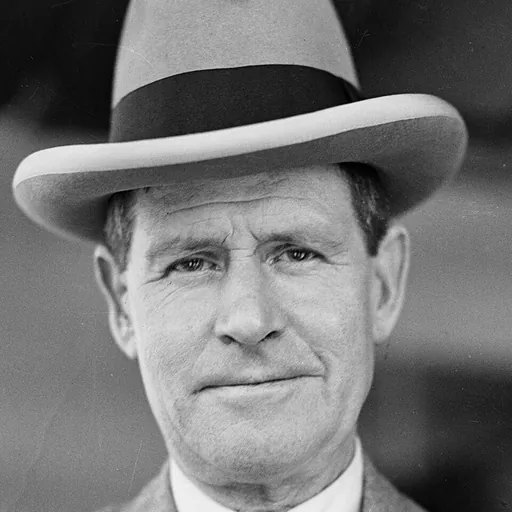
About Thomas Bavin
Lived 1874 – 1941 (aged 67). Thomas Bavin was an Australian and New Zealand politician.
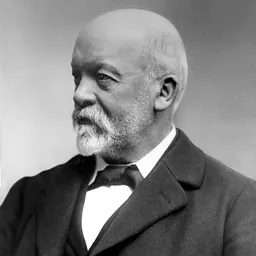
Sir Thomas Rainsford Bavin, (5 May 1874 – 31 August 1941) was an Australian lawyer and politician who served as Premier of New South Wales from 1927 to 1930. He was born in New Zealand and arrived in Australia at the age of 15, where he studied law and became a barrister. He served as personal secretary to Australia's first two prime ministers, Edmund Barton and Alfred Deakin. Bavin was elected to the New South Wales Legislative Assembly in 1917. He served two terms as Attorney General of New South Wales (1921, 1922–1925) before leading the Nationalist Party to victory at the 1927 state election, in a coalition with the Country Party. His predecessor Jack Lang and the Australian Labor Party (ALP) defeated his government after a single term at the 1930 state election.
Early years Born in Kaiapoi, New Zealand to a Methodist minister and his wife, Bavin was educated at Auckland Grammar School until 1889 when his family moved to Sydney and Bavin enrolled at Newington College (1889–1890). His siblings were: Edna (Mrs Charles Lack); Jessie (Mrs Ambrose Fletcher); Gertrude (Mrs William Parker); Major Cyril Bavin OBE; Horace Bavin; Florence Bavin (Mrs Ernest Warren); Lancelot Bavin; and Dora Bavin (Mrs Leslie Allen). At the University of Sydney he came into conflict with his parents by renouncing Methodism (he later converted to Anglicanism), and graduated with a BA in 1894 and LL.B. in 1897, winning the University Medal in the process.
Legal career and early political involvement
Called to the New South Wales Bar in 1897, Bavin became involved in the cause of Australian Federation, unsuccessfully standing for the Legislative Assembly seat of Canterbury on a pro-Federation platform in 1898. After lecturing in law at the University of Tasmania in 1900 where he was acting professor of law, Bavin returned to Sydney to marry Edyth Winchcombe, the daughter of Frederick Winchcombe, a member of the New South Wales Legislative Assembly and Council, on 6 February 1901. In 1901, after a chance encounter at an Albury railway station, Barton appointed him as his private secretary in place of Atlee Hunt, who had received a promotion. Bavin found Barton easily distracted and unable or willing to deal with routine administrative matters, later recalling that "having done his greatest work Barton was no longer very interested in the result". When Barton resigned to become a judge on the High Court, Bavin became his associate but also continued on as private secretary to Barton's successor Alfred Deakin. In 1913, he inquired into food supplies and prices and went to sea on the trawlers to investigate pricing of fish in detail. He recommended an anti-monopoly bureau that could investigate prices and recommend prosecutions. Bavin was elected as an alderman to Willoughby Municipal Council in 1910.
Following his election, Bavin rapidly rose through the parliamentary ranks, becoming deputy leader of the Nationalists in October 1920 and serving as Attorney-General and Minister for Justice in 1921 and Attorney-General of New South Wales from 1922 to 1925. After the Nationalist loss at the 1925 election, Bavin was elected party leader, and therefore Leader of the Opposition.
Premier of New South Wales
Following an agreement by the Nationalist and Country parties not to stand candidates against each other, the coalition won the 1927 election and Bavin became Premier and Treasurer on 18 October 1927.
During his term as Premier, Bavin introduced the Income Tax (Management) Act (1928), under which the incomes of husband and wife were combined, and a progressive tax system was introduced, angering many of his conservative supporters. In reaction to Labor Party calls to abolish the Legislative Council, Bavin pushed through legislation requiring a referendum to do so.
Bavin was plagued by ill-health throughout his Premiership, meaning that he was absent him from Cabinet during crucial times, especially in the wake of the Great Depression after 1929. Faced with a growing number of strikes, Bavin turned to non-unionised labour, which led to violent confrontations between striking workers and police, notably the Rothbury riot in December 1929.
Later life Following the Nationalists' loss in the 1930 election, Bavin continued to lead the party until 1932, when he joined the newly created United Australia Party. Appointed KCMG in 1933, Bavin retired from politics in 1935 to serve as a Justice of the New South Wales Supreme Court. Bavin also returned to writing, authoring a number of books, including Thomas Rainsford Bavin: Extracts from his Speeches from 1923 until 1932 (1933), and Sir Henry Parkes: His Life and Work (1941).
Bavin died of cancer in the Sydney suburb of Bellevue Hill, survived by his wife, son and three daughters.
Honours Bavin was appointed KCMG in 1933.
Namesakes In 2021 Bavin house at Newington College was named after him.
Don’t just read it —
keep it.
Full-length biographies made to live with: read them, listen on the way to work, watch them tonight.
- E-book
- Audio
- Video
Instant download · yours to keep · every purchase keeps this site free
Important facts
People in Thomas Bavin's life
Named in this biography and alive at the same time




Related people
Same field, nearest in time




Contemporaries
People whose lives overlapped Thomas Bavin's

Frequently asked questions
Who was Thomas Bavin?
New South Wales politician and Premier of New South Wales (1874–1941)
When was Thomas Bavin born?
Thomas Bavin was born on 5 May 1874 in Kaiapoi.
When did Thomas Bavin die?
Thomas Bavin died on 31 August 1941 in Bellevue Hill.
What was Thomas Bavin's occupation?
Thomas Bavin was a politician.
What nationality was Thomas Bavin?
Thomas Bavin was Australian and New Zealand.
Sources & further reading
Cite this page
APA: Biography.guide. (2026). Thomas Bavin. https://biography.guide/thomas-bavin/
MLA: "Thomas Bavin." Biography.guide, https://biography.guide/thomas-bavin/.
Chicago: "Thomas Bavin." Biography.guide. https://biography.guide/thomas-bavin/.
Data last updated: 2026-09-22 · Spot an error? Report a correction.
Portrait: Wikimedia Commons · author & licence
Page generated 2026-09-27 05:01 UTC