About Thomas Bampfield
Lived 1623 – 1693 (aged 69–70). Thomas Bampfield was an English politician and lawyer.
Thomas Bampfield ( 1623 – 8 October 1693) was a lawyer from Devon. A supporter of Parliament during the Wars of the Three Kingdoms, he sat as MP for Exeter between 1654 and 1660. For a short period in 1659, he was Speaker of the House of Commons in the Third Protectorate Parliament.After the 1660 Stuart Restoration, he retired from active politics in 1661.
A devout Presbyterian who was converted to Sabbatarianism by his older brother Francis Bampfield, he published a number of religious works before this death in October 1693.
Personal details Thomas Bampfield was the eighth son of John Bampfield of Poltimore and his wife Elizabeth. Like most of the Devon landed gentry, he and his brothers supported Parliament during the 1638 to 1651 Wars of the Three Kingdoms, although there is no record of his military service.
His elder brother Sir John Bampfylde, MP for Penryn until his death in 1650, was one of those excluded by Pride's Purge in December 1648. Another, Francis Bampfield (1615-1683), was a member of the Seventh Day Baptists, who spent nine years in prison for his religious convictions.
Career Bampfield attended Exeter College, Oxford, followed by legal training at Middle Temple in 1642, although the First English Civil War meant he did not qualify as a lawyer until 1649. In 1654, he was appointed Recorder of Exeter; combined with his Presbyterianism, holding this important legal position led to his election as Member of Parliament for Exeter in the First Protectorate Parliament. It is not clear whether he attended; like many others, he refused to accept Oliver Cromwell's insistence all MPs 'recognise' constitutional limits set out in the Instrument of Government.
In 1656, he was re-elected to the Second Protectorate Parliament, and chaired the Parliamentary committee that tried the Quaker activist James Nayler. He was also a prominent opponent of the 1657 Militia Bill, which sought to enshrine the much hated Rule of the Major Generals. In the Third Protectorate Parliament, he acted as Speaker from 14 April 1659 until it was dissolved on 22 April; he supported the re-seating of MPs excluded in Pride's Purge, and sat in the Convention Parliament that invited Charles II to resume the throne.
Following the May 1660 Stuart Restoration, he helped draft a petition recommending clemency for the republicans John Lambert and Sir Henry Vane, as well as urging Charles to "marry a Protestant'. His opposition to the restoration of Episcopacy in the Church of England, and support for Puritan regulations prohibiting drunkenness and profanity, were out of step with the public mood. He lost his position as Recorder in October 1660, and did not stand again for election as an MP.
His brother Francis, a former Royalist and Prebendary of Exeter Cathedral, became an advocate of Sabbatarianism. Bampfield opposed the Act of Uniformity 1662, which evicted priests who refused to subscribe to the Thirty-nine Articles. They included his brother Francis, a former Royalist and Prebendary of Exeter Cathedral, who had become an advocate of Sabbatarianism, and converted Thomas. Francis spent the next nine years in prison, where he established a community of Seventh Day Baptists.
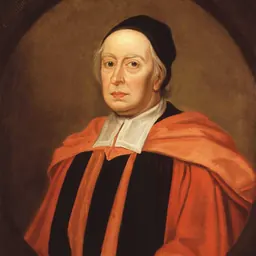
As a Nonconformist, Thomas was removed as a JP in 1665. He regained some of his former positions in 1688, when the Catholic James II was trying to win support for his policies from minority religious groups, then relinquished them after the Glorious Revolution. In retirement, he published several works on Sabbatarianism, which were reviewed by mathematician and theologian John Wallis, as well as Baptist minister Isaac Marlow. He died on 8 October 1693, and was buried at St Stephen's Church, Exeter.
Published works
"An Enquiry Whether the Lord Jesus Christ made the World, and be Jehovah, and gave the Moral Law? And Whether the Fourth Command be Repealed or Altered?" "A reply to Doctor Wallis"
Don’t just read it —
keep it.
Full-length biographies made to live with: read them, listen on the way to work, watch them tonight.
- E-book
- Audio
- Video
Instant download · yours to keep · every purchase keeps this site free
Important facts
Family & relationships
People in Thomas Bampfield's life
Named in this biography and alive at the same time



Related people
Same field, nearest in time

Contemporaries
People whose lives overlapped Thomas Bampfield's






Frequently asked questions
Who was Thomas Bampfield?
English politician
When was Thomas Bampfield born?
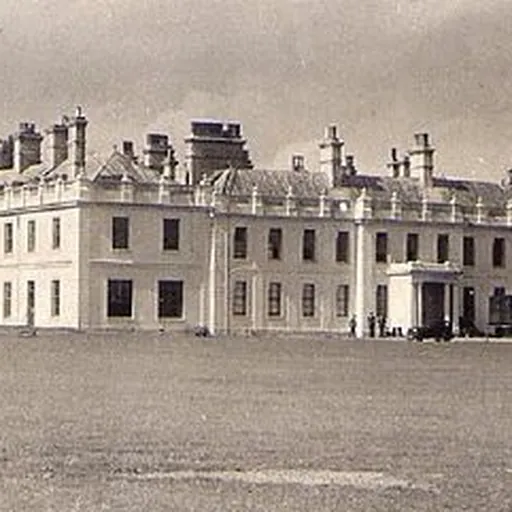
Thomas Bampfield was born in 1623 in Poltimore House.
When did Thomas Bampfield die?
Thomas Bampfield died on 8 October 1693 in Exeter.
What was Thomas Bampfield's occupation?
Thomas Bampfield was a politician and lawyer.
What nationality was Thomas Bampfield?
Thomas Bampfield was English.
Sources & further reading
Cite this page
APA: Biography.guide. (2026). Thomas Bampfield. https://biography.guide/thomas-bampfield/
MLA: "Thomas Bampfield." Biography.guide, https://biography.guide/thomas-bampfield/.
Chicago: "Thomas Bampfield." Biography.guide. https://biography.guide/thomas-bampfield/.
Data last updated: 2026-09-22 · Spot an error? Report a correction.
Portrait: Wikimedia Commons · author & licence
Page generated 2026-09-27 05:02 UTC