
About John Lambert
Lived 1619 – 1684 (aged 64). John Lambert was a British and English politician.
Major-General John Lambert (7 September 1619 – 1 March 1684) was an English army officer and politician. Widely regarded as one of the most talented commanders of the era, he fought on the Parliamentarian side throughout the Wars of the Three Kingdoms, and was largely responsible for the English victory in the Anglo-Scottish war of 1650–1652.
Although Lambert was involved in the discussions between the New Model Army and Parliament during 1647, his first formal involvement in civilian politics was in 1653, when he became a member of the English Council of State. In December 1653, he helped prepare the "Instrument of Government", which became the constitutional framework for the Protectorate. He later fell out with Oliver Cromwell, largely because he opposed converting Cromwell's role as Lord Protector into a kingship.
Lambert lost his offices in 1657 after refusing to swear an oath of loyalty to Cromwell, but in early 1659, following Cromwell's death in September 1658, he re-entered politics as Member of Parliament for Pontefract. When Richard Cromwell, his late father's successor, resigned in May, Lambert became a member of the Committee of Safety and successfully suppressed the Royalist Booth's Uprising. He was then sent to deal with George Monck, commander of the army in Scotland, but Lambert's army disintegrated and he was imprisoned in the Tower of London on 3 March 1660.
Lambert escaped a month later, on 9 April, He was kept imprisoned in the Tower of London and then transferred to Castle Cornet on the island Guernsey.
Restoration On the Restoration Lambert was exempted from prosecution by an address of both Houses of the Convention Parliament to the king, but the Cavalier Parliament in 1662 charged him with high treason. In April 1662 General Lambert was, with Sir Henry Vane, brought to England and tried in June 1662. On 25 July a warrant was issued to Lord Hatton, the governor of Guernsey, to take into his custody "the person of John Lambert, commonly called Colonel Lambert, and keep him a close prisoner as a condemned traitor until further orders". On 18 November following, directions were given from the king to Lord Hatton to "give such liberty and indulgence to Colonel John Lambert within the precincts of the island as will consist with the security of his person".
Later life In 1662 Lambert was imprisoned in Guernsey. In 1667 he was transferred to Drake's Island in Plymouth Sound, at the entrance to the Hamoaze, and he died there during the severe winter of 1683–84. The site of his grave is now lost but he was laid to rest at St Andrews Church in Plymouth on 28 March 1684.
Legacy
He was the author of the Instrument of Government, the first written constitution in the world codifying sovereign powers. The Instrument of Government was replaced in May 1657 by England's second, last, and extinct codified constitution, the Humble Petition and Advice.
It has been said that Lambert's nature had more in common with the royalist than with the puritan spirit. Vain and ambitious, he believed that Cromwell could not stand without him; and when Cromwell was dead, he imagined himself entitled to succeed him. As a soldier he was far more than a fighting general and possessed many of the qualities of a great general. He was an able writer and speaker, and an accomplished negotiator and took pleasure in quiet and domestic pursuits. He learnt his love of gardening from Lord Fairfax, who was also his master in the art of war. He painted flowers, besides cultivating them, and was accused by Lucy Hutchinson of "dressing his flowers in his garden and working at the needle with his wife and his maids".
Don’t just read it —
keep it.
Full-length biographies made to live with: read them, listen on the way to work, watch them tonight.
- E-book
- Audio
- Video
Instant download · yours to keep · every purchase keeps this site free
Important facts
People in John Lambert's life
Named in this biography and alive at the same time

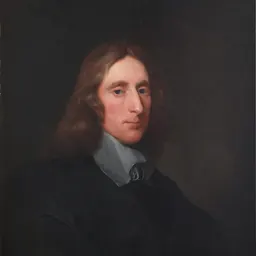
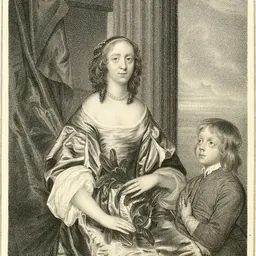
Related people
Same field, nearest in time
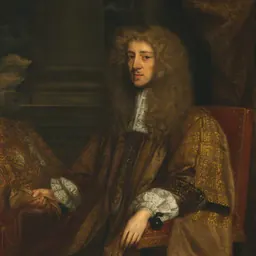
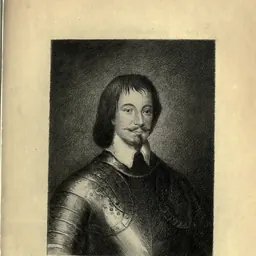

Contemporaries
People whose lives overlapped John Lambert's






Frequently asked questions
Who was John Lambert?
English Parliamentary general and politician (1619-1683)
When was John Lambert born?
John Lambert was born on 7 September 1619 in Kirkby Malham.
When did John Lambert die?
John Lambert died on 1 March 1684 in Plymouth Sound.
What was John Lambert's occupation?
John Lambert was a politician.
What nationality was John Lambert?
John Lambert was British and English.
Sources & further reading
· DBpedia: John Lambert (general)
Cite this page
APA: Biography.guide. (2026). John Lambert. https://biography.guide/john-lambert-politician/
MLA: "John Lambert." Biography.guide, https://biography.guide/john-lambert-politician/.
Chicago: "John Lambert." Biography.guide. https://biography.guide/john-lambert-politician/.
Data last updated: 2026-09-25 · Spot an error? Report a correction.
Page generated 2026-09-27 05:10 UTC