
About Therese Burgmüller
Lived 1771 – 1858 (aged 87). Therese Burgmüller was a singer, pianist, music journalist and canoness.
Anna Therese Friederike von Zandt zu Reichartshausen (18 June 1771 – 26 December 1858) was a German pianist and singer. She was the mother of the composers Friedrich Burgmüller and Norbert Burgmüller.
Life
Born in Düsseldorf, Zandt was the youngest daughter of the married couple
Johann Gerhard Franz Freiherr von Zandt (18 November 1740 in Mannheim – 18 March 1807 in Düsseldorf-Karlstadt), last Major General of the Cavalry, and Maria Sophia Reichsfreiin von Lindenfels (8 September 1745 in Schloss Wolframshof near Kastl – 28 November 1802 in Düsseldorf).
Her mother was accepted in 1795 into the Order of the Starry Cross; She initially continued to live in Düsseldorf, where she was mentioned as a singer in a concert on 11 January 1792, staged by Ferretti, in which she performed two bavura arias and two further vocal performances.
From 1792 to 1794, she was a pupil and lover of her husband-to-be Friedrich August Burgmüller. When her parents discovered the relationship, they banned him. Afterwards, she probably lived in Leipzig, temporarily also in Vienna. She met Burgmüller again on 25 August 1804 in Regensburg. On 13 May 1805, they were married, and in 1807 the couple moved to Düsseldorf.
She was a sought-after piano teacher for pupils from "the first families of the city", according to Wolfgang Müller von Königswinter. From 1838 she advocated the publication of compositions left by her son Norbert and sold some to Friedrich Hofmeister Musikverlag in Leipzig. The contract was signed on 17 September 1841.
Presumed relationship with Beethoven The Beethoven scholar Klaus Martin Kopitz put forward the thesis that Zandt worked from 1798 for the Leipzig paper Allgemeine musikalische Zeitung, edited by Friedrich Rochlitz, and that she was the author of those articles signed "Z...".
Beethoven could have meant Zandt, who according to Kopitz also wrote the address on the letter that Beethoven sent to Friedrich Rochlitz on 4 January 1804. In it, he informed him that he did not want to set a libretto sent by Rochlitz, but had just begun to set the Fidelio libretto to music. It's Beethoven's only known letter to Rochlitz.
A letter by Beethoven to the painter Joseph Willibrord Mähler, probably in December 1803, might also refer to Zandt:
Honour In honour of Zandt, a was opened at Stift Asbeck in June 2018, where her family is also honoured.
Don’t just read it —
keep it.
Full-length biographies made to live with: read them, listen on the way to work, watch them tonight.
- E-book
- Audio
- Video
Instant download · yours to keep · every purchase keeps this site free
Important facts
People in Therese Burgmüller's life
Named in this biography and alive at the same time
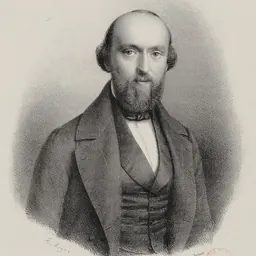
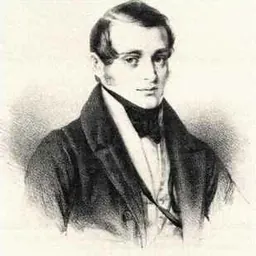


Related people
Same field, nearest in time
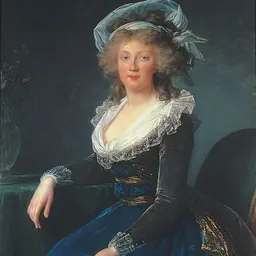
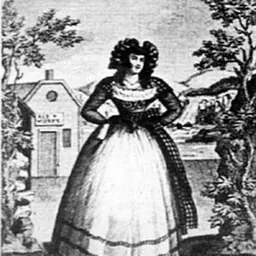

Contemporaries
People whose lives overlapped Therese Burgmüller's




Frequently asked questions
Who was Therese Burgmüller?
German pianist and singer (1771-1858)
When was Therese Burgmüller born?
Therese Burgmüller was born on 18 June 1771 in Düsseldorf.
When did Therese Burgmüller die?
Therese Burgmüller died on 26 December 1858 in Düsseldorf.
What was Therese Burgmüller's occupation?
Therese Burgmüller was a singer, pianist, music journalist and canoness.
Sources & further reading
· Wikipedia: Therese Burgmüller
Cite this page
APA: Biography.guide. (2026). Therese Burgmüller. https://biography.guide/therese-burgmuller/
MLA: "Therese Burgmüller." Biography.guide, https://biography.guide/therese-burgmuller/.
Chicago: "Therese Burgmüller." Biography.guide. https://biography.guide/therese-burgmuller/.
Data last updated: 2026-09-20 · Spot an error? Report a correction.
Page generated 2026-09-27 05:23 UTC