
About Friedrich Burgmüller
Lived 1806 – 1874 (aged 67). Friedrich Burgmüller was a German and French composer and pianist.
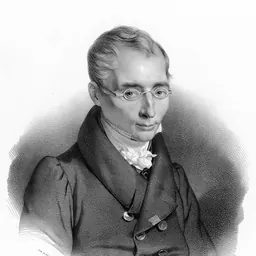
Johann Friedrich Franz Burgmüller, generally known as Friedrich Burgmuller (4 December 1806 – 13 February 1874) was a German pianist and composer during the Romantic period. He is perhaps best known for his three collections of children's etudes (or "teaching pieces") for the piano, particularly his Op. 100 "25 Études faciles et progressives" (25 Easy and Progressive Studies) for early intermediate students. The other two collections, for more advanced students, were Op. 105 and 109.
Life Friedrich Burgmüller was born in Ratisbon (at that time part of the Principality of Regensburg, Confederation of the Rhine). His father Friedrich August Burgmüller and his younger brother Norbert Burgmüller were also composers. His mother was pianist and singer Therese von Zandt.
He moved to Kassel in 1829 to study with Ludwig Spohr and Moritz Hauptmann. There he appeared as a pianist for his first concert, January 14, 1830.
Burgmüller moved to Paris in 1832 (at age 26), where he stayed until his death. Norbert Burgmüller, his brother, made plans to join him in Paris, in 1835. However, he drowned in a spa in Aachen during an epileptic seizure a year later. In Paris, Burgmüller adopted Parisian music and developed his trademark (light) style of playing. He wrote many pieces of salon music for the piano and published several albums. Burgmüller also went on to compose piano études intended for children. He died in Paris on February 13, 1874.
Works Burgmüller composed piano pieces, waltzes, nocturnes, polonaises and two ballets. His Peasant Pas de Deux was added to Adolphe Adam's ballet Giselle for its 1841 premiere. This music was originally titled Souvenirs de Ratisbonne.
Ballets La Péri Lady Harriet
With opus numbers 6 Mélodies gracieuses de Bellini, Op. 26 Souvenir de Bellini, Op. 27 Souvenir de Schönbrunn, Op. 32 La Cachucha, Op. 36 Murmures du Rhone, Op. 66 Corbeille de roses, Op. 68 Fleurs mélodiques, Op. 82 Fantaisie brillante sur "Ernani" de Verdi, Op. 92 Blaue Äuglein, Op. 93 Les Étincelles, Op. 97 25 Études faciles et progressives, Op. 100 12 Études, Op. 105 18 Études, Op. 109
Without opus numbers L'Ange consolateur Ay Chiquita 3 Nocturnes, for cello and guitar Le Pardon de Ploërmel La Péri Souvenirs de Londres Ballade
Don’t just read it —
keep it.
Full-length biographies made to live with: read them, listen on the way to work, watch them tonight.
- E-book
- Audio
- Video
Instant download · yours to keep · every purchase keeps this site free
Important facts
People in Friedrich Burgmüller's life
Named in this biography and alive at the same time
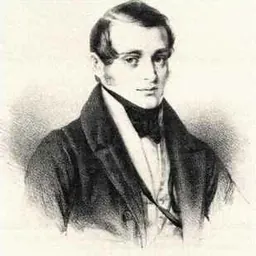
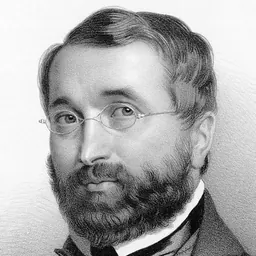



Related people
Same field, nearest in time
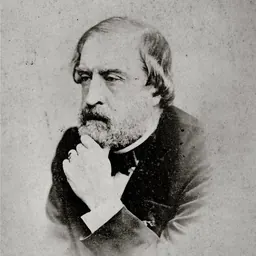
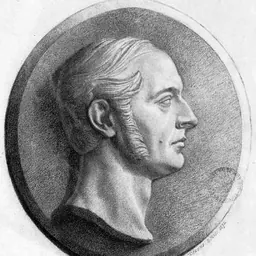

Contemporaries
People whose lives overlapped Friedrich Burgmüller's





Frequently asked questions
Who was Friedrich Burgmüller?
German composer (1806–1874)
When was Friedrich Burgmüller born?
Friedrich Burgmüller was born on 4 December 1806 in Regensburg.
When did Friedrich Burgmüller die?
Friedrich Burgmüller died on 13 February 1874 in Fontainebleau.
What was Friedrich Burgmüller's occupation?
Friedrich Burgmüller was a composer and pianist.
What nationality was Friedrich Burgmüller?
Friedrich Burgmüller was German and French.
Sources & further reading
· Wikipedia: Friedrich Burgmüller
· DBpedia: Friedrich Burgmüller
Cite this page
APA: Biography.guide. (2026). Friedrich Burgmüller. https://biography.guide/friedrich-burgmuller/
MLA: "Friedrich Burgmüller." Biography.guide, https://biography.guide/friedrich-burgmuller/.
Chicago: "Friedrich Burgmüller." Biography.guide. https://biography.guide/friedrich-burgmuller/.
Data last updated: 2026-09-27 · Spot an error? Report a correction.
Page generated 2026-09-27 05:17 UTC