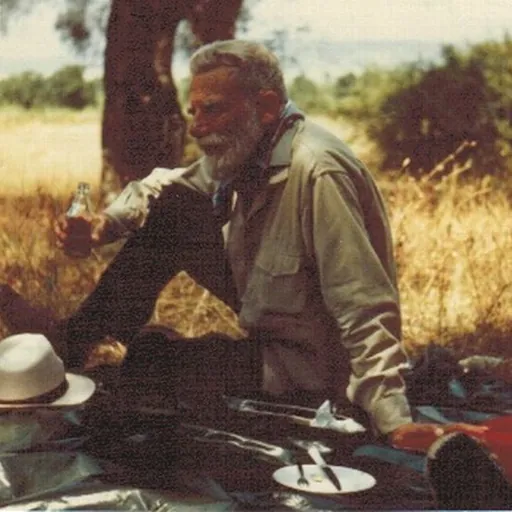
Theodoros Stephanides
Greek-British poet, author, doctor, scientist and naturalist
About Theodoros Stephanides
Lived 1896 – 1983 (aged 87). Theodoros Stephanides was a Greek and British writer, translator, physician, poet, radiologist and botanist.
Theodore Philip Stephanides (Greek: Θεόδωρος Φίλιππος Στεφανίδης; 21 January 1896 – 13 April 1983) was a Greek-British doctor and polymath, best remembered as the friend and mentor of Gerald Durrell. He was also known as a naturalist, biologist, astronomer, poet, writer and translator.
Stephanides' autobiographical account of the Battle of Crete, Climax in Crete (1946), is still cited by military historians and his 1948 A Survey of the Freshwater Biology of Corfu and of Certain Other Regions of Greece is a definitive biological treatise on the freshwater life in Corfu.
He was portrayed in a number of books, including My Family and Other Animals by Gerald Durrell, Prospero's Cell by Lawrence Durrell, The Colossus of Maroussi by Henry Miller as well as in several movies and TV productions, and has four biological species named after him.
Childhood in Bombay and Corfu Theodore Philip Stephanides was born on 21 January 1896 in Bombay, British India (present-day India), to Philip (Philippos) Stephanides, a native of Thessaly, Ottoman Empire, and Caterina Ralli, of Greek descent, born and educated in London. Stephanides' father worked for a company that belonged to Ralli Brothers, a British family of Greek origin, while Stephanides' mother was part of that family.
In 1907, as Stephanides' father retired, the family moved first to Marseilles, France, and shortly afterwards to Rallis' estate in Corfu. It was only then that Stephanides began to learn Greek, at the age of 11.
World War I and the Greco-Turkish War (1919–1922) Stephanides served as a gunner in the Greek army on the Macedonian front in 1917–1918. Following that, he participated in the Greco-Turkish War of 1919–1922. the prime-minister of Greece in 1910–1920, who was in conflict with Constantine I.
1920s: study of medicine in Paris, translation of poetry After his demobilization, Stephanides moved to France, where he studied medicine at the University of Paris (specialization of radiology) between 1922 and 1928, one of his professors being Marie Curie. In 1929, he defended his Ph.D. thesis on microscopy techniques, at the same university.
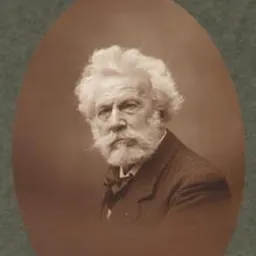
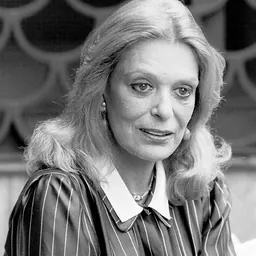
While in Paris, Stephanides also practiced astronomy and was highly regarded by Camille Flammarion, a French astronomer. For this research, he was made member of the French Astronomical Society in February 1915. and other modern Greek poets. They met during World War I and would become lifelong friends and collaborators. Alexia was a close friend of Gerald Durrell in Corfu, and Stephanides hoped that the two would marry one day, but the outbreak of World War II ruined these plans. Alexia went on to marry Spyros Mercouris (1926–2018), the brother of Greek actress Melina Mercouri. They had two children, Pyrrhus and Alexander Mercouris.
Stephanides grew interested in freshwater biology in the 1930s. In 1936, following instructions from the Greek government, he started to work on his scientific magnum opus, a treatise on the freshwater biology of Corfu, which would be published in 1948. He quickly developed a close friendship with two of the Durrell brothers, Lawrence and Gerald, who would remain his lifelong friends.
The two Durrell brothers would feature Stephanides in their memoirs of the time they spent in Corfu: Gerald in his Corfu trilogy (which includes the bestseller My Family and Other Animals, first published in 1956), and Lawrence in Prospero's Cell (first edition: 1945). Stephanides, too, would write memoirs on that period, which consist mostly of reminiscences about Lawrence Durrell and his then-wife, Nancy. Fragments from them were published by the Deus Loci journal in the 1970s and 1980s, while the full version appeared in 2011 under the title Corfu Memoirs in the collection of Stephanides' works Autumn Gleanings.
At the outbreak of World War II, Stephanides had to leave Corfu again and would only return there on rare occasions. In May 1941, Stephanides was in Crete with the Allied forces during the German invasion. During the last stage of their long and exhausting march, he and another medical officer took charge of a group of about one hundred walking wounded, and they had to walk in open under the protection of the Red Cross flag, without any weapons or even steel helmets. Eventually, they succeeded in reaching the embarkation beach and were evacuated by H.M.A.S. Perth to Alexandria.
In 1946, Stephanides published Climax in Crete, an eyewitness account of the Battle of Crete. Lawrence Durrell wrote a foreword to it, where he remarked: "For clearness, accuracy, and unselfconsciousness [this account] is quite fit to rank beside the compilations of any modern Purchas... It evokes the atmosphere of Greece and Crete during the German attack with a fidelity I have not seen elsewhere equalled; and to those who were there it will no doubt come as a refreshment after the scrappy sensational prose works of the professional journalists." Lawrence's brother, Gerald Durrell, mentioned that Climax in Crete was "one of the best war books written". Climax in Crete is quoted extensively by English military historian Antony Beevor in his book Crete: The Battle and the Resistance.
Stephanides' parents were killed in Corfu during the 1943 German bombing of the island, while his wife Mary and daughter Alexia had moved to England in 1939 and stayed safe until the end of the war, living with the Durrells in Bournemouth for some time. Neither of these three memoirs have seen print yet, although plans exist to publish Macedonian Medley; 1917–1918.
In 1945–1961, Stephanides worked as an Assistant Radiologist at St. Thomas' Hospital, Lambeth district of London. Both Stephanides and Durrell appeared in the film. or Lawrence's Prospero's Cell, Pope Joan and The Greek Islands.
After he published two collections of his own poems entitled The Golden Face (1965) and The Cities of the Mind (1969), Stephanides was highly praised as a poet. Only about half of his translations have been published so far. with Gerald Durrell as the "subject". This proved to be the last time Stephanides and Durrell saw each other.
Stephanides died peacefully in his sleep on 13 April 1983 in the Kilburn district of London.
Legacy Building in Corfu town (22 Mantzarou Street), where Stephanides had his laboratory and consulting rooms in the 1930s. Memorial plaque to Stephanides in Corfu town on 22 Mantzarou Street. Stephanides has four biological species named after him: Cytherois stephanidesi, Thermocyclops stephanidesi, Schizopera stephanidesi and Arctodiaptomus stephanidesi, which are microscopic freshwater crustaceans discovered by various researchers in the 1930s.
Félix Chemla Lamèch, a French meteorologist and selenographer, proposed naming the lunar crater Römer A after Stephanides, but this proposal was not accepted by the IAU.
Lawrence Durrell dedicated The Greek Islands (1978) and Gerald Durrell Birds, Beasts and Relatives (1969) and The Amateur Naturalist (1982) to Stephanides during his lifetime, the latter reading:
This book is for Theo (Dr Theodore Stephanides), my mentor and friend, without whose guidance I would have achieved nothing.
On 25 May 2011, a plaque in honor of Stephanides was unveiled in Corfu town on the building where he had his laboratory and consulting rooms in the 1930s (22 Mantzarou Street). The text is in Greek and English, the English text reading:
Theodore Stephanides, 1896–1983, doctor, scientist, writer, mentor of Lawrence and Gerald Durrell, practised here.
Selected bibliography Poems (original work by Kostis Palamas in Greek, translation to English, co-author George Katsimbalis (Hazell, Watson and Viney, 1925) Modern Greek Poems (selection and translation from Greek into English, co-author George Katsimbalis) (1926) Climax in Crete (an account of the Battle of Crete) (Faber and Faber, 1946) The Microscope and the Practical Principles of Observation (Faber and Faber, 1947) A Survey of the Freshwater Biology of Corfu and of Certain Other Regions of Greece, Practika of the Hellenic Hydrobiological Institute, No. 2 (2), pp. 11–263 (1948) "The influence of the antimosquito fish, Gambusia affinis, on the natural fauna of a Corfu lakelet" (technical article), Practika of the Hellenic Hydrobiological Institute, No. 9, pp. 3–6 (1964) The Golden Face (collection of poems) (Fortune Press, London, 1965) Cities of the Mind (collection of poems) (Fortune Press, London, 1969) Three Poems (original work by Kostis Palamas in Greek, translation into English, co-author George Katsimbalis) (self-published, 1969) Worlds in a Crucible (collection of poems) (Mitre Press, 1973) Island Trails (semi-fictional account of Corfu and other Ionian Islands) (London: Macdonald, 1973) The Twelve Words of the Gipsy (original work by Kostis Palamas in Greek, translation into English, co-author George Katsimbalis) (Oasis Books, London, 1974) A Hundred Voices (original work by Kostis Palamas in Greek, translation to English, co-author George Katsimbalis) (self-published, 1976) Karaghiozis and the Enchanted Tree: A Modern Greek Shadow-Play Comedy (Greek Gazette, 1979) The King's Flute (original work by Kostis Palamas in Greek, translation to English, co-author George Katsimbalis) (Kostis Palamas Institute, 1982) Erotocritos (original work by Vitsentzos Kornaros, translated from Greek to English) (Papazissis, 1984) Kostis Palamas: A Portrait and an Appreciation. Including Iambs and Anapaests and Ascraeus (partly original work by Kostis Palamas in Greek, translation into English, co-authors Theophanis G. Stavrou, Constantine A. Trypanis, George Katsimbalis) (Nostos Books, 1985) Autumn Gleanings: Corfu Memoirs and Poems (original texts apparently written in the 1970s; edited by Richard Pine, Lindsay Parker, James Gifford and Anthony Hirst) (Durrell School of Corfu & International Lawrence Durrell Society, 2011) Sweet-Voiced Sappho: Some of the Extant Poems of Sappho of Lesbos and Other Ancient Greek Poems (translated by Theodore Stephanides, edited by Anthony Hirst) (Colenso Books, London, 2015) To Chryso Prosopeio – The Golden Face (Colenso Books, London, 2019) Karaghiozis: Three Modern Greek Shadow-Play Comedies (translated by Theodore Stephanides) (Colenso Books, London, 2020)
Portrayals In the BBC 10-episode TV series My Family and Other Animals (1987), Stephanides is played by Christopher Godwin. In the ITV (Television Network) drama series The Durrells (2016–2019), Stephanides is played by Yorgos Karamihos.
Don’t just read it —
keep it.
Full-length biographies made to live with: read them, listen on the way to work, watch them tonight.
- E-book
- Audio
- Video
Instant download · yours to keep · every purchase keeps this site free
Important facts
People in Theodoros Stephanides's life
Named in this biography and alive at the same time



Related people
Same field, nearest in time





Contemporaries
People whose lives overlapped Theodoros Stephanides's



Frequently asked questions
Who was Theodoros Stephanides?
Greek-British poet, author, doctor, scientist and naturalist
When was Theodoros Stephanides born?
Theodoros Stephanides was born on 21 January 1896 in Mumbai.
When did Theodoros Stephanides die?
Theodoros Stephanides died on 13 April 1983 in Kilburn.
What was Theodoros Stephanides's occupation?
Theodoros Stephanides was a writer, translator, physician, poet, radiologist and botanist.
What nationality was Theodoros Stephanides?
Theodoros Stephanides was Greek and British.
Sources & further reading
· Wikipedia: Theodoros Stephanides
· DBpedia: Theodore Stephanides
Cite this page
APA: Biography.guide. (2026). Theodoros Stephanides. https://biography.guide/theodoros-stephanides/
MLA: "Theodoros Stephanides." Biography.guide, https://biography.guide/theodoros-stephanides/.
Chicago: "Theodoros Stephanides." Biography.guide. https://biography.guide/theodoros-stephanides/.
Data last updated: 2026-09-21 · Spot an error? Report a correction.
Portrait: Wikimedia Commons · author & licence
Page generated 2026-09-27 04:59 UTC