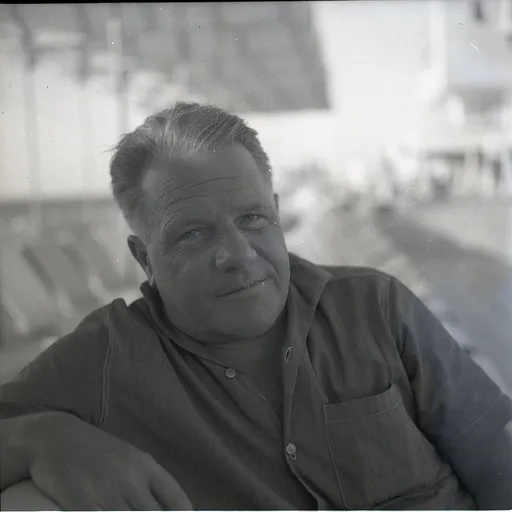
Lawrence Durrell
British novelist, poet, dramatist, and travel writer
About Lawrence Durrell
Lived 1912 – 1990 (aged 78). Lawrence Durrell was a British poet, playwright, autobiographer, writer, screenwriter and novelist.
Lawrence George Durrell (; 27 February 1912 – 7 November 1990) was an expatriate British novelist, poet, dramatist, and travel writer. He was the eldest brother of naturalist and writer Gerald Durrell.
Born in India to British colonial parents, he was sent to England at the age of 11 for his education. He did not like formal education, and started writing poetry at the age of 15. His first book was published in 1935, when he was 23 years old. In March 1935 he and his mother and younger siblings moved to the island of Corfu. Durrell spent many years thereafter living around the world.
His most famous work is The Alexandria Quartet, published between 1957 and 1960. The best-known novel in the series is the first, Justine. Beginning in 1974, Durrell published The Avignon Quintet, using many of the same techniques. The first of these novels, Monsieur, or the Prince of Darkness, won the James Tait Black Memorial Prize in 1974. The middle novel, Constance, or Solitary Practices, was nominated for the 1982 Booker Prize. Durrell supported his writing by working for many years in the Foreign Service of the British government. His sojourns in various places during and after World War II (such as his time in Alexandria, Egypt) inspired much of his work. He married four times, and had a daughter with each of his first two wives.
In the 20th century, Durrell was a bestseller and one of England's most celebrated writers.
Early years in India and schooling in England Durrell was born in Jalandhar, British India, the eldest son of Indian-born British colonials Louisa (who was Anglo-Irish) and Lawrence Samuel Durrell, an engineer of English ancestry. Durrell had a short spell working for an estate agent in Leytonstone (East London).
Adult life and prose writings First marriage and Durrell's move to Corfu On 22 January 1935, Durrell married art student Nancy Isobel Myers (1912–1983), with whom he briefly ran a photographic studio in London. It was the first of his four marriages. Durrell was always unhappy in England, and in March of that year he persuaded his new wife, and his mother and younger siblings, to move to the Greek island of Corfu. There they could live more economically and escape both the English weather, and what Durrell considered the stultifying English culture, which he described as "the English death".
That same year Durrell's first novel, Pied Piper of Lovers, was published by Cassell. Around this time he chanced upon a copy of Henry Miller's 1934 novel Tropic of Cancer. while his 1938 novel The Black Book abounded with "four-letter words... grotesques... [and] its mood equally as apocalyptic" as Tropic.
Pre WW2: In Paris with Miller and Nin In August 1937, Lawrence and Nancy travelled to the Villa Seurat in Paris, France, to meet Henry Miller and Anaïs Nin. Together with Alfred Perles, Nin, Miller, and Durrell "began a collaboration aimed at founding their own literary movement. Their projects included The Shame of the Morning and the Booster, a country club house organ that the Villa Seurat group appropriated "for their own artistic ... ends." They also started the Villa Seurat Series in order to publish Durrell's Black Book, Miller's Max and the White Phagocytes, and Nin's Winter of Artifice. Jack Kahane of the Obelisk Press served as publisher.
Durrell said that he had three literary uncles: T. S. Eliot, the Greek poet George Seferis, and Miller. He first read Miller after finding a copy of Tropic of Cancer that had been left behind in a public lavatory. He said the book shook him "from stem to stern".
Durrell's first novel of note, The Black Book: An Agon, was strongly influenced by Miller; it was published in Paris in 1938. The mildly pornographic work was not published in Great Britain until 1973. In the story, the main character Lawrence Lucifer struggles to escape the spiritual sterility of dying England and finds Greece to be a warm and fertile environment.
World War Two Breakdown of marriage At the outbreak of World War Two in 1939, Durrell's mother and siblings returned to England, while Nancy and he remained on Corfu. In 1940, they had a daughter, Penelope Berengaria. After the fall of Greece, Lawrence and Nancy escaped from Kalamata, where they had been teaching, via Crete to Alexandria, Egypt. The marriage was already under strain and they separated in 1942. Nancy took the baby Penelope with her to Jerusalem.
During his years on Corfu, Durrell had made notes for a book about the island. He did not write it fully until he was in Egypt towards the end of the war. In the book Prospero's Cell, Durrell described Corfu as "this brilliant little speck of an island in the Ionian". with waters "like the heartbeat of the world itself".
Press attaché in Egypt and Rhodes; second marriage During World War Two, Durrell served as a press attaché to the British embassies, first in Cairo and then Alexandria. While in Alexandria he met Eve (Yvette) Cohen (1918–2004), a Jewish Alexandrian. She inspired his character Justine in The Alexandria Quartet. In 1947, after his divorce from Nancy was completed, Durrell married Eve Cohen, with whom he had been living since 1942. The couple's daughter, Sappho Jane, was born in Oxfordshire in 1951, and named after the ancient Greek poet Sappho. He returned to London with Eve in the summer of 1948, around the time that Marshal Tito of Yugoslavia broke ties with Stalin's Cominform. Durrell was posted by the British Council to Belgrade, Yugoslavia, and served there until 1952. This sojourn gave him material for his novel White Eagles over Serbia (1957), a book quite unlike his usual style, a cold war adventure story more like the work of John Buchan and le Carré.
In 1952, Eve had a nervous breakdown and was hospitalised in England. Durrell moved to Cyprus with their daughter Sappho Jane, buying a house and taking a position teaching English literature at the Pancyprian Gymnasium to support his writing. He next worked in public relations for the British government during the local agitation for union with Greece. His British government position led to his becoming a target for assassination attempts at this time of political agitation. In 1962, however, he did receive serious consideration, along with Robert Graves, Jean Anouilh, and Karen Blixen, but ultimately lost to John Steinbeck. The academy decided that "Durrell was not to be given preference this year"—probably because "they did not think that The Alexandria Quartet was enough, so they decided to keep him under observation for the future." However, he was never nominated again. The production company had also proposed a film of Justine which would eventually appear in 1969.
Durrell settled in Sommières, a small village in Languedoc, France, where he purchased a large house on the edge of the village. The house was situated in extensive grounds surrounded by a wall. Here he wrote The Revolt of Aphrodite, comprising Tunc (1968) and Nunquam (1970). He also completed The Avignon Quintet, published from 1974 to 1985, which used many of the same motifs and styles found in his metafictional Alexandria Quartet. Although the related works are frequently described as a quintet, Durrell referred to it as a "quincunx".
The opening novel, Monsieur, or the Prince of Darkness, received the 1974 James Tait Black Memorial Prize. That year, Durrell was living in the United States and serving as the Andrew Mellon Visiting professor of humanities at the California Institute of Technology. The middle novel of the quincunx, Constance, or Solitary Practices (1981), which portrays France in the 1940s under the German occupation, was nominated for the Booker Prize in 1982.
Other works from this period are Sicilian Carousel, a non-fiction celebration of that island, The Greek Islands, and Caesar's Vast Ghost, which is set in and chiefly about the region of Provence, France.
Later years, literary influences, attitudes and reputation A longtime smoker, Durrell suffered from emphysema for many years. He died of a stroke at his house in Sommières in November 1990, and was buried in the churchyard of the Chapelle St-Julien de Montredon in Sommières.
He was predeceased by his younger daughter, Sappho Jane, who took her own life in 1985 at the age of 33. After Durrell's death, it emerged that Sappho's diaries included allusions to an alleged incestuous relationship with her father. In 1950, the year before his daughter was born, Durrell wrote Sappho: a play in verse, about the ancient poet, in which there is an accusation of incest between Sappho and her father; it is revealed to be a falsehood.
Durrell's government service and his attitudes Durrell worked for several years in the service of the Foreign Office. He was senior press officer to the British embassies in Athens and Cairo, press attaché in Alexandria and Belgrade, and director of the British Institutes in Kalamata, Greece, and Córdoba, Argentina. He was also director of Public Relations in the Dodecanese Islands and on Cyprus. He later refused an honour as a Knight Commander of the Order of St. Michael and St. George, because he felt his "conservative, reactionary and right-wing" political views might be a cause for embarrassment. although not nearly so much as he disliked Yugoslavia.
Durrell's poetry Durrell's poetry has been overshadowed by his novels, but Peter Porter, in his introduction to a Selected Poems, calls Durrell "One of the best [poets] of the past hundred years. And one of the most enjoyable." Porter describes Durrell's poetry: "Always beautiful as sound and syntax. Its innovation lies in its refusal to be more high-minded than the things it records, together with its handling of the whole lexicon of language."
British citizenship For much of his life, Durrell resisted being identified solely as British, or as only affiliated with Britain. He preferred to be considered cosmopolitan. Since his death, there have been claims that Durrell never had British citizenship, but he was originally classified as a British citizen as he was born to British colonial parents living in India under the British Raj.
In 1966 Durrell and many other former and present British residents became classified as non-patrial, as a result of an amendment to the Commonwealth Immigrants Act. The law was covertly intended to reduce migration from India, Pakistan, and the West Indies, but Durrell was also penalized by it and refused citizenship. He had not been told that he needed to "register as a British citizen in 1962 under the Commonwealth Immigrants Act 1962". Constance: or, Solitary Practices (1982) Sebastian: or, Ruling Passions (1983) Quinx: or, The Ripper's Tale (1985) Judith (2012, written 1962-c. 1966)
Play Sappho: a play in verse (1950)
Travel Prospero's Cell: A guide to the landscape and manners of the island of Corcyra [Corfu] (1945; republished 2000) Reflections on a Marine Venus (1953) Bitter Lemons (1957; republished as Bitter Lemons of Cyprus 2001) Blue Thirst (1975) Sicilian Carousel (1977) The Greek Islands (1978) Caesar's Vast Ghost: Aspects of Provence (1990)
Poetry Quaint Fragments: Poems Written between the Ages of Sixteen and Nineteen (1931) Ten Poems (1932) Transition: Poems (1934) A Private Country (1943) Cities, Plains and People (1946) On Seeming to Presume (1948) The Tree of Idleness and Other Poems (1955) Collected Poems (1960) The Poetry of Lawrence Durrell (1962) Selected Poems: 1935–1963. Edited by Alan Ross (1964) The Ikons (1966) The Suchness of the Old Boy (1972) Collected Poems: 1931–1974. Edited by James A. Brigham (1980) Selected Poems of Lawrence Durrell. Edited by Peter Porter (2006)
Drama Bromo Bombastes, under the pseudonym Gaffer Peeslake (1933) Sappho: A Play in Verse (1950) An Irish Faustus: A Morality in Nine Scenes (1963) Acte (1964)
Humour Esprit de Corps, Sketches from Diplomatic Life (1957) Stiff Upper Lip, Life Among the Diplomats (1958) Sauve Qui Peut (1966) Antrobus Complete (1985), brings together the three preceding volumes plus the previously uncollected sketch "Smoke, the embassy cat" (1978); omits "A smircher besmirched", which appeared in the U.S. but not the British edition of Stiff Upper Lip
Letters and essays A Key to Modern British Poetry (1952) Art & Outrage: A Correspondence About Henry Miller Between Alfred Perles and Lawrence Durrell (1959) Lawrence Durrell and Henry Miller: A Private Correspondence (1963), edited by George Wickes Spirit of Place: Letters and Essays on Travel (1969), edited by Alan G. Thomas Literary Lifelines: The Richard Aldington—Lawrence Durrell Correspondence (1981), edited by Ian S. MacNiven and Harry T. Moore A Smile in the Mind's Eye (1980) "Letters to T. S. Eliot" (1987), Twentieth Century Literature Vol. 33, No. 3 pp. 348–358. The Durrell-Miller Letters: 1935–80 (1988), edited by Ian S. MacNiven Letters to Jean Fanchette (1988), edited by Jean Fanchette From the Elephant's Back: Collected Essays & Travel Writings (2015), edited by James Gifford
Editing and translating Six Poems From the Greek of Sikelianós and Seféris (1946), translated by Durrell The King of Asine and Other Poems (1948), by George Seferis and translated by Durrell, Bernard Spencer, and Nanos Valaoritis The Curious History of Pope Joan (1954; revised 1960), originally "The Papess Joanne" by Emmanuel Roídes and translated by Durrell The Best of Henry Miller (1960), edited by Durrell New Poems 1963: A P.E.N. Anthology of Contemporary Poetry (1963), edited by Durrell Wordsworth; Selected by Lawrence Durrell (1973), edited by Durrell
Don’t just read it —
keep it.
Full-length biographies made to live with: read them, listen on the way to work, watch them tonight.
- E-book
- Audio
- Video
Instant download · yours to keep · every purchase keeps this site free
Important facts
People in Lawrence Durrell's life
Named in this biography and alive at the same time




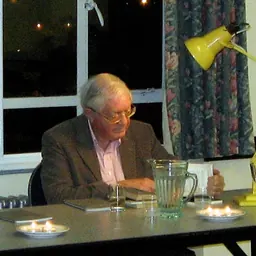


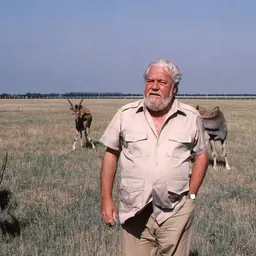
Related people
Same field, nearest in time


Contemporaries
People whose lives overlapped Lawrence Durrell's





Frequently asked questions
Who was Lawrence Durrell?
British novelist, poet, dramatist, and travel writer (1912–1990)
When was Lawrence Durrell born?
Lawrence Durrell was born on 27 February 1912 in Jalandhar.
When did Lawrence Durrell die?
Lawrence Durrell died on 7 November 1990 in Sommières.
What was Lawrence Durrell's occupation?
Lawrence Durrell was a poet, playwright, autobiographer, writer, screenwriter and novelist.
What nationality was Lawrence Durrell?
Lawrence Durrell was British.
Sources & further reading
Cite this page
APA: Biography.guide. (2026). Lawrence Durrell. https://biography.guide/lawrence-durrell/
MLA: "Lawrence Durrell." Biography.guide, https://biography.guide/lawrence-durrell/.
Chicago: "Lawrence Durrell." Biography.guide. https://biography.guide/lawrence-durrell/.
Data last updated: 2026-09-21 · Spot an error? Report a correction.
Portrait: Wikimedia Commons · author & licence
Page generated 2026-09-27 04:59 UTC