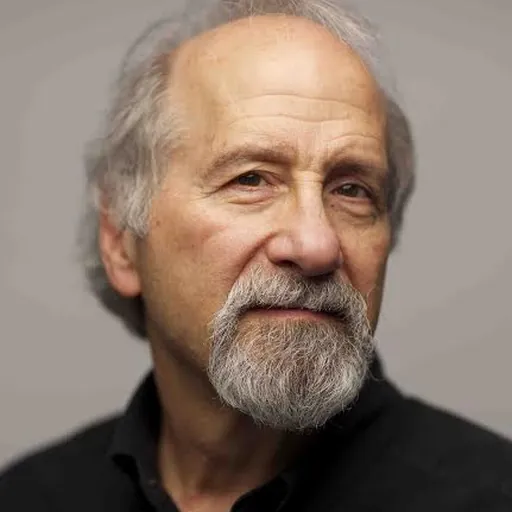
Theodore Wells Pietsch III
American zoologist, ichthyologist
About Theodore Wells Pietsch III
Born 1945. Theodore Wells Pietsch III is an American zoologist, ichthyologist, researcher, historian of science and biologist.
Theodore Wells Pietsch III (born March 6, 1945) is an American systematist, evolutionary biologist, and historian of science best known for his research on anglerfishes. He is professor emeritus in the School of Aquatic and Fishery Sciences and curator emeritus of fishes at the Burke Museum of Natural History and Culture at the University of Washington in Seattle.
Pietsch has described 72 species and 14 genera of fishes and has authored or edited more than 20 books and over 270 scientific and popular articles on the relationships, evolutionary history, and functional morphology of teleosts, particularly deep sea taxa. For this body of work, Pietsch was awarded the Robert H. Gibbs Jr. Memorial Award in Systematic Ichthyology by the American Society of Ichthyologists and Herpetologists in 2005. His zoological author abbreviation is Pietsch.
Early life and education Pietsch was born in Royal Oak, Michigan, the son of automobile designer Theodore Wells Pietsch II and grandson of Baltimore architect Theodore Wells Pietsch I. He attended John Adams High School in South Bend, Indiana. As a youth in the Midwest, he raised zebrafish and earthworms to sell to local aquarium and bait shops, which he later credited with leading him toward the biological sciences.
Pietsch earned a Bachelor of Science in zoology from the University of Michigan in 1967, where he initially studied herpetology under Arnold G. Kluge. On Kluge's advice, he pursued graduate study in ichthyology at the University of Southern California, earning a M.S. in biology in 1969 and a Ph.D. in 1973.
Career After completing his doctorate, Pietsch was a postdoctoral fellow at the Museum of Comparative Zoology at Harvard University from 1973 to 1975, where he worked with Karel F. Liem. He then joined the Department of Biology at California State University, Long Beach, as an assistant professor, teaching there from 1975 to 1978.
In 1989, with Douglas F. Markle of Oregon State University, Pietsch founded the Gilbert Ichthyological Society, a regional society for Pacific Northwest ichthyologists named for well-known ichthyologist Charles Henry Gilbert (1859–1928). He served as president of the American Society of Ichthyologists and Herpetologists in 1996–1997 and hosted the society's annual meeting at the University of Washington in June 1997. In this reproductive strategy, a tiny dwarf male permanently attaches to and fuses with a much larger female. Pietsch's morphological and phylogenetic analyses showed that this mode of reproduction evolved independently as many as five times within Ceratioidei. In 2020, he co-authored a study with Thomas Boehm and colleagues showing that ceratioid anglerfishes have lost major elements of the adaptive immune system, allowing male and female tissues to fuse without rejection.
In 2009, Pietsch, Rachel J. Arnold, and David J. Hall described the Psychedelic Frogfish, Histiophryne psychedelica, from waters off Ambon, Indonesia. The species is notable for its swirling, fingerprint-like pigment pattern and hopping locomotion. In 2018, Pietsch served as a scientific commentator on the first recorded observation of a live fanfin seadevil pair, Caulophryne jordani, filmed by the Rebikoff-Niggeler Foundation near the Azores.
International Kuril Island Project From 1994 to 2000, Pietsch led the International Kuril Island Project, a National Science Foundation-funded biotic survey and inventory of the Kuril Islands conducted with the Russian Academy of Sciences and Hokkaido University. Over seven summer expeditions, international teams surveyed the flora and fauna of all 30 major islands in the archipelago, sampling more than 6,580 sites and collecting over 335,000 specimens. 2015, 2018, and 2023. The work on the fifth and final volume has been completed and accepted for publication.
In 2010, he published The Curious Death of Peter Artedi: A Mystery in the History of Science, a novelized reconstruction of the 1735 drowning of Swedish ichthyologist Peter Artedi in an Amsterdam canal. The book was based on primary archival research into Artedi's relationship with Carl Linnaeus. A Swedish translation, Hur dog Peter Artedi?, was published in 2023.
With William D. Anderson Jr., Pietsch co-authored Ichthyopedia: A Biographical Dictionary of Ichthyologists, published by the American Philosophical Society in 2022. The work contains about 1,500 biographical sketches of deceased ichthyologists from antiquity to the twenty-first century.
Awards and recognition Pietsch received the Robert H. Gibbs Jr. Memorial Award in Systematic Ichthyology from the American Society of Ichthyologists and Herpetologists in 2005 for his body of systematic work on fishes. He received the ASIH Meritorious Teaching Award in Ichthyology in 2017, the Robert K. Johnson Award for Excellence in Service in 2018, and the Joseph S. Nelson Lifetime Achievement Award in Ichthyology in 2024. In 2022, the Society for the History of Natural History awarded him its Founders' Medal for his contributions to the history of natural history.
Pietsch is a fellow of the California Academy of Sciences, the Linnean Society of London, the American Association for the Advancement of Science, and the University of Washington Teaching Academy. He is also an honorary member of the Ichthyological Society of Japan, and the Russian Hydrobiological Society of the Russian Academy of Sciences.
Selected bibliography 1985. The manuscript materials for the Histoire Naturelle des Poissons, 1828−1849: Sources for understanding the fishes described by Cuvier and Valenciennes. Arch. Nat. Hist., 12(1): 59−108. 1987. Frogfishes of the World: Systematics, Zoogeography, and Behavioral Ecology. Stanford University Press, Stanford, California, xxii + 420 pp. (with David B. Grobecker). 1995. Historical Portrait of the Progress of Ichthyology, from Its Origins to Our Own Time. Edited and annotated by T. W. Pietsch, translated from the French by A. J. Simpson. Johns Hopkins University Press, Baltimore, xxiv + 366 pp., 67 figures. 1995. Fishes, Crayfishes, and Crabs: Louis Renard and His Natural History of the Rarest Curiosities of the Seas of the Indies. Johns Hopkins University Press, Baltimore, Vol. 1, Commentary, xxii + 214 pp., 95 figures; Vol. 2, Facsimile, 224 pp., 100 color pls. 1997. Collection Building in Ichthyology and Herpetology. Amer. Soc. Ichthy. Herp., Spec. Publ., 3, xiii + 593 pp. (with W. D. Anderson, Jr.). 2006. Les Planches inédites de Poissons et autres Animaux marins de l'Indo-Ouest Pacifique d'Isaac Johannes Lamotius [Isaac Johannes Lamotius (1646−c. 1718) and His Paintings of Indo-Pacific Fishes and Other Marine Animals]. Christian Érard (editor), Publications Scientifiques du Muséum and Bibliothèque Centrale, Muséum National d'Histoire Naturelle, Paris, 292 pp., 93 color pls. (with L. B. Holthuis). 2008. A Mermaid in the Tub: A Specimen of MvB Sirenne, a New Family of Type-Faces by Alan Greene, Inspired by Engraved Letterforms in a Rare Book. Mark van Bronkhorst and E. M. Ginger, editors, MvB Fonts, Albany, California, 36 pp. 2009. Oceanic Anglerfishes: Extraordinary Diversity in the Deep-sea. University of California Press, Berkeley and Los Angeles, xii + 557 pp. 2010. The Curious Death of Peter Artedi: A Mystery in the History of Science. Scott & Nix, New York, x + 224 pp. 2012. Trees of Life: A Visual History of Evolution. Johns Hopkins University Press, Baltimore, xi + 358 pp. 2012. Cuvier's History of the Natural Sciences: Twenty-four Lessons from Antiquity to the Renaissance [the first of Georges Cuvier's five-volume Histoire des Sciences Naturelles, depuis leur Origine jusqu'a nos Jours, originally published in French from 1841 to 1845]. Edited and annotated by T. W. Pietsch, translated from the French by A. J. Simpson. Publications Scientifiques du Muséum and Bibliothèque Centrale, Muséum national d'Histoire naturelle, Paris, 734 pp. 2015. Cuvier's History of the Natural Sciences: Nineteen Lessons from the Sixteenth and Seventeenth Centuries [the second of Georges Cuvier's five-volume Histoire des Sciences Naturelles, depuis leur Origine jusqu'a nos Jours, originally published in French from 1841 to 1845]. Edited and annotated by T. W. Pietsch, translated from the French by B. D. Marx. Publications Scientifiques du Muséum and Bibliothèque Centrale, Muséum national d'Histoire naturelle, Paris, 859 pp. 2017. Charles Plumier (1646–1704) and His Drawings of French and Caribbean Fishes, Publications Scientifiques du Muséum and Bibliothèque Centrale, Muséum national d'Histoire naturelle, Paris, 408 pp., 121 pls. 2018. Cuvier's History of the Natural Sciences: Twenty Lessons from the First Half of the Eighteenth Century [the third of Georges Cuvier's five-volume Histoire des Sciences Naturelles, depuis leur Origine jusqu'a nos Jours, originally published in French from 1841 to 1845]. Edited and annotated by T. W. Pietsch, translated from the French by Fanja Andriamialisoa. Publications Scientifiques du Muséum and Bibliothèque Centrale, Muséum national d'Histoire naturelle, Paris, 576 pp. 2019. Fishes of the Salish Sea: Puget Sound and the Straits of Georgia and Juan de Fuca, illustrated by Joseph R. Tomelleri. University of Washington Press, Seattle, 3 vols., 1,048 pp., 260 color pls. (with James W. Orr). 2020. Frogfishes: Biodiversity, Zoogeography, and Behavioral Ecology. Johns Hopkins University Press, Baltimore, Maryland, 601 pp., 346 figs. (with Rachel J. Arnold). 2020. Georges Cuvier's Historical Portrait of the Progress of Ichthyology, from Its Origins to Our Own Time. Second edition, revised and enlarged, edited and annotated by T. W. Pietsch, translated from the French by A. J. Simpson. Publications Scientifiques du Muséum, Muséum national d'Histoire naturelle, Paris, 672 pp., 149 figs. 2023. Hur dog Peter Artedi? En vetenskapshistorisk gåta ["How did Peter Artedi Die? A Scientific Historical Riddle"]. Translated from the English by Hans Aili. Ekström & Garay, Lund, Sweden, 266 pp., 19 figs. 2023. Ichthyopedia: A Biographical Dictionary of Ichthyologists. American Philosophical Society, Lightning Rod Press, Volume 10, xiv + 303 pp., 255 figs. 2023. Cuvier's History of the Natural Sciences: The Eighteenth Century. [the fourth of Georges Cuvier’s five-volume Histoire des Sciences Naturelles, depuis leur Origine jusqu'a nos Jours, originally published in French in 1843]. Edited and annotated by T. W. Pietsch, foreword by Stéphane Schmitt, translated by Fanja Andriamialisoa. Publications Scientifiques du Muséum, Muséum national d'Histoire naturelle, Paris, 622 pp., 60 figs. 2023. Field Guide to Fishes of the Salish Sea: Puget Sound and the Straits of Georgia and Juan de Fuca, illustrated by Joseph R. Tomelleri. Chatwin Books, Seattle, 347 pp., 270 color figs. (with James W. Orr). 2024. Peter Artedi: Reformer of Eighteenth-Century Zoology. Volume 1, Peter Artedi's Life and Works, With Latin Editions and English Translations of "Catalogus Piscium Maris Baltici," "Manuscriptum Ichthyologicum, quod Petrus Artedi Elaboravit in Usum Thesauri Sebani," and "Idea Institutionum Trichozoologiae." Studia Latina Stockholmiensia series, Stockholm University Press, Stockholm, Sweden, 421 pp., 24 figs. (with Hans Aili). 2025. Peter Artedi: Reformer of Eighteenth-Century Zoology. Volume 2, Peter Artedi's Ichthyologia, sive Opera Omnia Piscibus, 1738. Studia Latina Stockholmiensia series, Stockholm University Press, Stockholm, Sweden, 532 pp., 10 figs. (with Hans Aili).
Don’t just read it —
keep it.
Full-length biographies made to live with: read them, listen on the way to work, watch them tonight.
- E-book
- Audio
- Video
Instant download · yours to keep · every purchase keeps this site free
Important facts
People in Theodore Wells Pietsch III's life
Named in this biography and alive at the same time






Related people
Same field, nearest in time

Contemporaries
People whose lives overlapped Theodore Wells Pietsch III's



Frequently asked questions
Who is Theodore Wells Pietsch III?
American zoologist, ichthyologist
When was Theodore Wells Pietsch III born?
Theodore Wells Pietsch III was born on 6 March 1945.
What is Theodore Wells Pietsch III's occupation?
Theodore Wells Pietsch III is a zoologist, ichthyologist, researcher, historian of science and biologist.
What nationality is Theodore Wells Pietsch III?
Theodore Wells Pietsch III is American.
Sources & further reading
· Wikipedia: Theodore Wells Pietsch III
· DBpedia: Theodore Wells Pietsch III
Cite this page
APA: Biography.guide. (2026). Theodore Wells Pietsch III. https://biography.guide/theodore-wells-pietsch-iii/
MLA: "Theodore Wells Pietsch III." Biography.guide, https://biography.guide/theodore-wells-pietsch-iii/.
Chicago: "Theodore Wells Pietsch III." Biography.guide. https://biography.guide/theodore-wells-pietsch-iii/.
Data last updated: 2026-09-21 · Spot an error? Report a correction.
Portrait: Wikimedia Commons · author & licence
Page generated 2026-09-27 04:59 UTC