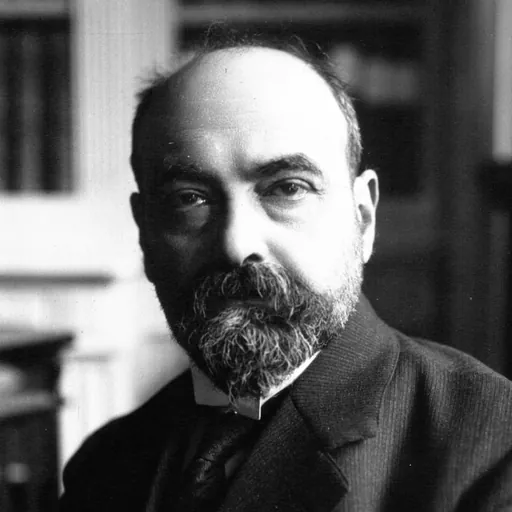
About Théodore Reinach
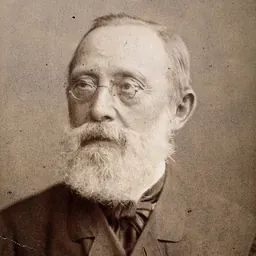
Lived 1860 – 1928 (aged 68). Théodore Reinach was a French mathematician, anthropologist, linguist, archaeologist, politician and art historian.
Théodore Reinach (, 3 July 186028 October 1928) was a French archaeologist, mathematician, lawyer, papyrologist, philologist, epigrapher, historian, numismatist, musicologist, professor, and politician.
Academic career
Educated at the Lycée Condorcet, the Ecole des Hautes Etudes, and the École des Sciences Politiques, Reinach had a brilliant career as a scholar. He practiced law in Paris from 1881 to 1886. He then devoted himself to numismatics. He became chair in ancient numismatics at the Collège de France and was a director of various journals. In 1916, he was awarded the medal of the Royal Numismatic Society and in 1917, during World War I, he worked on assignment in the United States.
He wrote important works on the ancient kingdoms of Asia Minor: (1888), (1890); (Paris), and also a critical edition and translation with Henri Weil of Pseudo-Plutarch's On Music; and an (2nd ed., 1901).
Reinach was president of the (French association of musicologists) in 1928.
Family and Villa Kerylos In 1886, Reinach married Charlotte Marie Evelyne Hirsch. They had two daughters. She died at age twenty-six in 1889. Reinach remarried in 1891 to Fanny Kann, a daughter of Maximilien Kann and Betty Ephrussi. They made their home in a chateau at La Motte-Servolex in the Savoie department in southeastern France. He was elected to the Chamber of Deputies as a member of the Bloc des gauches, serving from 1906 to 1914.
The Reinachs spent time on the French Riviera and in 1902 hired the architect Emmanuel Pontremoli to design a villa at Beaulieu-sur-Mer. Completed in 1908, the Greek Revival house was named Villa Kerylos.
Fanny died in 1917 and Théodore in 1928. He was a member of the Institut de France and on his death he bequeathed the Villa Kerylos to the Institut.
Reinach's son Léon (1893–1943) became the keeper of the archives at Villa Kerylos. In 1944, the Nazi occupiers murdered him, his wife Béatrice de Camondo, and their two children at Auschwitz.
After the War, other Reinach family members lived at the Villa until 1967. It is now a museum open to the public.
Fanny Reinach's mother was a member of the Ephrussi family, whose great-uncle Maurice was married to Béatrice de Rothschild. Inspired by the beauty of the Reinachs' Villa Kérylos and of the area, they built Villa Ephrussi de Rothschild nearby.
Don’t just read it —
keep it.
Full-length biographies made to live with: read them, listen on the way to work, watch them tonight.
- E-book
- Audio
- Video
Instant download · yours to keep · every purchase keeps this site free
Important facts
People in Théodore Reinach's life
Named in this biography and alive at the same time

Related people
Same field, nearest in time


Contemporaries
People whose lives overlapped Théodore Reinach's


Frequently asked questions
Who was Théodore Reinach?
French archaeologist (1860-1928)
When was Théodore Reinach born?
Théodore Reinach was born on 3 July 1860 in Saint-Germain-en-Laye.
When did Théodore Reinach die?
Théodore Reinach died on 28 October 1928 in 16th arrondissement of Paris.
What was Théodore Reinach's occupation?
Théodore Reinach was a mathematician, anthropologist, linguist, archaeologist, politician and art historian.
What nationality was Théodore Reinach?
Théodore Reinach was French.
Sources & further reading
Cite this page
APA: Biography.guide. (2026). Théodore Reinach. https://biography.guide/theodore-reinach/
MLA: "Théodore Reinach." Biography.guide, https://biography.guide/theodore-reinach/.
Chicago: "Théodore Reinach." Biography.guide. https://biography.guide/theodore-reinach/.
Data last updated: 2026-09-21 · Spot an error? Report a correction.
Portrait: Wikimedia Commons · author & licence
Page generated 2026-09-27 05:00 UTC