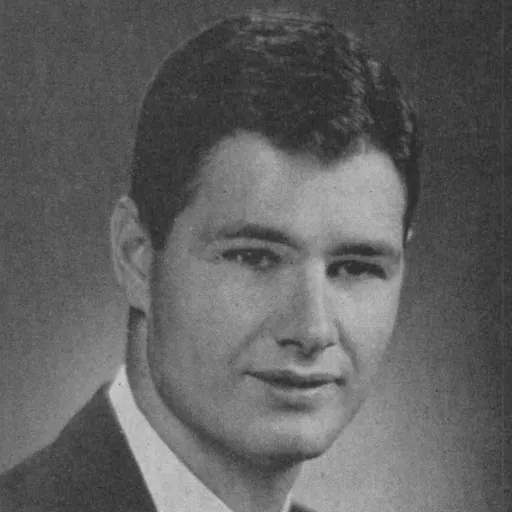
About Tex Winter
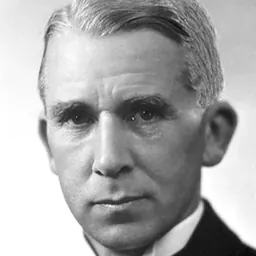
Lived 1922 – 2018 (aged 96). Tex Winter was an American basketball coach, basketball player, coach and athletics competitor.
Morice Fredrick "Tex" Winter (February 25, 1922 – October 10, 2018) was an American basketball coach and innovator of the triangle offense, an offensive system that became the dominant force in the National Basketball Association (NBA) and resulted in 11 NBA Championships with the Chicago Bulls in the 1990s and the Los Angeles Lakers in the 2000s under head coach Phil Jackson, with Winter an assistant coach to Jackson on the first nine of those championship teams; and a consultant for the 2008-09 Lakers' championship team. In 2002, after the Lakers won their third consecutive NBA championship, the team made rings for the players and coaches honoring Winter. On the front of the jewel-encrusted ring was a design with several triangles, honoring Winter’s triangle offense.
Winter was inducted into the Naismith Memorial Basketball Hall of Fame in 2011. In 2016, the NBA Coaches Association created the annually presented Tex Winter Assistant Coach Lifetime Impact Award in his honor. In 2010, he was given the Chuck Daly Lifetime Achievement Award by the NBA Coaches Association. In 1998, Winter was awarded the John Bunn Award for lifetime achievement from the Naismith Basketball Hall of Fame.
Winter was a head coach in college basketball for 30 years. He was the youngest head coach in major college basketball for a number of years, and during his 15 years coaching Kansas State University he went to the NCAA Division I men's basketball tournament Final Four twice (1958 and 1964), won eight conference titles, and had nearly a 70 percent winning percentage. In March 1958, he was voted the United Press college Coach of the Year. Winter was selected the Big Eight Coach of the Year at Kansas State three consecutive seasons (1957 to 1960), and again in his final season in the Big Eight (1967–68).
Winter has been inducted into the National Collegiate Basketball Hall of Fame (2010), Kansas State Athletics Hall of Fame (1991), USC Athletics Hall of Fame (2003), PAC-12 Hall of Honor (2003), Kansas Sports Hall of Fame (1997), and Compton Community College Athletics Hall of Fame (2012). In 2003, Kansas State fans voted him the Kansas State basketball coach of the century.
In 1947, as a college basketball player Winter received the University of Southern California's (USC) Ernie Holbrook memorial trophy for the most inspirational player on the Trojan basketball team. He was an outstanding pole vaulter at every college he attended, and prior to World War II was considered a candidate in the pole vault for the United States Olympic Team in the 1944 Olympics (which never took place).
Early life Winter was born on February 25, 1922, Winter grew up in an unpainted shack just outside of Wellington, located in the Texas panhandle, during the Dust Bowl. The Winter family moved to Lubbock, Texas in 1929. Winter's father was a mechanic. When Winter was seven or eight years old living in Lubbock, his father died from an infection after being speared by a marlin while fishing. Winter had to work while in elementary school to help feed his family, one such job being to collect boxes for a local baker in exchange for day-old bread.
In 1936, Winter moved with his mother and twin sister to Huntington Park, California. His older sister Elizabeth had already married and earlier moved to California, and encouraged them to join her there. Winter's mother worked in Huntington Park as a clothing store sales manager. Winter's older brother Ernest was a football star in high school, and remained in Texas to finish high school. Winter worked on a truck farm when he first arrived in California, bringing overripe fruit home to the family. Both Woolpert and Newell would become Hall of Fame head coaches.
College Winter attended Compton Junior College and Oregon State University (then Oregon State College), before joining the United States Navy during World War II. After completing his military service, Winter attended the University of Southern California.
After graduation from high school in 1940, Winter attended college at Compton Junior College for two years, where he became a renowned pole vaulter. He played guard in basketball and was a leading scorer at Compton.
It has been stated that Winter earned a pole-vaulting scholarship to Oregon State University (1942). It has also been stated he went to Oregon State on a basketball scholarship. At the time he transferred in 1942–43, Winter was described as being a "basketball transfer" from Compton to Oregon State, playing under basketball coach Slats Gill; and that Oregon State's track coach (Doc Grant Swan) did not realize he was going to be getting a top pole vaulter for the track and field team. Winter was on both the basketball and track and field teams at Oregon State. As a pole vaulter, Winter competed against Bob Richards, a 1948 and 1952 Olympian. Winter's brother Ernest was a Navy pilot in the China-Burma theater during World War II, and Ernest Winter became the first pilot to walk out of China after having his plane shot down (walking over 600 miles); and was a recipient of the Distinguished Flying Cross. After Winter's pilot's wings were conferred he was assigned to fighter pilot duty in the Pacific. However, his orders were rescinded after his brother's plane was shot down.
It is reported that Winter was stationed in a number of locations after he joined the Navy: Illinois, Wisconsin, Iowa, and Texas. He was reportedly first stationed at Monmouth College in Illinois, along with a number of other Oregon State varsity basketball players, in a program to become ensigns. Winter also said he was first stationed in Sanford, Florida. While stationed at NAS Ottumwa in late April 1944, Winter also competed in the Drake Relays and tied for second in the pole vault.
After the war, Winter was assigned to NAS Corpus Christi as a test pilot for an experimental jet craft. Four of the eight test pilots died.
While in the Navy, Winter's commanding officer Chuck Taylor (later famous for developing the Converse sneaker) recommended Winter as a starting guard for his Navy basketball team. Winter left the Navy with the rank of ensign in 1946. It is also stated that he was discharged from the Navy in 1945. In 1945–46, before re-entering college, Winter played Amateur Athletic Union (AAU) basketball for the Los Angeles Carroll's Shamrocks. or as stated elsewhere, Winter learned the fundamentals of Barry's system from which Winter himself would devise the triangle offense. The Naismith Hall of Fame has said the triangle offense evolved in part from Barry's center-opposite offense. Winter saw similarities between Barry's offense and the offense he had seen Loyola use when he was in high school. In April 1947, Winter was the inaugural recipient of USC's Ernie Holbrook memorial trophy for the most inspirational player on the Trojan basketball team.
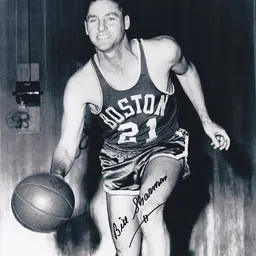
At USC, Winter was a basketball teammate of Bill Sharman, Alex Hannum, and Gene Rock, future professional basketball players. Like Winter, Sharman and Hannum would go on to be Hall of Fame coaches, though Winter, in a rarity, went in for his contributions as an assistant coach.
At USC, Winter was also on the track team, and was named an All-American as a pole vaulter.
College coaching career After graduating college in 1947, Winter immediately became interested in coaching (both in basketball and track). at Kansas State University (K-State or Kansas State), a position Winter held from 1947 to 1951. His college coach Sam Barry had urged Winter to pursue the position at Kansas State under Gardner, whom Barry had also coached. He was Gardner's assistant in 1948 and 1951 when the team went to the Final Four of the NCAA Division I men's basketball tournament. In 1953, Winter returned to Kansas State as its head coach; at 31, still the youngest major college coach. Winter served as Kansas State's head coach for the next 15 years, posting a 261–118 (.689) record, and in Winter's final season at K-State (1967–68), the team was first in the Big Eight and the Associated Press (AP) named him Big Eight Coach of the Year once again. He still owns the record for most conference titles (eight) in school history and twice led the Wildcats to the Final Four (1958 and 1964). In the 1958 NCAA tournament, Winter led third-ranked Kansas State to the Final Four by defeating Oscar Robertson and second-ranked Cincinnati in an 83–80 overtime thriller, ending Cincinnati's 16-game winning streak. Junior center Bob Boozer was one of three Wildcats to be named a first-team All-American, along with teammates Jack Parr and Roy DeWitz who were also named All-Americans. Boozer, Parr and DeWitz were all named to the Midwest-Lawrence All-Regional NCAA team that year. Earlier in the season, on February 3, 1958, then No. 4 ranked Kansas State defeated Wilt Chamberlain and the No. 2 ranked University of Kansas in double overtime, using a defensive scheme Winter devised to impede Chamberlain's offense.
K-State advanced to their fourth Final Four in 1964. Another key factor was Winter's using forward Jeff Simons to bring the ball up the court to defuse the effectiveness of Wichita State's full-court press on Kansas State's guards. Larry Weigel, a guard on that Kansas State team, said that this offensive strategy was an example of Winter's great gift as a coach for reading what was occurring in a game and making effective adjustments at halftime to improve his team's play. Two-time Big Eight selection Willie Murrell averaged 25.3 points per game during Kansas State's run to the Final Four, which ended in a 90–84 loss to eventual national champion UCLA. It was the first of UCLA's nine NCAA championships over the next 10 years. Winter also served as head coach at the University of Washington (1968 to 1971, where he was hired by then Athletic Director Joseph Kearney); Northwestern University (1973 to 1978); and Long Beach State (1979 to 1983). Winter was considering retirement at age 61 when Louisiana State University (LSU) head coach Dale Brown, whom Winter had befriended when Brown was a high school basketball coach, convinced Winter to come to LSU as an assistant coach and consultant for one season (1983–84).
In 30 years as a college head coach, Winter compiled a career record of 453–334 Winter coached Pachin Vicens in Puerto Rico in 1952, BSN's most valuable player, and Winter later coached Vicens at Marquette and Kansas State.
NBA
Winter was hired by Pete Newell as head coach of the Houston Rockets for two seasons, 1971 to 1973, posting a 51–78 record. Winter replaced his old USC teammate, Alex Hannum. Winter was fired and replaced by assistant coach Johnny Egan on January 21, 1973. The trading of Elvin Hayes to the Baltimore Bullets prior to the 1972–73 season and the Rockets' subsequent subpar performance were factors in his dismissal.
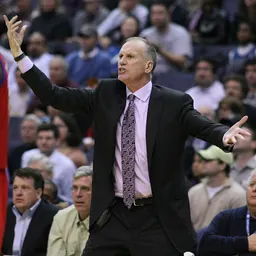
In 1985, Winter started another chapter of his life after contemplating retirement, serving as an assistant coach with the Chicago Bulls. He was hired for that position by general manager Jerry Krause, who first met Winter at Kansas State while Krause was working as a professional scout, and developed a lasting impression of Winter's exceptional basketball knowledge. Winter originally worked under Bulls' head coaches Stan Albeck (1985–86) and Doug Collins (1986 to 1989). Although Winter would later gain fame implementing the triangle offense with Michael Jordan and the Bulls, during Winter's first four years in Chicago neither Albeck nor Collins were interested in Winter's triangle offense. Winter became a mentor to Jackson. keying the triangle offense, Winter and his ball-movement offense were an integral part of the Bulls' NBA championships in 1991, 1992, 1993, 1996, 1997, and 1998. Shortly after Jackson had decided to take the Lakers' head coaching job, he had asked Winter to join him as an assistant coach. The 78-year old Winter and Jackson were very close, and Winter said during that season, "'The reason I've stayed with it is because he said he needed me, and you like to be needed . . . I would have been retired a long long time ago if not for Phil Jackson'". One Los Angeles area sportswriter (Phil Osterholt) predicted that the Lakers would become NBA champions not because of Jackson's coaching, but because of "Tex Winter's Triangle Offense". In 2002, after the Lakers won their third consecutive NBA championship, the team made rings for the players and coaches honoring Winter. On the front of the jewel-encrusted ring was a design with several triangles, honoring Winter’s triangle offense. When he retired in 2004, the 82-year old Winter had coached for 57 consecutive seasons, believed to be a record at the time. He subsequently did consulting work in the NBA, and was a consultant for the NBA champion 2008–09 Los Angeles Lakers, at the age of 87.
Legacy and honors On Winter's eighth time on the final ballot for the Naismith Basketball Hall of Fame, it was announced on April 2, 2011, that Winter had been elected. He was formally inducted on August 12, with his Boston-based physicist son Chris giving a speech in his behalf. In June 2010, he was given the Chuck Daly Lifetime Achievement Award, along with Hall of Fame coach Dr. Jack Ramsay, by the NBA Coaches Association.
Winter is a member of several other Halls of Fame, including the Kansas State Athletics Hall of Fame (1991), the Kansas Sports Hall of Fame (1997), On May 26, 2012, Winter was inducted into the Compton Community College Athletics Hall of Fame, under the category of Basketball. Winter was willing to criticize Jordan and Bryant directly if he believed they were not playing properly in executing the offense.
Jordan respected Winter because of Winter's only being satisfied if things were done correctly. Winter was in a nursing home in Oregon in early 2010 when his son Brian moved Winter and his mother Nancy to Brian's home in Manhattan (near the Kansas State campus).
Head coaching record
College
1960–61 record reflects one win by forfeit over Colorado.
NBA
Publications
Don’t just read it —
keep it.
Full-length biographies made to live with: read them, listen on the way to work, watch them tonight.
- E-book
- Audio
- Video
Instant download · yours to keep · every purchase keeps this site free
Important facts
People in Tex Winter's life
Named in this biography and alive at the same time


Related people
Same field, nearest in time



Contemporaries
People whose lives overlapped Tex Winter's


Frequently asked questions
Who was Tex Winter?
American basketball coach (1922–2018)
When was Tex Winter born?
Tex Winter was born on 25 February 1922 in Wellington.
When did Tex Winter die?
Tex Winter died on 10 October 2018 in Manhattan.
What was Tex Winter's occupation?
Tex Winter was a basketball coach, basketball player, coach and athletics competitor.
What nationality was Tex Winter?
Tex Winter was American.
Sources & further reading
Cite this page
APA: Biography.guide. (2026). Tex Winter. https://biography.guide/tex-winter/
MLA: "Tex Winter." Biography.guide, https://biography.guide/tex-winter/.
Chicago: "Tex Winter." Biography.guide. https://biography.guide/tex-winter/.
Data last updated: 2026-09-21 · Spot an error? Report a correction.
Portrait: Wikimedia Commons · author & licence
Page generated 2026-09-27 04:59 UTC