
About Terrence L. Fine
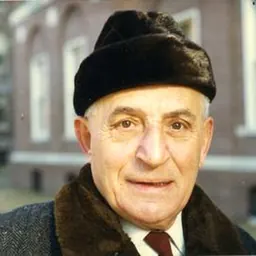
Lived 1939 – 2021 (aged 81–82). Terrence L. Fine was an American mathematician.
Terrence L. Fine (March 9, 1939 January 31, 2021) was an American scientist, engineer and philosopher. He is known especially for his contributions to the defense and development of alternatives to the classical calculus for probabilistic modeling and decision-making. Other contributions include Fine's theorem, the Fine numbers and the Fine–McMillan quantizer. He was the recipient of the first patent awarded in the area of statistical delta modulation.
Biography Fine was born in New York City on March 9, 1939. His academic degrees were from the City College of New York (B.E.E.) and from Harvard University (S.M., Ph.D.). He was awarded a Miller Research Fellowship at the University of California Berkeley for the period 1964 to 1966, after which he joined the faculty of Cornell University in Ithaca, New York, where he remained until his retirement in 2010. There he served as Professor in the Department of Electrical and Computer Engineering; concurrently, as Professor in the Department of Statistical Sciences; and from 1999 to 2004, as Director of the university's multidisciplinary Center for Applied Mathematics. He was a Professor Emeritus at Cornell. He was a Life Fellow and Third Millennium Medalist of the IEEE (Institute of Electrical and Electronics Engineers).
Selected publications Theories of Probability: An Examination of Foundations, Academic Press, 1973. A study of mathematical and interpretive alternatives to the standard framework for mathematical probability. Feedforward Neural Network Methodology, Series on Statistics for Engineering and Information Science, Springer-Verlag, 1999. Probability and Probabilistic Reasoning for Electrical Engineering, Pearson/Prentice-Hall, 2006. "An argument for comparative probability", in R. Butts, J. Hintikka, eds., Basic Problems in Methodology and Linguistics III, Univ. Western Ontario Ser. Philosophy of Science, 11, D. Reidel, Dordrecht, 105–119, 1977. "On the apparent convergence of relative frequency and its implications", IEEE Transactions on Information Theory, IT-16, 251–257, 1970. Source of Fine's Theorem. "Extrapolation when very little is known about the source", Information and Control, 16, 331–359, 1970. A non-statistical approach to extrapolation, and source of the Fine numbers.
Don’t just read it —
keep it.
Full-length biographies made to live with: read them, listen on the way to work, watch them tonight.
- E-book
- Audio
- Video
Instant download · yours to keep · every purchase keeps this site free
Important facts
Related people
Same field, nearest in time


Contemporaries
People whose lives overlapped Terrence L. Fine's





Frequently asked questions
Who was Terrence L. Fine?
American mathematician
When was Terrence L. Fine born?
Terrence L. Fine was born in 1939.
When did Terrence L. Fine die?
Terrence L. Fine died on 31 January 2021.
What was Terrence L. Fine's occupation?
Terrence L. Fine was a mathematician.
What nationality was Terrence L. Fine?
Terrence L. Fine was American.
Sources & further reading
Cite this page
APA: Biography.guide. (2026). Terrence L. Fine. https://biography.guide/terrence-l-fine/
MLA: "Terrence L. Fine." Biography.guide, https://biography.guide/terrence-l-fine/.
Chicago: "Terrence L. Fine." Biography.guide. https://biography.guide/terrence-l-fine/.
Data last updated: 2026-09-20 · Spot an error? Report a correction.
Page generated 2026-09-27 05:17 UTC