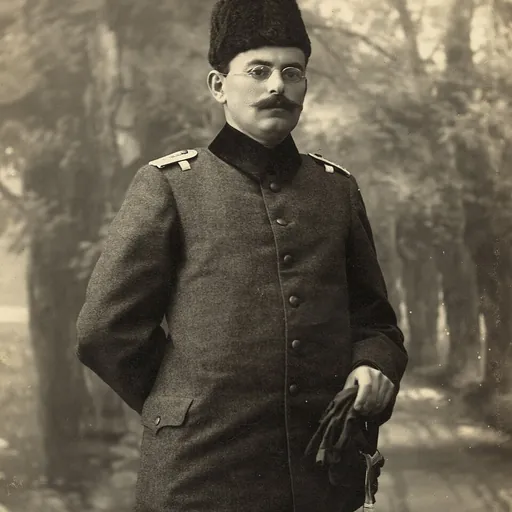
About Tawfiq Canaan
Lived 1882 – 1964 (aged 81). Tawfiq Canaan was a physician and ethnographer, known for Mandatory Palestine.
Tawfiq Canaan ( ; 24 September 1882 – 15 January 1964) was a Palestinian physician, medical researcher, ethnographer, and Palestinian nationalist. Born in Beit Jala during the rule of the Ottoman Empire, he served as a medical officer in the Ottoman army during World War I.
During British rule, he served as the first President of the Palestine Arab Medical Association founded in 1944, and as the director of several Jerusalem area hospitals before, during, and after the 1948 war. Over the course of his medical career, he authored more than thirty-seven studies on topics including tropical medicine, bacteriology, malaria, tuberculosis, and health conditions in Palestine, and contributed to research that led to a cure for leprosy.
Interested in Palestinian folklore, popular beliefs, and superstitions, Canaan collected over 1,400 amulets and talismanic objects believed to have healing and protective properties. His published analyses of these objects, and other popular folk traditions and practices, brought him recognition as an ethnographer and anthropologist. The several books and more than 50 articles he wrote in English and German serve as valuable resources to researchers of Palestinian and Arab heritage.
An outspoken public figure, he also wrote two books on the Palestine problem, reflecting his involvement in confronting British imperialism and Zionism. He was arrested by the British authorities in 1939. The last two decades of his life were lived in the shadow of several personal tragedies: the loss of his son in an accident at Jerash, the loss and destruction of his family home, and of his clinic in Jerusalem during the 1948 war.
Early life
Canaan was born in the village of Beit Jala in Palestine during the rule of the Ottoman Empire. As a child, he studied at the Schneller School, an institution founded by German missionaries in nearby Jerusalem. His father, Bechara, who was also schooled there, founded the first Lutheran church, YMCA, and co-ed school in Beit Jala and the first Arab pastor for the German Protestant Palestine Mission. His mother, Katharina, was raised in a German orphanage in Beirut and met Bechara while working at a hospital in Jerusalem.
In 1898–99, Canaan went to Beirut to study medicine at the Syrian Protestant College. Obliged to work while studying as his father died of pneumonia shortly after his arrival, he graduated with distinction in 1905.
Canaan attributed his love of, interest in, and dedication to the people, culture and land of Palestine to his upbringing and the influence of his father who regularly took the family with him on his trips around the country. In the Jerusalem Quarterly, Khaled Nashef suggests Canaan's knowledge of nature in Palestine as exhibited in writings such as "Plant-lore in Palestinian Superstition" (1928) among others were informed by these trips. He was also sought as a manager at the German-Jewish Hospital (Shaare Zedek). His first published medical article as a practicing physician, “Cerebro-Spinal Meningitis in Jerusalem" (1911), was based on studies he conducted with the director there. Margot's father was a German importer and she was born and raised in Palestine. They were quickly married, having their first child Yasma that same year, and built their family home in the al-Musrarah district of Jerusalem in 1913, where their three other children (Theo, Nada, and Leila) were born. In that home, Canaan also opened the only Arab clinic operating in Jerusalem at the time. That same year, he was appointed director of the Malaria Branch of the International Health Bureau, a world center for medical research and microscopic examination founded by The German Society for Fighting Malaria, The Jewish Health Bureau, and The Jewish Physicians and Scientists for Improving Health in Palestine. He served patients at the Arab General Hospital in the hilltop village of Sheikh Badr next to Jerusalem. Between 1924 and 1927, Heráclides César de Souza Araújo led a word-wide inquiry on leprosy, for which Canaan wrote the report about Palestine, establishing his reputation in as an expert in this pathology at the international level.
Over the course of his medical career, Canaan treated people from all classes and segments of Palestinian and Arab society. He was one of a number of physicians from Jerusalem to examine Sherif Hussein of Mecca in Amman before his death in 1931, and removed a bullet from the thigh of Abu Jildah, a notorious Palestinian rebel, in 1936. He questioned the nationality laws enacted by the Mandatory authorities which prevented Palestinian immigrants in the Americas, who had been citizens of the Ottoman Empire, from obtaining Palestinian citizenship in Mandate Palestine. Directed at influencing British public opinion, the writings were seen by the Mandatory authorities as subversive.
Though Margot's arrest was primarily because of her German ancestry, both women were politically active, having helped found the Arab Women's Committee in Jerusalem in 1934. Canaan's first book on Palestinian folklore practices was published in 1914 and entitled Superstition and Popular Medicine.
Canaan played a very active role in the Palestine Oriental Society, serving as a member of the board, as well as secretary and sometime treasurer from early in the 1920s through until 1948, though the last article he published in its journal was in 1937. Other articles Canaan published for the Journal of the Palestine Oriental Society (1920-1948) – such as, "Haunted Springs and Water Demons in Palestine" (1920–1921), "Tasit ar-Radjfeh" ("Fear Cup"; 1923), and "Plant-lore in Palestinian Superstition" (1928) – exhibit his deep interest in superstition.
Salim Tamari, director of the Institute of Jerusalem Studies, describes Canaan as the most prominent member of a school of "nativist" ethnographers who published their works in The Journal of the Palestine Oriental Society (JPOS). Their research and contributions were motivated by their belief that the "native culture of Palestine" was best represented in the traditions of the fellaheen, and that this ancient "living heritage" had to be urgently documented as the modern world encroached upon the Palestinian countryside. These Palestinian ethnographers included Omar Saleh al-Barghouti, Stephan Hanna Stephan, Elias Haddad, and Khalil Totah, and all of them (excepting Totah) were Jerusalemites, like Canaan.
Mohammedan Saints and Sanctuaries in Palestine Mohammedan Saints and Sanctuaries in Palestine (1927) is identified by Meron Benvenisti as Canaan's "most outstanding contribution to the ethnography of Arab Palestine and to the annals of his country." In the introduction to the book, Canaan makes explicit his urgent motivation to document ancient, still practiced Palestinian traditions & beliefs threatened by Western influence and the spread of European educational models: "The primitive features of Palestine are disappearing so quickly that before long most of them will be forgotten."
While local saints worshipped in Palestine can be said to be rooted in Muslim traditions, "they are actually ennobled sheikhs, who after their death, have been elevated to sainthood." Only one-tenth of the shrines surveyed in Canaan's work were dedicated to female saints, but they enjoyed relatively greater reverence compared to those of their male counterparts, with "60 per cent of the female saints enjoying a wide reputation, as compared to only 31 per cent of the male list."
Local Muslims, many of whom had never stepped into a mosque, honoured these village saints at awlia, often situated by trees or other natural landmarks, some at or nearby ancient sites of worship for the "local Baals of Canaan" given, as John Wilkinson puts it, a 'Muslim disguise'. Canaan saw these practices as evidence that the fellaheen were heirs to the practices of the earlier pre-monotheistic inhabitants of Palestine, "who built the first high places."
Archaeology & ethnography Among Canaan's acquaintances were a number of specialists in the field of Palestinian archaeology, including William Foxwell Albright, Nelson Glueck, and Kathleen Kenyon, and his interest in the history of the region naturally extended to the field of archaeology. That same year he published a five chapter article, "Studies in the Topography and Folklore of Petra", in the JPOS that included topographical maps with Arabic names for the features and sites that he collected from the local Bedouin population, along with oral histories associated with them. He also devoted a chapter to an ethnographic study of the Lijatne tribe, and politely dispelled their erroneous identification as "Simeonites or other Beni-Israel" by non-Arabic speaking authors, due to their sidelocks, noting it just happened to be a recent fashion among them at the time. He kept detailed records of his acquisitions and their applications, collecting many of these objects while working treating patients in Palestinian villages between 1913 and 1920, often purchasing them, but sometimes in lieu of payment or as gifts. Hebron glass beads in the shape of eyes of various sizes were given names including rooster eye, baby camel eye and camel eye.
The sacred status of trees in Palestinian folk traditions accounts for the many twigs and sprigs in Canaan's collection. The branch of the mes-tree (celtis australis) that grows within the Haram al-Sharif compound in Jerusalem, for example, was placed in a necklace or on the head. The branch is said to have a special effect if harvested on Laylat al-Qadr (27 Ramadan), which in Islamic belief is the night the Quran was revealed. It also consists of: Tatreez patterns including the hujub amulet pattern (the diamond shape with two inverted triangles on either side) on a dress for a woman from Beit Dajan. An illustrative example of the widespread use of amulet symbolism in the costumes of the people of Palestine Amulets or talismans written on paper, often including prayers and supplications, and placed in triangular cloth, leather wraps, cylindrical silver cases (Arabic: khiyara or hijab) and hujub which were worn, sometimes as jewelry, or hung in homes for protection. Pilgrims' certificates bearing religious symbols of the three Semitic religions, in stamp or written form which were given to pilgrims who visited holy sites in Jerusalem and Hebron. Silver votive offerings, most of which are from Aleppo, Syria, and shaped in the form of the human body or its parts. These were hung in churches and on religious icons to heal illnesses and protect the health of children. Vessels, often copper or bronze, such as "fear cups" inscribed with Quranic verses and supplications, in which water was placed to be left under the light of the moon and stars for several nights before being given to an afflicted person to drink. Other ceramic dishes inscribed with talismans for curing diseases and facilitating childbirth.
As the situation in Palestinian cities and villages became increasingly insecure, the Society trained and organized relief units and centers to provide medical aid to civilians and the Palestinian and Arab militants fighting to defend them. Contacting and coordinating with the Red Cross to protect hospitals and other humanitarian institutions, the Society also made appeals to medical associations to send help, and limited medical aid was sent by some in the Arab world. Canaan was also a founding member of the Higher Arab Relief Committee, established on 24 January 1948, to receive aid coming to the country and supervise its distribution. Canaan's family home, his clinic, library, and three manuscripts ready for publication were all either destroyed or looted. Fortunately, his collection of amulets and icons survived, as it had already been entrusted to an international organization in the western part of Jerusalem earlier that same year for safekeeping. He spent his last days there with his surviving family, continuing his research and writing in the field of ethnography. "Crime in the Traditions and Customs of the Arabs in Jordan" was the last article he composed, and was published in German in in 1964, probably posthumously, as he died on 15 January 1964. His grave is in the Evangelical Lutheran Cemetery in Bethlehem, which is directly adjacent to the village of his birth, Beit Jala. Alt:
Don’t just read it —
keep it.
Full-length biographies made to live with: read them, listen on the way to work, watch them tonight.
- E-book
- Audio
- Video
Instant download · yours to keep · every purchase keeps this site free
Important facts
People in Tawfiq Canaan's life
Named in this biography and alive at the same time




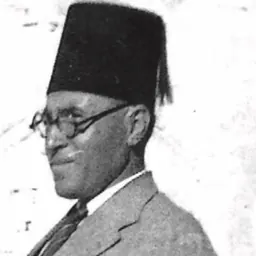
Related people
Same field, nearest in time


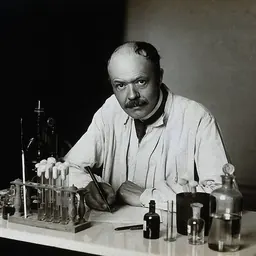
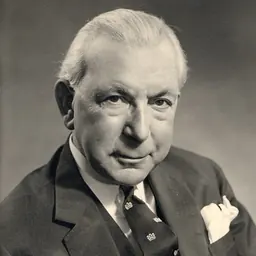

Contemporaries
People whose lives overlapped Tawfiq Canaan's
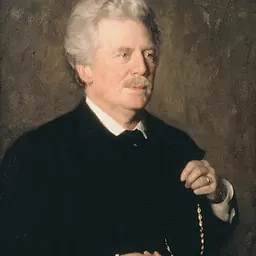

Frequently asked questions
Who was Tawfiq Canaan?
Palestinian physician and author (1882-1964)
When was Tawfiq Canaan born?
Tawfiq Canaan was born on 24 September 1882 in Beit Yala.
When did Tawfiq Canaan die?
Tawfiq Canaan died on 15 January 1964 in East Jerusalem.
What was Tawfiq Canaan's occupation?
Tawfiq Canaan was a physician and ethnographer.
What was Tawfiq Canaan known for?
Tawfiq Canaan was known for Mandatory Palestine.
What nationality was Tawfiq Canaan?
Tawfiq Canaan's recorded nationality: Ottoman Palestine, Palestinian people.
Sources & further reading
Cite this page
APA: Biography.guide. (2026). Tawfiq Canaan. https://biography.guide/tawfiq-canaan/
MLA: "Tawfiq Canaan." Biography.guide, https://biography.guide/tawfiq-canaan/.
Chicago: "Tawfiq Canaan." Biography.guide. https://biography.guide/tawfiq-canaan/.
Data last updated: 2026-09-23 · Spot an error? Report a correction.
Portrait: Wikimedia Commons · author & licence
Page generated 2026-09-27 05:06 UTC