
About Tatsuo Ikeda
Lived 1928 – 2020 (aged 92). Tatsuo Ikeda was a Japanese painter, kamikaze, draftsperson and illustrator.
was a Japanese avant-garde artist. An active figure in the Japanese postwar art scene, Ikeda’s works adopted a surrealist sensibility deeply grounded in social and political critique. Using strategies of distortion, grotesque figures, biomorphic forms, and a satirical tone, Ikeda sharply engaged with a range of contemporary issues including labor politics and class conflict, Japan-United States relations, nuclear disarmament, and legacies of militarism, especially through the proliferation and continued presence of American military bases on Japanese soil after the end of the Occupation era. A leading figure in the Reportage movement of the 1950s and early 60s, Ikeda, along with artists such as Hiroshi Nakamura, Kikuji Yamashita, and Shigeo Ishii, visited sites of protest across the country to document the realities of postwar social unrest through a expressive mode inflected with both surrealist and realist tenors.
He was involved in a number of prominent but short-lived artistic societies that emerged after the war, including Tarō Okamoto and Kiyoteru Hanada's Zen'ei Bijutsu-kai (Avant-garde Art Study Group, which had its roots in their earlier Yoru no Kai group), Seiki no Kai (Century Society), Seibiren (Youth Artists' Alliance) and the Seisakusha Kondankai (Producers' Workshop), which he co-founded with film critic Senpei Kasu.
Ikeda mostly worked in painting and drawing using earthy monochromatic tones, though later in his career he turned towards mixed-media and sculptural work as well. He is best known for his ink drawing works, which include Anti-Atomic Bomb, Chronicle of Birds and Beasts, and Genealogy of Monsters. His later works, particularly following the Anpo protests in 1960 and their failure to enact social upheaval, turned to more spiritual and cosmological concepts, as evidenced by the biomorphic, embryonic forms expressed in the BRAHMAN series (1973–88).
Biography
Early life Ikeda Tatsuo was born in Imari, Saga prefecture on August 15, 1928, as the eldest son of a stonemason. As a young witness to the escalation of imperial aggression and militarist ideology through the 1930s and early 40s, Ikeda's early education was heavily shaped by the nationalist sentiments that colored the atmosphere of the era.
The end of the war left Ikeda with a sense of traumatic disillusionment, and he described his sentiments during this period as follows: "Young people had grown up being fed the lesson that sacrifice for the country and becoming a god enshrined at Yasukuni [i.e., dying in the war] was the road to eternal righteousness. We were all hurtling down that road with no time to think. When the road suddenly cut off, it led to great sorrow and confusion.” Ikeda gained admission to the Tama Art and Design School (now Tama Art University) with the painting as part of his portfolio, and moved to Tokyo in 1948 to begin his studies.
Move to Tokyo and career beginnings Though he had originally enrolled with the intention of studying oil painting, Ikeda quickly lost interest in academism and instead began to immerse himself in Tokyo's avant-garde circles.
Ikeda also explored the conditions and ramifications of postwar urban development through work such as Big Street (Odori) (1954), where he used expressive, child-like hand to draw houses, arrows and stick figures in haphazard array, alluding to the mass development and land reclamation practices that left many at the margins in impoverished living conditions, even a decade after the war.
This insistence on moving out of the studio space and engaging directly with the sociopolitical issues of the postwar milieu would form the core of the methodology driving the Reportage movement. Alongside fellow left-wing artists such as Hiroshi Nakamura, Kikuji Yamashita, and Shigeo Ishii, Ikeda began producing a rich series of protest work that sharply critiqued the conservative cabinet that rose to power following the occupation and the ongoing violence incurred by the perpetuation of American military presence, endemic corruption, and the escalation of the nuclear arms race. Combining elements of both realism and surrealism, the works often mobilize satire, allegorical imagery, and the aesthetics of the grotesque to express in vivid form the perils and anxiety of the postwar social condition.
Seisakusha Kondankai (Producers' Workshop) In 1955, Ikeda and film critic Sanpei Kasu formed the Seisakusha Kondankai (Producers' Workshop), which grew out of the dissolution of Seibiren.
Select exhibitions
Solo exhibitions
Asobi, tatakau atisto Ikeda Tatsuo [Ikeda Tatsuo, The Artist Who Plays and Fights], Saga Prefectural Museum, 2023 Tatsuo Ikeda: BRAHMAN, Fergus McCaffrey Gallery, New York, 2022 Sengo bijutsu no genzaikei: Ikeda Tatsuo-ten—daen gensō [Ikeda Tatsuo: An Elliptical Visionary—The Present Tense of Postwar Art], Nerima Art Museum, 2018 Ikeda Tatsuo avangyarudo no kiseki [Ikeda Tatsuo: The Trajectory of Postwar Japanese Art] Yamanashi Prefectural Museum, 2010–11 Ikeda Tatsuo no sekai [The World of Ikeda Tatsuo], Ikeda Museum of 20th Century Art, Itō, 1985
Group exhibitions
The Milk of Dreams, 59th Venice Biennale, 2022 Michael E. Smith & Tatsuo Ikeda, Nonaka Hill Gallery, Los Angeles, 2022 Surrealism Beyond Borders, Metropolitan Museum of Art, New York, 2021–22 Tokyo 1955–1970: A New Avant-Garde, Museum of Modern Art, New York, 2012–13 Avant-Garde Arts of Japan 1910-1970, Centre Pompidou, Paris, 1987 1950-nen jidai — sono ankoku to shōbō [The 1950s — Gloom and Shaft of Light], Tokyo Metropolitan Art Museum, 1981
Don’t just read it —
keep it.
Full-length biographies made to live with: read them, listen on the way to work, watch them tonight.
- E-book
- Audio
- Video
Instant download · yours to keep · every purchase keeps this site free
Important facts
People in Tatsuo Ikeda's life
Named in this biography and alive at the same time
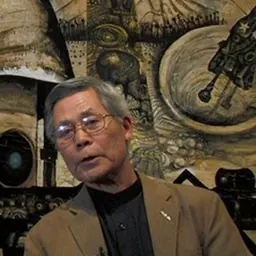

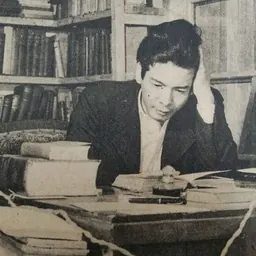

Related people
Same field, nearest in time
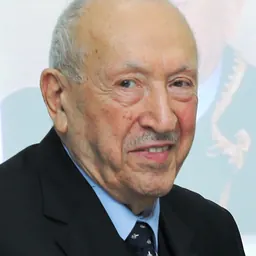
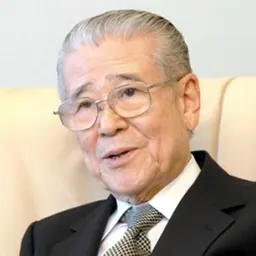

Contemporaries
People whose lives overlapped Tatsuo Ikeda's


Frequently asked questions
Who was Tatsuo Ikeda?
Japanese artist (1928–2020)
When was Tatsuo Ikeda born?
Tatsuo Ikeda was born on 25 August 1928.
When did Tatsuo Ikeda die?
Tatsuo Ikeda died on 30 November 2020.
What was Tatsuo Ikeda's occupation?
Tatsuo Ikeda was a painter, kamikaze, draftsperson and illustrator.
What nationality was Tatsuo Ikeda?
Tatsuo Ikeda was Japanese.
Sources & further reading
Cite this page
APA: Biography.guide. (2026). Tatsuo Ikeda. https://biography.guide/tatsuo-ikeda/
MLA: "Tatsuo Ikeda." Biography.guide, https://biography.guide/tatsuo-ikeda/.
Chicago: "Tatsuo Ikeda." Biography.guide. https://biography.guide/tatsuo-ikeda/.
Data last updated: 2026-09-20 · Spot an error? Report a correction.
Page generated 2026-09-27 05:08 UTC