
About Tarō Okamoto
Lived 1911 – 1996 (aged 84). Tarō Okamoto was a Japanese sculptor, painter, artist, writer, photographer and potter.
was a Japanese artist, art theorist, and writer. He is particularly well known for his paintings, public sculptures, and murals, his theorization of traditional Japanese culture, and his avant-garde artistic practices.
Biography
Early life (1911–1929) Tarō Okamoto was the son of cartoonist Okamoto Ippei and writer Okamoto Kanoko. He was born in Takatsu, in Kawasaki, Kanagawa Prefecture.
In 1927, at the age of sixteen, Okamoto began to take lessons in oil painting from the artist Wada Eisaku. In 1929, Okamoto entered the Tokyo School of Fine Arts (today Tokyo University of the Arts) in the oil painting department.
Time in Europe (1929–1940) In 1929, Okamoto and his family accompanied his father on a trip to Europe to cover the London Naval Treaty of 1930. While in Europe, Okamoto spent time in the Netherlands, Belgium, and Paris, where he rented a studio in Montparnasse and enrolled in a lycée in Choisy-le-Roi. After his parents returned to Japan in 1932, he stayed on in Paris until 1940.
Okamoto also began to establish himself as a painter in Paris, working with the Parisian avant-garde artists. He was inspired by Pablo Picasso’s Pitcher and Bowl of Fruit (1931) which he saw at the Paul Rosenberg Gallery, and in 1932 he began successfully submitting his own paintings for exhibition at the Salon des surindépendants, for which he received some positive reviews. From 1933 to 1936, he was a member of the group Abstraction-Création, and showed works in their exhibitions. He participated in the French intellectual discussion group Collège de Sociologie and joined the secret society founded by Georges Bataille, Acéphale. His painting Itamashiki ude ("Wounded Arm") was notably included in the International Surrealist Exhibition in Paris in 1938.
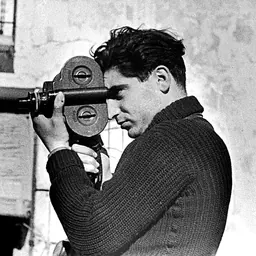
Okamoto met and befriended many prominent avant-garde art figures in Paris, including André Breton, Kurt Seligmann, Max Ernst, Pablo Picasso, Man Ray, Robert Capa and Capa's partner, Gerda Taro, who adopted Okamoto's first name as her last name.
Wartime (1940–1945) Okamoto returned to Japan in 1940 because his mother had died, and because of the outbreak of World War II. He found some artistic success in Japan upon his return, winning the Nika Prize at the 28th Nika Art Exhibition in 1942. The same year, he also had a solo exhibition of works he had completed in Europe, at the Mitsukoshi department store in Ginza.
In 1942, Okamoto was drafted into the army as an artist tasked with documenting the war, and left for service in China. He returned to Japan in 1946 after spending several months in a prisoner-of-war camp in Chang’an. During his absence, his family home and all of his works were destroyed in an air raid. In 1948, he and the art critic Kiyoteru Hanada established the group Yoru no Kai ("Night Society"), whose members attempted to theorize artistic expression after the war. It dissolved in 1949. Hanada and Okamoto then founded the Abangyarudo Kenkyūkai ("Avant-Garde Research Group") which mentored younger artists and critics such as Tatsuo Ikeda, Katsuhiro Yamaguchi, and Yūsuke Nakahara. Eventually these groups inspired younger artists to break off and form their own avant-garde groups.
1950–1969 The alien "Pairan" from the 1956 film Warning from Space, designed by Tarō. The insignia of Osaka Kintetsu Buffaloes, designed by Tarō in 1959.
From the 1950s through the end of his career, Okamoto received numerous public commissions to create murals and large sculptures in Japan, including government buildings, office buildings, subway stations, museums, and other locations. Notable examples included ceramic murals for the old Tokyo Metropolitan Office Building in Marunouchi, designed by Kenzō Tange and completed in 1956, and five ceramic murals for Tange's Yoyogi National Gymnasium for the 1964 Tokyo Olympics.
During the 1950s, Okamoto theorized several key aesthetic ideas that helped establish his role as a public intellectual in Japanese society. In 1952, Okamoto published an influential article on Jōmon period ceramics. This article was the beginning of a long engagement with prehistoric Japan, and his argument that Japanese aesthetics should take inspiration from the ancient Jōmon period helped change the public perception of Japanese culture. He later traveled around Japan in order to research the essence of Japanese culture, and published Nihon Sai-hakken-Geijutsu Fudoki ("Rediscovery of the Japan-Topography of Art") (1962) and Shinpi Nihon ("Mysteries in Japan") (1964), amply illustrated by photographs he took during his research trips. These works were an extension his ethnographic interest and taking his own photography helped provide strong evidence to his observations.
As part of his travels around Japan, in 1959 and 1966, Okamoto visited Okinawa. He was struck by what he saw as the remnants of a simpler and more indigenous life there. In 1961, he published Wasurerareta Nihon: Okinawa bunka-ron ("Forgotten Japan: On Okinawa culture"), which included many photographs from his trip. The book received the Mainichi Publication Culture Award. Many of Okamoto's photographs revisited Okinawa subject matter already photographed by other Japanese photographers, such as Ihei Kimura and Ken Dōmon. His interest in Okinawa may be seen as part of a larger modern Japanese interest in viewing Okinawa as a lingering repository of tradition, in contrast with the rapidly modernizing Japanese main islands.
In 1967, Okamoto visited Mexico, where he worked on a major mural commission and filmed a program for Japanese television entitled "The New World: Okamoto Tarō explores Latin America." Okamoto was deeply inspired by Mexican painting and saw it as an avenue to refocus the attention of Japan's art world away from Western countries. He imagined a partnership between Japanese and Mexican art worlds to launch a new, non-Western modern art aesthetic, and saw affinities between Japanese Jōmon culture and pre-Columbian art in Mexico. Allusions to Mexican art would appear in his subsequent artworks.
1970–1996
Okamoto continued to travel, write and produce public art works in the 1970s. He also began to produce prints, experimenting with silkscreen and copperplate printing.
Okamoto's most notable achievement of the 1970s was his involvement with 1970 Japan World Exposition in Osaka (Expo ’70), for which he designed and produced the central Theme Pavilion, which included a monumental sculpture entitled Tower of the Sun, an exhibition in and around the tower, and two smaller towers. The distinct appearance of Tower of the Sun was influenced by Okamoto's background in European Surrealism, interest in Mexican art, and Jōmon ceramics. The pavilion was visited by over 9 million people during Expo ’70, and is preserved today in the Expo Commemoration Park.
Toward the end of his career, Okamoto began to receive many more solo exhibitions of his work. In 1986, several of his early paintings were included in a major exhibition of Japanese avant-garde artists, Japon des Avant-Gardes 1910–1970 at the Centre Pompidou in Paris. In 1991, his major works were donated to Kawasaki city, and a museum in his honor was opened in 1999, following his death in 1996.
Work Artwork Painting Although very few of Okamoto's prewar paintings remain, during his early career in Paris he was interested in abstraction and showed a number of works with the Abstraction-Création group. However, over time he grew dissatisfied with the limitations of pure abstraction, and began to include more representational imagery in his paintings. The completion of Itamashiki ude ("Wounded Arm"), which melded abstraction and representation, convinced Okamoto that he should leave the Abstraction-Création group and explore other modes of painting. Itamashiki ude, which seems to depict a young girl through the representation of an arm, shoulder, hair, and bright red bow, disturbingly includes no human head or body, and the arm itself defies expectation with abstract stripes of flesh and bubble gum pink tones. Although the work was celebrated by the Surrealists in Paris, Okamoto opted out of joining the group.
Okamoto's postwar paintings, like his murals and public sculpture, continued to be informed by abstraction and Surrealism, but were also influenced by his theory of polarism, and by his discovery of prehistoric arts. The Law of the Jungle (1950), one of his most famous paintings, depicts a monstrous red fish-like creature with an enormous, zipper-shaped spine devouring a human figure. Small human and animal forms in vibrant primary colors surround the central creature, floating through the glowing green jungle setting. Many of the key features of this work – the mix of abstraction and surreal anthropomorphic forms, vibrant colors, and a flat picture plane – continued in his paintings for the rest of his career.
Key murals and sculptures Tower of the Young Sun, 1969. Installed in Japan Monkey Park, Inuyama, Aichi Prefecture.
During his trip to Mexico in 1967, Okamoto painted a 5.5 x 30-meter mural in oil on canvas, entitled , for the Hotel de Mexico in Mexico city by Manuel Suarez y Suarez that was being constructed for the 1968 Olympics. The mural's subtitle is "Hiroshima and Nagasaki," and accordingly the painting illustrates a landscape of nuclear destruction where a skeleton burns in red and emits pointed white protrusions. Surrounding images allude to events of nuclear disaster, such as the incident with Lucky Dragon #5. The hotel was never completed and thus the mural was never installed or displayed. After being lost for 30 years in Mexico, on November 17, 2008, the mural was unveiled in its new permanent location at Shibuya Station, Tokyo.
Okamoto's Tower of the Sun became the symbol of Expo '70 in Osaka. Standing at 70 meters tall, the humanoid form was created in concrete and sprayed stucco, with two horn-shaped arms, two circular faces, and one golden metal face attached at its highest point. As a whole, it represents the past (lower part), present (middle part), and future (the face) of the human race. Visitors entered through the base of the sculpture and then ascended through it in escalators next to the so-called "Tree of Life," a sculptural tree displaying the evolution of creatures from primitive organisms toward more complex life forms. Visitors then exited through the arms of the sculpture. Constructed not long after Okamoto's visit to Mexico, the project was also inspired by pre-Columbian imagery. At the same time, the form of the tower resembled Jōmon figurines (dogū) and alluded to Cubist portraiture of Picasso. This theory, proposed shortly after World War II, was in many ways an aesthetics that directly opposed the visual totality and harmony of Japanese wartime painting. In terms of its application to art, Okamoto saw abstract painting as synthesis – it united color, motion, and the various senses into one work. The Law of the Jungle (1950), however, is permanently fragmented: individual elements are clearly described in line and color, but resist any identification, and float in the painted space without any connection to one another. There is also a strong tension between flatness and depth, clarity and obscurity, foreground and background, representational and abstract. Dawn (1948) and Heavy Industry (1949) are also thought to be examples of polarism.
Tradition and contemporary art Okamoto's Jōmon theory has become one of the most influential theoretical contributions to 20th century Japanese aesthetics and cultural history. The theory was first introduced in his seminal essay "Jōmon doki ron: Shijigen to no taiwa" ("On Jomon ceramics: Dialogue with the fourth dimension"), published in Mizue magazine in 1952. Inspired by a trip to Tokyo National Museum, where he viewed earthenware ceramic vessels and dogū from the prehistoric Jōmon period, the article argued for a complete rethinking of Japanese aesthetics. Okamoto believed that Japanese aesthetics until that point had been founded on the aesthetics of prehistoric Yayoi period ceramics, which were simple, subdued, restrained, and refined. This foundation gave rise to the what many considered traditional Japanese aesthetic concepts, such as wabi-sabi. By contrast, the energetic, rough, and mysterious patterns and designs of Jōmon ceramics offered a dynamic, authentic expression that was missing from contemporary Japan. He argued that Japanese artists should pursue the same dynamic power and mystery to fuel their own work, drawing inspiration from this more "primitive" culture of their ancestors. Okamoto's understanding of Japanese aesthetics drew heavily from his ethnographic studies and encounters with Surrealism in Paris, but instead of exoticizing ethnographic objects, he used Jōmon objects specifically to construct a native theoretical basis for Japanese avant-garde artistic practices.
Collections and legacy
Much of Okamoto's work is held by the Tarō Okamoto Museum of Art in Kawasaki and the , which is housed in the artist's former studio and home built by the architect Junzō Sakakura in 1954 in Aoyama, Tokyo. Both museums organize special exhibitions addressing key themes in Okamoto's oeuvre, such as Jōmon artifacts, Okinawa, and public artworks. Okamoto's works are also held by the Solomon R. Guggenheim Museum, the National Museum of Modern Art, Tokyo, the National Museum of Modern Art, Kyoto, and the Toyama Prefectural Museum of Art and Design.
The Tarō Okamoto Award for Contemporary Art (TARO Award) was established in 1997 and is run by the Tarō Okamoto Museum of Art in Kawasaki. The award is given annually to young contemporary artists who are creating art of the next generation, and who display the creativity and individuality he advocated for in The Art of Today (1954).
Don’t just read it —
keep it.
Full-length biographies made to live with: read them, listen on the way to work, watch them tonight.
- E-book
- Audio
- Video
Instant download · yours to keep · every purchase keeps this site free
Important facts
People in Tarō Okamoto's life
Named in this biography and alive at the same time


Related people
Same field, nearest in time


Contemporaries
People whose lives overlapped Tarō Okamoto's






Frequently asked questions
Who was Tarō Okamoto?
Japanese artist (1911–1996)
When was Tarō Okamoto born?
Tarō Okamoto was born on 26 February 1911 in Futago.
When did Tarō Okamoto die?
Tarō Okamoto died on 7 January 1996 in Keio University Hospital.
What was Tarō Okamoto's occupation?
Tarō Okamoto was a sculptor, painter, artist, writer, photographer and potter.
What nationality was Tarō Okamoto?
Tarō Okamoto was Japanese.
Sources & further reading
Cite this page
APA: Biography.guide. (2026). Tarō Okamoto. https://biography.guide/taro-okamoto/
MLA: "Tarō Okamoto." Biography.guide, https://biography.guide/taro-okamoto/.
Chicago: "Tarō Okamoto." Biography.guide. https://biography.guide/taro-okamoto/.
Data last updated: 2026-09-20 · Spot an error? Report a correction.
Page generated 2026-09-27 05:20 UTC