
About Tamara Geva
Lived 1907 – 1997 (aged 90). Tamara Geva was an American ballet dancer, actor, choreographer, film actor, animator and dancer.
Tamara Geva (, born Tamara Levkievna Zheverzheeva, ; 17 March 1906 – 9 December 1997) was a Soviet and later an American actress, ballet dancer, and choreographer. She was the daughter of art patron and collector and was the first wife of the well-known ballet dancer and choreographer George Balanchine.
Throughout her life, she danced with Diaghilev's Ballets Russes and with husband George Balanchine and performed in and choreographed many notable Broadway shows, as well as Hollywood movies.
Family and early life
Tamara Geverzheeva was born in St. Petersburg, Russian Empire Geva's mother Tamara Urtahl was an actress, while her father Levkiy Gevergeyev was a passionate collector and art enthusiast.
Training and early career
Geva fell in love with ballet when she was taken by her father to the Mariinsky Theatre and saw La Esmeralda danced by Mathilde Kschessinska. However open-minded, her parents forbade Geva to go to ballet school. Still, she was allowed to take private lessons.
At age 13, Geva began to attend evening dance classes at the St. Petersburg's Mariinsky Theatre School, when it began to accept older students shortly after the revolution. Her teachers were Evgenia Sokolova and & . Here, she met dancer and choreographer George Balanchine, who at the time was the teacher for the ballroom dance classes. Balanchine and she became close very soon, and he began choreographing pieces for them both. One of the first things they did was La Nuit to Anton Rubinstein's Romance in E-flat. In London, they had two weeks of very unsuccessful performances, when the audience met them with dead silence. With expiring visas, they weren't welcome in any other European country, as the last resort remained in France.
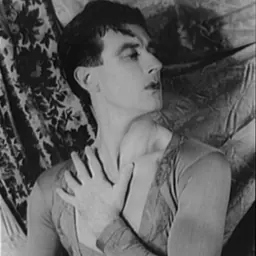
In 1924, the couple met Anton Dolin, one of Sergei Diaghilev's star dancers. Dolin suggested that they audition for Diaghilev's Ballets Russes. According to other sources, Diaghilev met them in Misia Sert's salon. The impresario hired all dancers of the Young Ballet and they joined the Ballets Russes. With the Ballets Russes, Geva performed in The Triumph of Neptune in 1926, where she wore a costume made of tiny mirrors that weighed 75 pounds. Geva remembered Diaghilev as having a superior air at all times and that he would often look down upon others, but he could also turn his charm on at any time he needed it. Diaghilev often stuck Geva in the corps de ballet, only sometimes she received little solos. By 1926, her marriage to Balanchine became shaky; while he enjoyed life in Monte Carlo under the wing of Diaghilev, she felt trapped and longed for more. She wanted to rise above ballet and try herself in cinema and theater. Finally, in 1926, she left Balanchine and accepted Nikita Balieff's offer to join his La Chauve-Souris. Despite the split, Geva and Balanchine remained friends and collaborated later in life. Flying Colors (1932) and Whoopee! (1934). She cherished her time on Broadway as a performer, but she also got the chance to choreograph many numbers in these productions. She choreographed the "Talkative Toes" dance for Three's a Crowd and "Two Faced Woman" in Flying Colors.
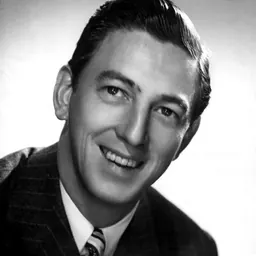
In 1935, Geva performed with the American Ballet, Balanchine's ballet company in New York. She performed in their first performance, where she danced in Errante with music by Schubert. She later immersed herself in film and theater work while staying in America. In 1936, she was paired with actor Ray Bolger in On Your Toes by Rodgers and Hart. In On Your Toes, she danced in the dramatic "Slaughter on Tenth Avenue" sequence and a balletic parody choreographed by Balanchine and composed by Dick Rodgers. New York Times reviewer Brooks Atkinson described her performance as "magnificent", adding, "she can burlesque it with the authority of an artist on holiday".
Her last performance was onscreen in (1983).
Personal life
Geva was the first of Balanchine's four wives, all of whom were dancers. After their split in 1926, she could not officially divorce because all documents remained in the USSR. Later in the USA, Geva married Kapa Davidoff (né Garabed Tavitian; 1897-1982) in August 1931, although they had a religious ceremony two years prior; the couple divorced in June 1936. Davidoff was an actor and fashion executive. that union ended in divorce in 1963. Geva never had children.
Tamara Geva died on 9 December 1997, at the age of 91, at her home in Manhattan, from natural causes.
Filmography
Broadway credits +
Memoir Geva, Tamara. Split Seconds: A Remembrance. Limelight Editions, 1972.
Don’t just read it —
keep it.
Full-length biographies made to live with: read them, listen on the way to work, watch them tonight.
- E-book
- Audio
- Video
Instant download · yours to keep · every purchase keeps this site free
Important facts
Family & relationships
People in Tamara Geva's life
Named in this biography and alive at the same time




Related people
Same field, nearest in time



Contemporaries
People whose lives overlapped Tamara Geva's



Frequently asked questions
Who was Tamara Geva?
Soviet-American actress and dancer (1906–1997)
When was Tamara Geva born?
Tamara Geva was born on 17 March 1907 in Saint Petersburg.
When did Tamara Geva die?
Tamara Geva died on 9 December 1997 in New York City.
What was Tamara Geva's occupation?
Tamara Geva was a ballet dancer, actor, choreographer, film actor, animator and dancer.
What nationality was Tamara Geva?
Tamara Geva was American.
Sources & further reading
Cite this page
APA: Biography.guide. (2026). Tamara Geva. https://biography.guide/tamara-geva/
MLA: "Tamara Geva." Biography.guide, https://biography.guide/tamara-geva/.
Chicago: "Tamara Geva." Biography.guide. https://biography.guide/tamara-geva/.
Data last updated: 2026-09-20 · Spot an error? Report a correction.
Page generated 2026-09-27 05:21 UTC