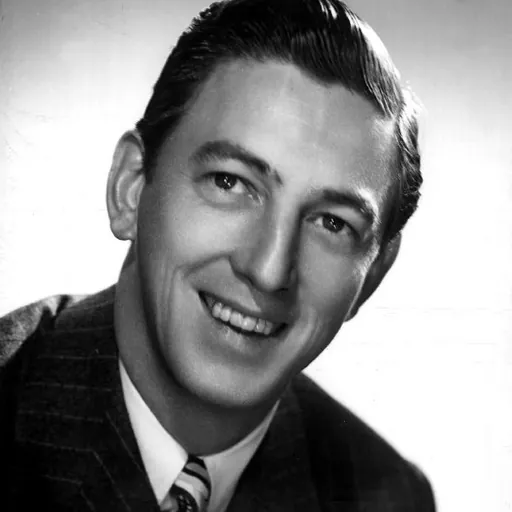
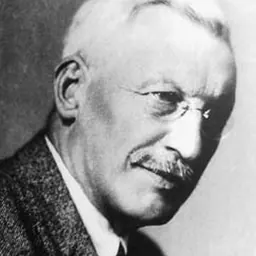
About Ray Bolger
Lived 1904 – 1987 (aged 83). Ray Bolger was an American actor, singer, television actor, stage actor, film actor and dancer, known for Babes in Toyland (1961 film), Scarecrow (Oz) and The Wizard of Oz (1939 film).
Raymond Wallace Bolger (; January 10, 1904 – January 15, 1987) In his later years he made frequent guest appearances in television shows, including The Jean Arthur Show, The Partridge Family, Little House on the Prairie and Diff'rent Strokes.
Early life Raymond Wallace Bolger was born, prematurely, on January 10, 1904 in St. Elizabeth's Hospital in Brighton, Massachusetts, into a Catholic family of Irish descent. A misconception exists, however, that he was instead of Portuguese descent and named Raymond Bulcao. He was the son of James Edward Bolger, then a delivery wagon driver for a bakery, and Johannah Cecilia "Annie" Bolger . James was born in Fall River, Massachusetts to parents from Ireland. Annie was born into a large Irish-American family in Bridgewater, Massachusetts. They had married in 1902, whereupon they moved to Dorchester, Massachusetts. In 1909 a sister named Regina was born. Bolger grew up in the Codman Square section of the Dorchester neighborhood of Boston and attended Dorchester High School, from which he graduated in 1920. He recounted that, in his high school years, he danced so poorly that nobody wanted to dance with him. He initially aspired toward being a banker instead of an entertainer, until he discovered that "to be a success in life, [he] had to learn how to dance", after his senior prom date abandoned him because the only dance he could do, at the time, was the waltz. so for a period thereafter, Ray did menial work for the Kelly Peanut Company and for local grocers. That same year he went to see Fred Stone perform as the titular scarecrow in Jack O'Lantern, a musical loosely based on The Wonderful Wizard of Oz. Stone became Bolger's idol because of his dancing prowess and competency at acting. After Annie's death, in July of 1919, of a cerebral hemorrhage, Ray clerked Boston's First National Bank each afternoon, which provided the family a weekly $18. He would, in his leisure time, participate in dancing contests held in Scollay Square, which was within walking distance of the bank, and attend musical performances in the area. Ray, who is speculated by his biographer Holly Van Leuven to have resented James for "[adding] to Annie's discomforts", rarely ever made public mention of his father.
Bolger said in a 1940 interview that he once sold vacuums door-to-door in New England. Circa 1922 he joined the New England Mutual Life Insurance Company as an office boy and clerk. While delivering mail between offices he would "[dance] up and down the stairs", and he would also dance for the entertainment of his co-workers. The company once hosted an amateur theatrical show, in which Bolger participated. He became a student of O’Brien’s School for Social and Formal Dancing, during which time he met ballet master Senia Russakoff. In exchange for lessons, and a place to sleep (Bolger had been evicted from a room for not paying rent), In 1922 Bolger was fired from New England Mutual either for being late or for dancing by the water cooler. Abe Lastfogel, who worked for the William Morris Agency, became Bolger's agent in 1928. Bolger performed in the New York Palace Theatre, which was the United States' "most important vaudeville theater", with the Ritz Carlton Nights troupe in 1929. Bolger danced in nightclubs in London while on his honeymoon with Rickard from July to August of that year. The British liked his sense of humor and energetic style of dancing. Because he had a passing resemblance to George VI (at the time Albert, Duke of York), people mistakenly curtsied toward him. Bolger was cast as Jerry, a "loose-jointed bootlegger", in Me for You, a musical by Alex A. Aarons and Vinton Freedley which began its 1929-1930 run at the Detroit Opera House on September 10, 1929. The show was received poorly and did not sell well, so Aarons and Freedley rewrote it in October; it returned as Heads Up! in November, with the name of Bolger's character changed to Georgie.
The stock market crash of October 30, 1929 and the ensuing Great Depression destroyed the vaudeville industry, which was supplanted by that of motion pictures. In the Midwest and New England, Bolger performed comedy routines at the Paramount-Publix theaters, where films were screened concurrently to live performances. Most other gigs for entertainers, including Bolger, disappeared; to avoid spending money at restaurants and hotels he rented rooms for cheap and Rickard, who traveled with him, cooked his meals. From September of 1931 to March of 1932, Bolger appeared in George White's yearly revue George White's Scandals, which began each autumn in Atlantic City and concluded at Broadway. Walter Winchell, Al Smith, Graham McNamee and the biblical Adam were subject to impersonation by Bolger for the Scandals. Bolger's performances in the Scandals were acclaimed by critics and brought fame to him in New York. In 1932 he was elected to the theater club The Lambs and performed on opening night at Radio City Music Hall on December 27, 1932. President Franklin D. Roosevelt invited Bolger to his 1934 Birthday Ball as a performer. Bolger performed in The Earl Carroll Vanities in that same year but, after a wage dispute with Earl Carroll, quit.
Bolger played Boccaccio in the musical Life Begins at 8:40, which ran for 237 performances at the Winter Garden Theatre between August 27, 1934 and March 16, 1935. Lee Shubert had asked Bolger to play Balzac, the lead, but Bolger, believing he did not yet have the fame and experience to be a leading man, let Bert Lahr take that role. A contract for two films was made between Bolger and Metro-Goldwyn-Mayer on March 7, 1935. The first was the 1936 musical biopic The Great Ziegfeld, in which he played a minor role as himself and sang the number "She's a Follies Girl". Richard Rodgers and Lorenz Hart brought Bolger into the lead role, vaudevillian-turned-music teacher Phil "Junior" Dolan III, of their musical On Your Toes (which featured two ballet pieces, "Slaughter on Tenth Avenue" and "Zenobia Ballet"); Fred Astaire had been offered the part but refused. The script was edited by writer George Abbott and producer Dwight Wiman at the behest of Bolger, who had told Rodgers and Hart that the musical needed wittier dialogue and a more cohesive storyline. For On Your Toes Bolger was coached in ballet dancing, with which he had hitherto been only slightly acquainted, by George Balanchine. On Your Toes ran on Broadway from April 11, 1936 to January 23, 1937. The dancing required for "Slaughter on Tenth Avenue" went on for fifteen minutes Bolger's tendency to improvise was difficult for Powell to work with; and, to Bolger's chagrin, the scenes in which he danced, with her and otherwise, did not appear in the final cut. He was brought on to dance in The Girl of the Golden West (1938), but his scene was deleted. His role in Sweethearts (1938) was an unimportant one of a "Dutch boy clog dancing in wooden shoes".
In late 1938 Bolger was selected to play the Tin Woodman for MGM's film adaptation of the Wonderful Wizard of Oz. Although the contract stipulated that he would play any character MGM wanted him to, he was unhappy with the role, as he feared that the metal costume would stiffen his movements, ruining the appeal of his dancing. With a dance, he convinced MGM's executives to let him swap roles with Buddy Ebsen, who had been cast as the Scarecrow. (Jack Haley ended up playing the Tin Woodman, after the aluminum powder used for the Tin Woodman's face caused a severe allergic reaction in Ebsen). The production of The Wizard of Oz was taxing, mentally and physically, for the cast. The costumes of the three male leads (Bolger, Haley and Bert Lahr, the latter of whom played the Cowardly Lion) overheated under the bright lighting needed to make the Technicolor work; and the mask used for Bolger's Scarecrow, which took an hour each to put on and to remove each day of filming, set permanent lines into his face. Bolger smoked and, after returning home each evening, drank to cope. During breaks he, Haley and Lahr played practical jokes upon one another and told stories lest they, in Bolger's words, go "mad". Bolger and Judy Garland (who played Dorothy Gale), according to Van Leuven, had in common a "sensitive, thoughtful nature" and adored each other: Bolger gifted her a copy of Edgar Allan Poe's "The Raven" and advised her to read about her interests in her own time, and Garland showed him affection whenever they met. Until Garland's death in 1969 they kept a close friendship. Bolger met Fred Stone at the film's premiere, on August 15, 1939, in Grauman's Chinese Theater. MGM gave Bolger $87,000 USD (in 2018 this would have been over $1,500,000) for his work with them.
Starting in May of 1940 Bolger and Jimmy Durante led the revue Keep off the Grass. For the revue he, Durante and Ilka Chase sang the song Rhett, Scarlett, and Ashley, in parody of the 1939 film adaptation of Gone with the Wind. Keep off the Grass, which sold poorly and was panned by Billboard as "a Hollywood misconception of what a revue should be like", closed that July, having run for 44 performances. He subsequently performed with Xavier Cugat's and Charlie Barnet's bands in, respectively, the New York Paramount Theatre and the Michigan Theatre. Bolger, having signed a three-picture contract with RKO, was cast as Bunny Billings, opposite Anna Neagle's Sunny O'Sullivan, in Sunny (1941), in which he had three "dance spots" and made the introduction to the song "Who?" (all the song but its first three lines was performed by a chorus). Van Leuven opined that Bolger's first dancing scene, which, contra his usual style, was ballroom, had him "uncharacteristically stiff".
Bolger was deferred from military service in World War II. From September to November 1941 he, Stan Laurel, Oliver Hardy, Chico Marx, John Garfield, Jane Pickens and Mitzi Mayfair entertained American troops in Puerto Rico, Trinidad, British Guinea and Saint Lucia as the United Service Organizations (USO)-sponsored company "Camp Show Unit #1". On December 7, 1941, the Japanese attacked Pearl Harbor and Bolger's performance was interrupted by President Franklin D. Roosevelt's announcement of the news of the attack. Bolger appeared in the United Artists wartime film Stage Door Canteen (1943). In 1942 he starred as Nifty in the musical comedy Four Jacks and a Jill; here, one critic considered him to have "[outdone] himself". He minorly burned his wrist with an iron pan while filming the first scene. In 1942 Rodgers and Hart, deciding that a dancer should be the lead of their newest project, cast Bolger as Sapiens in the musical By Jupiter (originally titled All's Fair). Gwen Bolger helped Rodgers write the script, as Hart, stricken by alcoholism, was in hospital at the time the script was being drafted. The show premiered on June 3, 1942, to generally good reception. Planning to resume touring with the USO, Bolger, on the pretext of exhaustion, quit By Jupiter in May 1943, ending the show (nobody could adequately replace him). Bolger's decision angered both Rodgers (who later wrote to Ed Sullivan a jingle beginning, "By Jupiter is shuttered, so Bolger is a loafer") and the cast. Bolger and Jack Little, comprising Camp Show #89, became the first entertainers to tour the South Pacific, to which they departed on July 3, 1943. Camp Show #89, also of the USO, began in Hawaii; stopped at Fiji, New Caledonia, Australia, Papua New Guinea, Guadalcanal and Kiribati; and returned to the United States on November 25, 1943. Bolger, who had received $1800 from the USO, managed the logistics and his and Little's finances for the tour. Little, a pianist and accordionist, played accompaniment to Bolger's vocals and dancing. In her husband's absence, Gwen Bolger attempted to procure a film deal for him, in a supporting role opposite Rita Hayworth and Lee Bowman, in Tonight and Every Night, a film directed by Victor Saville. This never came to be, as Bolger returned home too late (filming began on November 1).
Bolger contracted laryngitis in 1948 and suffered repeated episodes of it through to 1950. In Where's Charley, which ran on Broadway from 1948 to 1951, Bolger portrayed Charley and Charley's Aunt, making him the first actor to play both parts. In the play, Bolger introduced the song "Once in Love with Amy"; Where's Charley earned Bolger critical acclaim and a place among what Van Leuven calls the "elite artists", including Alfred Hitchcock and Margo and Eddie Albert.
Bolger appeared in his own ABC television sitcom with a variety show theme, Where's Raymond? (1953–1954), renamed the second year as The Ray Bolger Show (1954–55). To his surname's exclusion, his character's name in the show was Raymond Wallace.
Bolger made frequent guest appearances on television, including the episode "Rich Man, Poor Man" of the short-lived The Jean Arthur Show in 1966. In the 1970s, he had a recurring role as Fred Renfrew, the father of Shirley Partridge (Shirley Jones) on The Partridge Family, and appeared in Little House on the Prairie as Toby Noe and also guest-starred on other television series, such as Battlestar Galactica, Fantasy Island, and The Love Boat. He had unrealized plans to create "The Wizardland of Oz", which would have been both a theme park and a retirement village, in Palm Springs. Bolger was nominated for the Primetime Emmy award for Outstanding Single Performance by a Supporting Actor in Comedy or Drama Special for his role as Billy Rice, opposite Jack Lemmon's Archie Rice, in a 1975 made-for-television film adaptation of The Entertainer. Bolger narrated "A Time for Living" (1975), the University of Connecticut's short film on how to get ready for retirement, and in 1977 was made a special consultant of its gerontology program as well as of its Center for Instructional Media and Technology. In 1976 Bolger performed the opening number for the 48th Academy Awards ceremony. Film critic Roger Ebert listed Bolger's opening as, in his opinion, one of the ceremony's few good parts. His last television appearance was on Diff'rent Strokes in 1984, three years before his death. Bolger retired from dancing in 1984; he had broken his right hip while leaving the stage after a one-man show and could not dance as well, after receiving a hip replacement, as he could before. He narrated a portion, containing footage from his dancing in The Wizard of Oz, of the 1985 documentary film That's Dancing. For his "contributions to the arts and...humanitarian efforts" the University of Connecticut awarded Bolger an honorary Doctorate of Fine Arts in 1986.
Style Bolger was informed by the Celtic form of eccentric dance, which required the dancer to be able to flail his lower legs (for which Bolger's long shins and extraordinary flexibility suited him). According to Fritz Weaver he had a heavy dependence on improvisation and "couldn't stick to anything that was choreographed". He could not perform any given dance routine a second time, as he would make it up on the spot and forget it immediately afterward. On his shoes he wore maple taps, in lieu of the typical metal ones, to create a unique sound. He would start using elements of comedy only after demonstrating his physicality. In his routines he acted out the roles of both celebrities and imagined characters for comedic effect. Bolger had limited acting abilities and range, and often was he typecast as, in his words, a "small country boy".
Personal life In the 1920s, Bolger had a brief relationship with animator Max Fleischer's daughter, Ruth. Bolger met, and was asked out by, Gwendolyn "Gwen" Rickard (1909–1997) in 1926 in the backstage of the Los Angeles Orpheum Theater, after Bolger's performance in Ritz Carlton Nights; Rickard was looking for Gus Edwards, who had departed shortly after the show ended. They separated after Edwards' show went to New York but reunited in 1928 after Bolger returned to Los Angeles. They married in Port Chester, New York on July 9, 1929. James Bolger, who may have disapproved of Rickard's not being Catholic, did not go to the wedding. The newlyweds honeymooned in Europe from July to August.
Rickard, who "wanted to live vicariously" through Bolger, was throughout his career his collaborator and supporter. She advised him on whether to accept roles and gigs, handled his finances, dictated his costuming, persuaded producers of his shows to make the changes she wanted and conceived of many of his creative decisions. It is unclear why they never conceived; either Bolger or Rickard could have been infertile, though Rickard consulted a gynecologist, in the 1930s, who found no problems with her. Bolger had closer relationships with his in-laws than with his biological relatives (to whom he behaved distantly, even during public appearances), and financially supported his brothers-in-law.
Bolger possessed thousands of records of classical music and was fond of tap dancing to it. His other hobbies included horse race betting, fishing, gin rummy, golf and poker. He was a lifelong Republican who campaigned for Barry Goldwater in the 1964 United States presidential election, Richard Nixon in the 1968 election, and Ronald Reagan in the 1980 election. He supported the United States' escalation in the Vietnam War.
Death and legacy
Bolger was diagnosed with bladder cancer in 1985. Initially his wife cared for him at their home in Beverly Hills, but his deteriorating health incited him to check into Nazareth House, a Catholic nursing home in Los Angeles, in November 1986. He died there on January 15, 1987, five days after his 83rd birthday.
At the time of his death, Bolger was the last surviving main-credited cast member of The Wizard of Oz.
Whenever asked whether he had received any residuals from telecasts of The Wizard of Oz, Bolger would reply: "No, just immortality. I'll settle for that." Bolger's Scarecrow is ranked among the "most beloved movie characters of all time" by AMC and the American Film Institute. The costume was donated to the Smithsonian Institution a few months after his death in 1987.
He has two stars on the Hollywood Walk of Fame. Both were dedicated on February 8, 1960, for his contributions to the entertainment industry: one for motion pictures, located at 6788 Hollywood Blvd, and the other for television, located at 6834 Hollywood Blvd. In 1998, a Golden Palm Star on the Palm Springs, California, Walk of Stars was dedicated to him. In 2016, the City of Boston commissioned a mural in Bolger's honor in the Codman Square section of the Dorchester neighborhood.
Filmography +Theatrical films Year Title Role Notes 1926 "The Berth Mark" Banker 1936 The Great Ziegfeld Ray Bolger 1937 Rosalie Bill Delroy 1938 The Girl of the Golden West Happy Moore (scenes deleted) 1938 Sweethearts Hans 1939 The Wizard of Oz Hunk / The Scarecrow 1941 Sunny Bunny Billings 1942 Four Jacks and a Jill Nifty Sullivan 1943 Forever and a Day Sentry (scenes deleted) 1943 Stage Door Canteen Ray Bolger 1946 The Harvey Girls Chris Maule 1949 Look for the Silver Lining Jack Donahue 1952 Where's Charley? Charley Wykeham 1952 April in Paris S. Winthrop Putnam 1961 Babes in Toyland Barnaby 1966 The Daydreamer The Pieman 1979 Just You and Me, Kid Tom 1979 The Runner Stumbles Monsignor Nicholson 1982 Annie Sound Effects Man Uncredited 1985 That's Dancing! Himself – Host Documentary film
+Television Year Title Role Notes 1953–1955 Where's Raymond? Raymond 'Ray' Wallace Lead role (61 episodes) 1956–1957 Washington Square Host 1958–1959 General Electric Theater Stan Maylor / Alfred Boggs 2 episodes 1962 The Red Skelton Show Mayor Threadbare III Episode: "The Mayor of Central Park" 1962 The Little Sweep Storyteller Television film1963The Judy Garland Showguest starGarland's weekly tv series 1966 The Jean Arthur Show Wealthy Man Episode: "Rich Man, Poor Man" 1970–1972 The Partridge Family Grandpa Renfrew Recurring role (3 episodes) 1971 Nanny and the Professor Uncle Horace Episode: "South Sea Island Sweetheart" 1976 The Entertainer Billy Rice Television film 1976 Captains and the Kings R.J. Squibbs Television miniseries (Chapter I) 1977–1979 The Love Boat Andy Hopkins / Horace McDonald 2 episodes 1978 Baretta Episode: "Just for Laughs" 1978 Three on a Date Andrew Television film 1978–1982 Fantasy Island Gaylord Nelson / Spencer Randolph 2 episodes 1978–1979 Little House on the Prairie Toby Noe 2 episodes 1979 Heaven Only Knows Simon Television pilot 1979 Battlestar Galactica Vector Episode: "Greetings from Earth" 1981 Aloha Paradise Harry Carr Episode: "Best of Friends/Success/Nine Karats" 1981 Peter and the Wolf Narrator Television film 1983 Peter and the Magic Egg Uncle Amos Voice, Television special 1984 Diff'rent Strokes Clarence Markwell Episode: "A Haunting We Will Go", (final appearance)
Stage work +Broadway productions Year Title Role Theatre 1926 The Merry World Performer Imperial Theatre 1926 A Night in Paris Performer 44th Street Theatre 1929 Heads Up Georgie Alvin Theatre 1931 George White's Scandals of 1931 Performer Apollo Theatre 1934 Life Begins at 8:40 Performer Winter Garden Theatre 1936 On Your Toes Phil Dolan III, Hoofer Imperial Theatre 1940 Keep Off the Grass Performer Broadhurst Theatre 1942 By Jupiter Sapiens Shubert Theatre 1946 Three to Make Ready Performer Adelphi Theatre 1948 Where's Charley? Charley Wykeham St. James Theatre 1951 Where's Charley? (revival) Charley Wykeham Broadway Theatre 1962 All-American Professor Fodorski Winter Garden Theatre 1969 Come Summer Phineas Sharp Lunt-Fontanne Theatre
+Additional stage work Year Title Role Theatre Ref. 1932 Radio City Music Hall Inaugural Program performer Radio City Music Hall 1969 Come Summer Phineas Sharp O'Keefe Centre 1969 The Happy Time performer Starlight Musicals
Don’t just read it —
keep it.
Full-length biographies made to live with: read them, listen on the way to work, watch them tonight.
- E-book
- Audio
- Video
Instant download · yours to keep · every purchase keeps this site free
Important facts
People in Ray Bolger's life
Named in this biography and alive at the same time




Related people
Same field, nearest in time


Contemporaries
People whose lives overlapped Ray Bolger's



Frequently asked questions
Who was Ray Bolger?
American actor (1904–1987)
When was Ray Bolger born?
Ray Bolger was born on 10 January 1904 in Dorchester.
When did Ray Bolger die?
Ray Bolger died on 15 January 1987 in Los Angeles.
What was Ray Bolger's occupation?
Ray Bolger was an actor, singer, television actor, stage actor, film actor and dancer.
What was Ray Bolger known for?
Ray Bolger was known for Babes in Toyland (1961 film), Scarecrow (Oz) and The Wizard of Oz (1939 film).
What nationality was Ray Bolger?
Ray Bolger was American.
Sources & further reading
Cite this page
APA: Biography.guide. (2026). Ray Bolger. https://biography.guide/ray-bolger/
MLA: "Ray Bolger." Biography.guide, https://biography.guide/ray-bolger/.
Chicago: "Ray Bolger." Biography.guide. https://biography.guide/ray-bolger/.
Data last updated: 2026-09-22 · Spot an error? Report a correction.
Portrait: Wikimedia Commons · author & licence
Page generated 2026-09-27 05:03 UTC