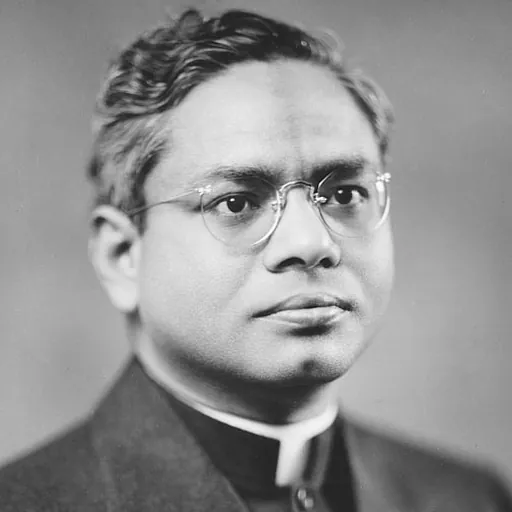
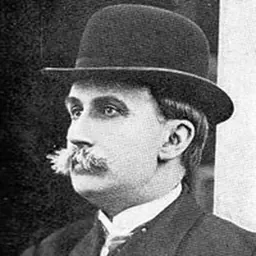
Swami Ashokananda
Disciple of famous Swami Vivekananda of India/monk:Ramakrishna Math
About Swami Ashokananda
Lived 1893 – 1969 (aged 76). Swami Ashokananda was an Indian editor.
quote=Meditation is not simply thinking of God. It is an actual perception of God. It is not imagination; it is the anticipation of the Real.
Life Yogesh Dutta was born in the village of Bekiteka. He spent his childhood days in Durgapur, a village seven or eight miles west of the town of Habibganj in the Sylhet district of Assam (now part of Bangladesh). After attending his uncle's elementary school, which covered the first five grades, he entered junior high school at Shayestaganj, two or three miles from Durgapur. He attended Murari Chand College in Sylhet, for two years, followed by two years at City College of the University of Calcutta where he won a gold medal for English literature. After graduating, he joined the Beanibazar High School in the town of Panchakhanda in the district of Sylhet, as an assistant headmaster. After working here for a year, he joined the Shayestaganj junior high school. During this time, he also worked with a village in Habiganj, providing education for the children, as well as basic medical care. Opposing the views of Mahatma Gandhi, Swami Ashokananda believed that both spirituality and industrialization were possible.
In the February 1926 issue of the Prabuddha Bharata, Swami Ashokananda wrote: "Lower interests fulfill themselves by serving the higher ones; the latter in their turn attain fruition by declining to be exploited for lower profits....No nation can with impunity exploit its higher powers for lesser gains. To do so is to commit a Himalayan blunder. We are afraid the Indian National Congress has been guilty of the identical error in its policy and activities during the past few years. It sought to exploit religion for political ends."
According to Sankari Prasad Basu, "Going through all the articles of Ashokananda and replies of Gandhiji, we [have] to admit that the latter's expositions were no match for Ashokananda's sturdy and comprehensive intellect. Gandhiji simply reiterated his faith with great sincerity, and that is all. Ashokananda in his turn was also an idealist, a man of religion, but spirituality did not obstruct him to see and understand the material needs of the millions."
Swami Ashokananda took over as the editor of the Prabuddha Bharata in June 1926. From 1926 though 1930, he was in correspondence with Romain Rolland, the French historian, novelist and mystic who was writing the biographies of Sri Ramakrishna and Swami Vivekananda. Rolland's view was that the spread of Vedantic ideas in the Western world was due not to the modern-day diffusion of Vedantic thought but, rather, to "the unity of thought and laws that govern the [human] spirit." In reply, Swami Ashokananda wrote The Influence of Indian Thought on the Thought of the West.
In 1931, Swami Ashokananda left India for serving in the Vedanta Society of Northern California. He reached San Francisco on the 4th of July 1931 and would spend the rest of his life there.
In the early 1930s, when he arrived, Eastern Religions were still looked upon with suspicion in the Western world. Under his leadership the Vedanta Society of Northern California built three temples (in San Francisco, Berkeley and Sacramento) and bought two thousand acres of land in Olema that became the largest Vedanta Retreat in America.
Works Ashokananda rendered great service to the cause of the Vedanta movement in the West by his clear and thorough expositions of Vedantic teachings through lectures and classes for nearly four decades. A pioneer on the Vedanta frontier, he established new Vedanta Centres in Berkeley and Sacramento, developed the 2000-acre Vedanta Retreat at Olema (still the largest in the western hemisphere), and built the large New Temple in San Francisco to accommodate the Society's growing membership and activities. His contributions to the Vedanta Movement in America are well known, as are his lectures in print, which have become a popular source of inspiration since the first collection was published in 1970.
As her spiritual teacher, Gargi saw Ashokananda as a compassionate guide. An adherent of Advaita (non-dual) Vedanta, he was aware of the divinity of all life, and he saw in his disciples their potential perfection. Beyond their human quirks and ego-bound foibles, she says, he beheld the pure Spirit, and his role as a teacher was to polish the mirror of each disciple's perception to reflect this inner light.
"Swami Ashokananda was a dynamic speaker, one of the best, and he attracted a steady stream of congregants to the Vedanta Society of Northern California." – Dr. Shelly Brown
"Swamiji (Swami Vivekananda) liked Swami Sadananda so much because he could write a little. He thought highly of him. But if he had known Ashokananda he would have always kept him close in his heart." – Swami Shivananda
"For almost twenty years I sat at the feet of Swami Ashokananda. I learned from him, was amazed by him, enchanted by him—and often left in profound awe." – Sister Gargi
"We are all thrashing about in a dark and hurtful world, and all the while we can light our own indistinguishable lamp of strength and wisdom by which we can see our way. This was Swami Ashokananda's faith, indeed, his knowledge, and so sure was that knowledge that he gave his life to showing us how to light our own lamps." – Sister Gargi
Don’t just read it —
keep it.
Full-length biographies made to live with: read them, listen on the way to work, watch them tonight.
- E-book
- Audio
- Video
Instant download · yours to keep · every purchase keeps this site free
Important facts
People in Swami Ashokananda's life
Named in this biography and alive at the same time


Related people
Same field, nearest in time



Contemporaries
People whose lives overlapped Swami Ashokananda's


Frequently asked questions
Who was Swami Ashokananda?
Disciple of famous Swami Vivekananda of India/monk:Ramakrishna Math (1893–1969)
When was Swami Ashokananda born?
Swami Ashokananda was born on 23 September 1893 in Bekiteka, Habiganj Sadar Upazila, North-East Frontier.
When did Swami Ashokananda die?
Swami Ashokananda died on 13 December 1969.
What was Swami Ashokananda's occupation?
Swami Ashokananda was an editor.
What nationality was Swami Ashokananda?
Swami Ashokananda was Indian.
Sources & further reading
· Wikipedia: Swami Ashokananda
Cite this page
APA: Biography.guide. (2026). Swami Ashokananda. https://biography.guide/swami-ashokananda/
MLA: "Swami Ashokananda." Biography.guide, https://biography.guide/swami-ashokananda/.
Chicago: "Swami Ashokananda." Biography.guide. https://biography.guide/swami-ashokananda/.
Data last updated: 2026-09-22 · Spot an error? Report a correction.
Portrait: Wikimedia Commons · author & licence
Page generated 2026-09-27 05:03 UTC