
About Susan Denham
Born 1945. Susan Denham is an Irish judge, chairperson and barrister.
Susan Jane Denham, SC (née Gageby; born 22 August 1945 ) is a retired Irish judge who served as Chief Justice of Ireland from 2011 to 2017, she was the first woman to hold the position. She served as a Judge of the Supreme Court from 1992 to 2017, and was the third longest-serving member of the court on her retirement. She also served as a Judge of the High Court from 1991 to 1992.
Early life Susan Gageby was born in Dublin in 1945. She was educated at Alexandra College, Dublin. She is the daughter of the former editor of The Irish Times, Douglas Gageby, the sister of another barrister Patrick Gageby and maternal granddaughter of Seán Lester. She is from a Church of Ireland background. She was involved with the Free Legal Advice Centres while studying in Dublin and was a founder and president of the Archaeology and Folklife Society at Trinity College. She became a senior counsel on the same day as future Supreme Court colleague Mary Laffoy. She was considered for appointment to the role of President of the High Court in 1994, but declined to have her name put forward. She made two dissents early on in her period on the Court. In 2001, she was the sole member of the Supreme Court to dissent in TD v Minister for Education. The court overturned a decision of Peter Kelly in the High Court to direct the government to build secure care units for certain children. The majority held in the Supreme Court that it would violate the separation of powers for the judicial arm of government to direct how the state was to administer its resources which was a right reserved under the Constitution for the legislative and executive arms of government.
From 1995 to 1998, she chaired the Working Group on a Courts Commission, which was responsible for a significant reform of the organisation of the courts since the foundation of the state. It led to the establishment of the Courts Service.
From 2006, she chaired the Working Group on a Court of Appeal. The report of the group was published by the government in August 2009. It recommended the establishment of a general Court of Appeal. This was ultimately established in 2014, after a referendum in 2013.
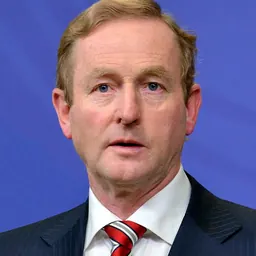
Chief Justice of Ireland On 4 July 2011, she was nominated by Taoiseach Enda Kenny to become Chief Justice of Ireland, and she was appointed as Chief Justice by President Mary McAleese on 25 July 2011. She was the first woman appointed to the office and as a member of the Church of Ireland, she was the first non-Catholic to hold the position. She was also the first graduate of Trinity College Dublin to have been appointed to the office; Chief Justices have largely been graduates of University College Dublin. She succeeded John L. Murray.
During her tenure as Chief Justice, the Supreme Court issued suspended declarations of unconstitutionality for the first time. The court first adopted this approach in N.V.H v Minister for Justice & Equality in May 2017.
As Chief Justice, she oversaw changes in the operations of the Supreme Court and the courts generally. She oversaw the removal of the requirement for judges to wear wigs while hearing cases. In 2015, the Supreme Court sat outside Dublin for the first time since 1931, sitting in Cork. She corresponded with the Office of Public Works over the lack of heating in the Four Courts, threatening to cancel sittings if the issue was not resolved. She advocated for the inclusion of a new courtroom for the Supreme Court in plans to develop a new family court complex on Hammond Lane.
In her capacity as Chief Justice, she oversaw the administration of the Presidential Declaration of Office at the inauguration of President Michael D. Higgins in Dublin Castle in November 2011.
She retired from the position in July 2017 and was succeeded by Judge Frank Clarke. She was the third-longest serving Supreme Court judge ever at the time of her retirement. In her remarks on her retirement, she drew attention to the government's failure to institute a judicial council, having first attempted to persuade the government to establish one in 1997.
Post-retirement
In 2019, she was made an honorary fellow of Trinity College Dublin.
The Courts Service announced on 24 August 2020 that the Supreme Court had appointed her to review the attendance of Supreme Court judge Séamus Woulfe at a dinner organised by the Oireachtas Golf Society. She was appointed on a non-statutory basis as the relevant section in the Judicial Council Act 2019 on judicial conduct had not yet been commenced.
Personal life She is married to paediatrician Dr Brian Denham and they have four children.
From 1996 to 2010, Denham was a Pro-Chancellor of Trinity College, Dublin, the sole constituent college of the University of Dublin.
Don’t just read it —
keep it.
Full-length biographies made to live with: read them, listen on the way to work, watch them tonight.
- E-book
- Audio
- Video
Instant download · yours to keep · every purchase keeps this site free
Important facts
People in Susan Denham's life
Named in this biography and alive at the same time






Related people
Same field, nearest in time



Contemporaries
People whose lives overlapped Susan Denham's


Frequently asked questions
Who is Susan Denham?
Chief Justice of Ireland
When was Susan Denham born?
Susan Denham was born on 7 May 1945 in Sandymount.
What is Susan Denham's occupation?
Susan Denham is a judge, chairperson and barrister.
What nationality is Susan Denham?
Susan Denham is Irish.
Sources & further reading
Cite this page
APA: Biography.guide. (2026). Susan Denham. https://biography.guide/susan-denham/
MLA: "Susan Denham." Biography.guide, https://biography.guide/susan-denham/.
Chicago: "Susan Denham." Biography.guide. https://biography.guide/susan-denham/.
Data last updated: 2026-09-26 · Spot an error? Report a correction.
Page generated 2026-09-27 05:15 UTC