
About Suryamal Misran
Lived 1815 – 1868 (aged 52). Suryamal Misran was a writer, poet and historian.
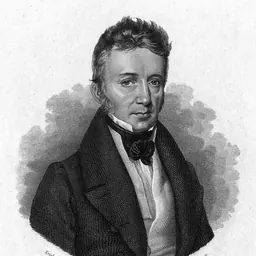
Kaviraja Suryamall Misran (also spelled Suryamall Meesan; 1815–1868) was the Rajkavi (poet-historian) of Bundi kingdom. He was proficient in six languages including Dingal, Sanskrit, Prakrit, Apabhraṃśa, and was a scholar of grammar, logic, history and politics. His important works include Vansh Bhaskar, Vir Satsai, Balwant Vilas and Chhandomayukh.
The family originally resided in the kingdom of Mewar. Bhan, an esteemed ancestor of Suryamall, held a respected position in the Chittorgarh darbar and would occasionally visit Rao Suryamal, the reigning ruler of Bundi. During one such visit, Rao bestowed great honor upon Bhan as his guest, and while on during a hunting expedition, Bhan and Rao Suryamal encountered two large bears, which Rao Suryamal skillfully dispatched with his katar. Impressed, Bhan immortalized the event in his poetry, evoking the appreciation of Rao Suryamal, who gifted him an elephant, a horse, and a substantial amount. Rao Suryamal persuaded Bhan to stay as his guest for several months. However, upon returning to Chittorgarh, Bhan narrated the tale of Suryamal's valor and generosity to Rana Ratan Singh, who, out of jealousy, asked him to leave his domain. Bhan then returned to Bundi, where he was warmly received and honored with a jagir in sasan and valuable presents. Later, Bhan's descendants made Bundi their permanent residence. Kaviraja Chandidan, the father of poet Suryamall Misran, was the tenth successor in line from Bhan.
He received education in Dingala, Sanskrit, philosophy, history, and poetics from various Gurus besides his own father. Swami Swarupdas, a Dadupanthi, gave him training in Yoga, Vedanta, Nyaya, and Vaiseshika literature. From Pandit Ashanand, he learned grammar, verses, poetry, astrology, Ashvadhak, and Chanakya Shastra. From Muhammad, he learned veena-playing and Persian from another mentor. From another Muslim teacher, he acquired knowledge about Islamic religion and culture and had read Persian histories like the Tarikh-i-Firishta and the Akbar-Nama by Abul-Fazl. Thus, Suryamal Misran received an educational, literary, and historical atmosphere right from the beginning, giving rise to a unique confluence of knowledge, wisdom, and valor. In his book Vansh-Bhaskar, Suryamall expresses his deep respect for these Gurus. In the poetry world, they are known as "Mahakavi". He undertook the work Vans Bhaskar during the reign of Maharao Ram Singh. He intended to write Vans Bhaskar in two volumes and twelve parts as an analogy with the sun, which has two solstices and twelve months in a year. He left the work unfinished at the eighth part of the second volume because of differences with the king, whose territory became a British protectorate, while the poet supported the Indian Rebellion of 1857.
Suryamal Misran felt moved by the plight of ordinary Rajput soldiers. In at least three couplets of Veer Satsai he expressed his concern for the wives of brave soldiers, who asked the queen for a handful of grains against the promise of their husbands' heads rolling before hers, whenever needed in return. Veer-Satsai is a soulful expression of the hopes and aspirations of the valiant Rajasthani Warriors and their spouses. It sings of those who indulged unflinchingly in the dangerous game of defiance and death, preferring extinction with honour to a life of slavery and shame.
Misran's glorification of local heroes helped to develop the spirit of nationalization in Rajasthan.
Anti-British Sentiment Suryamal Misran was a proponent of resistance against colonial powers. In his views, subjection to the British implied loss of dharma (faith and way of life). He warned that if the British stayed on no one would be jami ka thakur (lord of the land) and all would become Isai (Christian). Works of Suryamal Misran remained influential even after a century. Gyasiram Misra (from Mathura) who was given the same position in Bundi Court based his work Vamsa Pradipaka on Suryamall’s Vansh Bhaskar.
In popular culture In recent years, his persona has been staged in theatre, most notably in Rajendra Panchal's ' Katha Sukavi Suryamall Ki' performed by the Perafin group of Kota.
Don’t just read it —
keep it.
Full-length biographies made to live with: read them, listen on the way to work, watch them tonight.
- E-book
- Audio
- Video
Instant download · yours to keep · every purchase keeps this site free
Important facts
Family & relationships
People in Suryamal Misran's life
Named in this biography and alive at the same time
Related people
Same field, nearest in time


Contemporaries
People whose lives overlapped Suryamal Misran's



Frequently asked questions
Who was Suryamal Misran?
Indian writer (1815–1868)
When was Suryamal Misran born?
Suryamal Misran was born on 19 October 1815 in Bundi.
When did Suryamal Misran die?
Suryamal Misran died on 11 October 1868 in Bundi.
What was Suryamal Misran's occupation?
Suryamal Misran was a writer, poet and historian.
What nationality was Suryamal Misran?
Suryamal Misran's recorded nationality: Bundi State.
Sources & further reading
Cite this page
APA: Biography.guide. (2026). Suryamal Misran. https://biography.guide/suryamal-misran/
MLA: "Suryamal Misran." Biography.guide, https://biography.guide/suryamal-misran/.
Chicago: "Suryamal Misran." Biography.guide. https://biography.guide/suryamal-misran/.
Data last updated: 2026-09-26 · Spot an error? Report a correction.
Page generated 2026-09-27 05:15 UTC