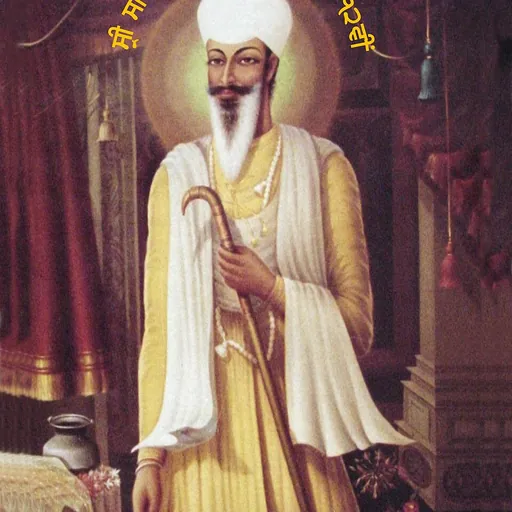
About Ram Singh
Lived 1816 – 1885 (aged 69). Ram Singh was an Indian philosopher.
Namdhari Guru Ram Singh (3 February 1816 – 1885 ) is known to the Namdhari sect of Sikhism as the twelfth guru (religious leader), whilst for mainstream Sikhs such as Damdami Taksal and Nihangs, he is regarded as a 'Saint' and not a Guru. He is credited as being the first Indian to use non-cooperation and boycott of British goods and services as a political tool. He was exiled to Rangoon, Burma (Myanmar) by the British colonial government of India on 18 January 1872. In 2016, the Government of India officially decided to commemorate the 200th anniversary of Satguru Ram Singh. The Punjab Government organizes state-level functions on his birth anniversary and has declares a holiday on this occasion. His portrait is displayed at the Indian Parliament and at the Railway Station, Ludhiana. Namdhari Guru Ram Singh spent 20 years of his life attending to the family business.
Service in the military of the Sikh Empire Later, his father sent him to the army of the Sikh Empire at age 20. As the empire fell apart after the death of Maharaja Ranjit Singh, concerns over British power and Sikh decline led him to galvanize his followers (of mostly humble origin) to proclaim a new "Sant Khalsa" to restore Sikh prestige. He told Guru Ram Singh that he was the next in line to him.
Guru Ram Singh became a disciple of Guru Balak Singh.
Guru Ram Singh was wary of the political, cultural, and spiritual decline of the Sikhs and worried about the growing influence of the British on the horizon and what it meant for the community. Therefore, Guru Ram Singh attempted to reform the Sikhs to meet these challenges. It is noted within the British Archives as well as Giani Gian Singh's Panth Parkash that within 10 years Satguru Ram Singh baptized a large number of people with amrit. Namdhari Sikhs were also referred to as Kukas, a name given by the public due to spiritually ecstatic behavior of the members of the sect at religious functions.
Socio-religious reforms
Theologically, the origin of Namdhari movement is located in the Sikh tradition of Nam-simran (mediation on the name of God). All vices like drinking, consumption of intoxicants and meat were strongly abhorred. He directed all the holy Scriptures to be taken out of almirahs (wardrobe, cabinet, or cupboard) and placed with respect in places of worship, and that they be read regularly. He had forbidden the worship of tombs and the dead.
Guru Ram Singh's religious ideals were influenced by his predecessor, however his socio-political, martial reforms and ideology was influenced by Bhai Maharaj Singh.
In 1863, the colonial authorities perceived the visit of Guru Ram Singh in Amritsar as an attempt to declare himself as the reincarnation of Guru Gobind Singh, but a crackdown by the colonial police prevented him from doing so. The ill practices of child marriage, female infanticide, swapping of wives and sale of girls, prevalent in the then Punjab, were vehemently opposed by Namdhari Guru Ram Singh. British officials had noted that trafficking in women was a lucrative 'money making scheme' in Punjab during those times. The priestly class got worried on the introduction of this simple ritual and fearing loss of income, reported to the imperial British authorities. Thereafter, Namdhari Guru Ram Singh was placed under house arrest for some time.
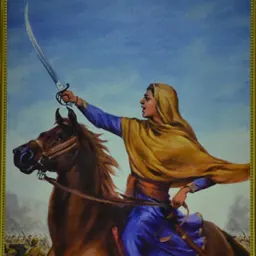
One woman was appointed a Suba by Satguru Ram Singh. She had been influential in propagating the message of Sikhi among people. Recognising her contributions, the President of India Giani Zail Singh led initiative and name a doorway Gate No. 37 of the Indian Parliament as 'Hukmi Mai Marg'.
Contributions to the Indian independence movement Guru Ram Singh aimed to restore Sikh-rule over the region and needed to oust the British in-order to do so. Namdhari movement also endeavored to establish contacts with foreign countries towards the aim of Indian Independence. Namdhari Sikhs made contacts with Kashmir, Nepal and Russia.
Perceived sacrilege of the Golden Temple complex Photograph of the Golden Temple at Amritsar by an unknown photographer in the 1860s, showing the Gothic-style clock-tower under construction, from the Crofton Collection. Similarly, other changes were brought, one of which was construction of a tall, Gothic cathedral style Clock Tower in the vicinity of Golden Temple, the sacred place of Sikhs. The management of Golden Temple was practically entirely in the hands of the imperial Government and there was no care among the priestly class for Sikh sentiments. The Clock Tower, whose construction started in 1864, was built by demolishing the structures Bunga of Kanwar Naunihal Singh and the Attari of Rani Sada Kaur, which were very dear to the Sikhs.
Sirdar Kapur Singh, Sikh scholar and the author of the Anandpur Sahib Resolution, mentioned the conditions of Amritsar, specifically Golden Temple, when the Namdhari Sikhs prepared to confront the colonially-sponsored anti-social elements. He remarks, '...the (imperial) Britishers made public kine-killing lawful and general in the annexed Punjab and gratuitously and devilishly established a public kine-slaughter house adjoining to the precincts of the Golden Temple which also they had annexed.'
Conflict with butchers and subsequent punishment by the colonial British government The social harmony of the region was largely under threat due to the issue of cow slaughter. In the late nineteenth century, the support of colonial administration to kine-killing had become publicly evident, and was reported in a number of newspapers like Aftab-i-Punjab (Lahore), Wasir-ul-Mulk (Sialkot), Koh-i-Nur (Lahore), which explicitly stated that "kine-killing was done by the orders of the authorities who 'desired that disharmony should prevail' between Hindus and Muslims.
By this time, as Namdharis were the only ones who were actively propagating against the British and were under strict British surveillance, The British authorities were keeping an eye on the supposed prophesies of the British being vanquished by Ram Singh and as the time was passing by, they reported that an urgency of an action was vouched by certain members of the sect.
The Russians declined to assist Guru Ram Singh in his endeavor as they were wary of embroiling themselves in a war with the British. These, along with his brother Namdhari Guru Hari Singh, kept the morale of largely persecuted Sikhs high and they remained and worked as the opponents of British imperialism. The movement continued its efforts and later collaborated with Indian National Congress in civil disobedience movement. However, the Namdhari sect heavily disputes this as per their beliefs, they are convinced that he remains alive till the present-day.
The country will always feel proud of the sacrifices given by Namdhari under the banner of freedom fight initiated by Guru Ram Singh, now again there's going to be a test of love for the nation of the Indians. - Subhash Chandra Bose, Indian freedom fighter
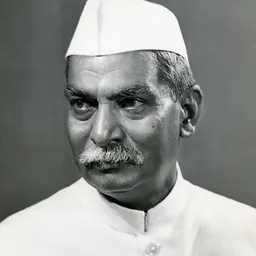
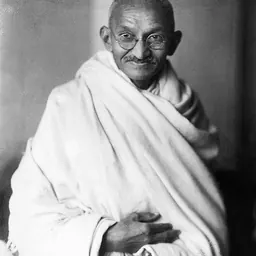
Guru Ram Singh considered independence as an element of religion. The task of non-cooperation campaigned vehemently by Mahatma Gandhi was propagated by Guru Ram Singh fifty years back among the Namdharis. - Rajendra Prasad, Indian freedom fighter
The revered Baba Ram Singh Ji was truly a transformational personality of the century. - S. Shamsher Singh Ashok, Research scholar
I cannot deny the fact that he (Guru Ram Singh) reinvigorated Gurmat among the Sikhs and taught patriotism to Sikhs by starting non-cooperation movement against the foreign Government. - Master Tara Singh, Akali leader
Subsequent to Guru Gobind Singh, only Baba Ram Singh has been a braveheart in India. Because of this, it was natural for the faithful ones to see him as a reflection of Guru Gobind Singh. - Sardar Kapur Singh, ICS, Former DC
Gallery
Don’t just read it —
keep it.
Full-length biographies made to live with: read them, listen on the way to work, watch them tonight.
- E-book
- Audio
- Video
Instant download · yours to keep · every purchase keeps this site free
Important facts
People in Ram Singh's life
Named in this biography and alive at the same time



Related people
Same field, nearest in time




Contemporaries
People whose lives overlapped Ram Singh's





Frequently asked questions
Who was Ram Singh?
Indian activist, spiritual leader (1816–1885)
When was Ram Singh born?
Ram Singh was born on 3 February 1816 in Bhaini.
When did Ram Singh die?
Ram Singh died on 29 February 1885 in Dhaka, Myeik.
What was Ram Singh's occupation?
Ram Singh was a philosopher.
What nationality was Ram Singh?
Ram Singh was Indian.
Sources & further reading
Cite this page
APA: Biography.guide. (2026). Ram Singh. https://biography.guide/ram-singh-philosopher/
MLA: "Ram Singh." Biography.guide, https://biography.guide/ram-singh-philosopher/.
Chicago: "Ram Singh." Biography.guide. https://biography.guide/ram-singh-philosopher/.
Data last updated: 2026-09-23 · Spot an error? Report a correction.
Portrait: Wikimedia Commons · author & licence
Page generated 2026-09-27 05:07 UTC