
About Sukhamoy Chakraborty
Lived 1934 – 1990 (aged 56). Sukhamoy Chakraborty was an Indian economist.
Sukhamoy Chakravarty (:sʊkʰəmoɪ tʃʌkrəvɑːrti; 26 July 1934 – 22 August 1990) was an Indian economist who, along with Prasanta Chandra Mahalanobis, was a key architect of the Five-Year plans of India. He attended Ballygunge Government High School, Calcutta and Presidency College, Kolkata when it was under University of Calcutta as an Economics major, where he was a batchmate of Amartya Sen. He later attended the Delhi School of Economics and obtained a doctorate from Erasmus University Rotterdam under Jan Tinbergen. He assumed a teaching post at Massachusetts Institute of Technology but returned to India to join the Planning Commission. He was a professor of economics at the Delhi School of Economics. Most of all, he was known for the Chakravarty commission of 1982–85 that helped in economic reforms to the monetary system in India.
Early life and education Born in Mymensingh village in Dhaka in 1934 in a well-to-do family, Sukhamoy completed his schooling where his father was a judge. Subsequently he joined Presidency College in Calcutta for under-graduate studies and Calcutta University for M. A. in Economics. Right from his college days, Chakravarty showed a wide range of interests in literature, philosophy, history and mathematics.
A short stint at the Indian Statistical Institute brought him into contact with P. C. Mahalanobis which helped Chakravarty in starting his professional career. Tinbergen who was on a visit to the Institute was so impressed with Chakravarty that he right away offered him a fellowship for doctoral studies at the Netherlands Institute of Economics. On the completion of his doctoral work in less than one year, he spent two years at the Massachusetts Institute of Technology for doing teaching and research.
On his return to India later in 1961 Chakravarty taught at his alma mater, the Presidency College in Calcutta until 1963 when he took up the Sir Shankarlal Professorship in Mathematical Economics at the Delhi School of Economics. This was the beginning of Chakravarty's longest professional association where the performance on his part was significant and the same can be said for his role in the School of Economics. Prior to Chakravarty's arrival, B. N. Ganguli and K. N. Raj were the eminent professors of this school. Jagdish Bhagwati, A. L. Nagar and Amartya Sen too joined its faculty about the same time as Chakravarty. This was a period of high academic activity at the school with seminars jointly held with the Planning Unit of the Indian Statistical Institute (ISI) which had added B. S. Minhas and T. N. Srinivasan to its faculty. Many well regarded economists from British and American universities visiting Delhi under various programmes also actively participated in the same seminars.
The committee was led by these five members and chaired by Chakravarty:
Prof. Sukhamoy Chakravarty M. P. Chitale R. K. Hazari F. A. Mehta C. Rangarajan These were the following below points of reference under which the committee was assigned to work:
To critically review the structure and operation of the monetary system in the context of the basic objectives of planned development. To assess the inter-action between monetary policy and public debt management in so far as they have a bearing on the effectiveness of monetary policy. To evaluate the various instruments of monetary and credit policy in terms of their impact on the credit system and on the economy. In this context links among the banking sector, the non-banking financial institutions and the unorganised sector could he assessed. To recommend measures for improvement in the formulation and operation of monetary and credit policies and to suggest specific areas where the various policy instruments need strengthening. To make such other recommendations as the Committee may deem relevant to the effective operation of monetary and credit policy.
He also served as Vice-President of the International Economic Association and played a pivotal role in organizing the World Congress of the Association in Delhi in December 1986 in his additional capacity as President of the Indian Economic Association. and the V.K.R.V. Rao Prize.
Legacy Sukhamoy was an avid reader and scholar. Credited to be one of the foremost Indian economists of the 20th Century by his well known colleagues, his initial interest in high theory and mathematical economics gave way to practical policy analysis of issues relating to the under-privileged. He had put forward his scholarship to further the study of applications in development issues. Paul Samuelson and Jan Tinbergen had a deep and profound respect for Chakravarty.
Samuelson had shown his respect by writing in the foreword to Chakravarty's book: What makes for a beautiful problem in science? It may be logical beauty: proof that the set of prime numbers cannot be finite... is as aesthetically neat in our times as it was in Euclid’s. But a problem takes on extra lustre if, in addition to its logical elegance, it provides useful knowledge. By the above test, we must judge Professor Chakravarty’s book to be fascinating
Upon his death, Tinbergen in a tribute remarked that he had learned more from Chakravarty than the latter learnt from him.
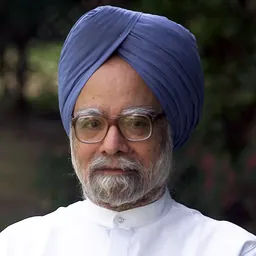
A conference was held on 17 March 2017 in G. Parthasarathi Conference Hall in his memory that had been attended by dignitaries such as the former Indian PM Manmohan Singh, Y. K. Alagh, Manmohan Agarwal, V. S. Seshadri, and V. R. Panchamukhi.
Don’t just read it —
keep it.
Full-length biographies made to live with: read them, listen on the way to work, watch them tonight.
- E-book
- Audio
- Video
Instant download · yours to keep · every purchase keeps this site free
Important facts
People in Sukhamoy Chakraborty's life
Named in this biography and alive at the same time


Related people
Same field, nearest in time


Contemporaries
People whose lives overlapped Sukhamoy Chakraborty's



Frequently asked questions
Who was Sukhamoy Chakraborty?
Indian economist (1934-1990)
When was Sukhamoy Chakraborty born?
Sukhamoy Chakraborty was born on 26 July 1934.
When did Sukhamoy Chakraborty die?
Sukhamoy Chakraborty died on 22 August 1990 in New Delhi.
What was Sukhamoy Chakraborty's occupation?
Sukhamoy Chakraborty was an economist.
What nationality was Sukhamoy Chakraborty?
Sukhamoy Chakraborty was Indian.
Sources & further reading
· Wikipedia: Sukhamoy Chakraborty
· DBpedia: Sukhamoy Chakravarty
Cite this page
APA: Biography.guide. (2026). Sukhamoy Chakraborty. https://biography.guide/sukhamoy-chakraborty/
MLA: "Sukhamoy Chakraborty." Biography.guide, https://biography.guide/sukhamoy-chakraborty/.
Chicago: "Sukhamoy Chakraborty." Biography.guide. https://biography.guide/sukhamoy-chakraborty/.
Data last updated: 2026-09-20 · Spot an error? Report a correction.
Page generated 2026-09-27 05:15 UTC