
About Sugawara no Michizane
Lived 845 – 903 (aged 57). Sugawara no Michizane was a Japanese poet, writer, diplomat and kugyō.
, Along with Taira no Masakado and Emperor Sutoku, he is often called one of the "Three Great Onryō of Japan".
Biography He was born into a family of scholars, who bore the hereditary title of which predated the Ritsuryō system and its ranking of members of the court. His grandfather, Sugawara no Kiyotomo, served the court, teaching history in the national school for future civil bureaucrats and even attained the third rank. His father, Sugawara no Koreyoshi, began a private school in his mansion and taught students who prepared for the entrance examination to the national school or who had ambitions to be officers of the court, including his own son Michizane.
Michizane passed the entrance examination, and entered Daigaku, as the national academy was called at the time. After graduation he began his career in the court as a scholar as a relatively prestigious senior sixth rank upper in 870. His rank coincided with his role initially as a minor official in the court bureaucracy under the Ministry of Civil Affairs. By 874 Michizane had reached the fifth rank (his father the fourth rank), and served briefly under the Ministry of War before being transferred to a more desirable role in the Ministry of Popular Affairs. Among his duties, based on limited records, was to tour the province, recommend outstanding individuals to the court, and to punish as needed. In 887, Michizane had to petition and pray to the Buddhas and the Shinto kami to help relieve a drought at the time. Records of the time imply that Michizane's time as governor had met with only middling success.
Ambassador to the Tang dynasty Consultant Assistant Investigator of the Records of Outgoing Officials Junior Fourth Rank Lower Major Controller of the Left Supernumerary Senior Assistant Minister of Ceremonial Assistant Master of the Crown Prince's Household (later Emperor Daigo)
He was appointed ambassador to China in the 890s, but instead came out in support of abolition of the imperial embassies to China in 894, theoretically in consideration for the decline of the Tang dynasty. On the other hand, some historians point to a power struggle between Michizane and his political rivals, the influential Fujiwara no Tokihira and other Fujiwara clans, as another reason for Sugawara Michizane to advise the emperor to abolish the Japanese envoys to Tang. The theory is that if Michizane had been sent to Tang as an ambassador, he would have been removed from the center of power at the court, and he advised the emperor to abolish the envoys to avoid this.
Within the abdication of Emperor Uda, Michizane's position became increasingly vulnerable. In 901, through the political maneuverings of his rival, Fujiwara no Tokihira, who accused him of favouring Prince Tokiyo over the crown prince as the main successor to the emperor's throne, Michizane was demoted from his aristocratic rank of junior second to a minor official post at Dazaifu, in Kyūshū's Chikuzen Province where he and his entire family was banished. He died in exile in 903.
Poetry Michizane had an exceptional talent in poetry both for waka (poetry in Japanese) and kanshi (poetry in Chinese).
Like his father, Michizane had a talent for poetry, and it is said that he began composing at the age of five. His appeared in various compiled at the behest of successive emperors and the . His appear in the , the , the , and the , among others. Michizane is traditionally credited with the Shinsen Man'yōshū, but the attribution has been challenged.
One of his was included in Fujiwara no Teika's Ogura Hyakunin Isshu: Japanese Rōmaji English translation このたびは ぬさもとりあへず 手向山 紅葉の錦 神のまにまにKono tabi wa Nusa mo toriaezu Tamuke-yama Momiji no nishiki Kami no mani-maniOn this journey I have no streamers made of silk to offer up. Gods, if it pleases you, may you take instead this beautiful brocade of Mt. Tamuke's autumn colors.
The poem was originally the 420th of the Kokin Wakashū. The work contained 46 kanshi, was completed sometime before his death in 903. He sent it to right before his death. Yagyū clan – self-proclaimed to be a descendant of an officer called Sugawara no Nagayoshi Yagyū Munetoshi (1529–1606) – the founder of Yagyū Shinkage-ryū (a school of swordsmanship) Yagyū Munenori (1571–1646) – the head sword instructor of Tokugawa shōguns, author of A Hereditary Book on the Art of War
Don’t just read it —
keep it.
Full-length biographies made to live with: read them, listen on the way to work, watch them tonight.
- E-book
- Audio
- Video
Instant download · yours to keep · every purchase keeps this site free
Important facts
People in Sugawara no Michizane's life
Named in this biography and alive at the same time
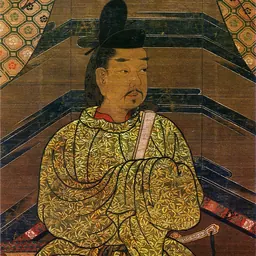

Related people
Same field, nearest in time



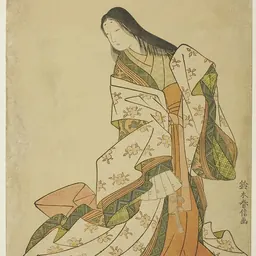

Contemporaries
People whose lives overlapped Sugawara no Michizane's
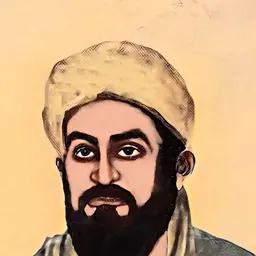




Frequently asked questions
Who was Sugawara no Michizane?
Japanese poet
When was Sugawara no Michizane born?
Sugawara no Michizane was born on 1 August 845 in Kyoto.
When did Sugawara no Michizane die?
Sugawara no Michizane died on 26 March 903 in Dazaifu.
What was Sugawara no Michizane's occupation?
Sugawara no Michizane was a poet, writer, diplomat and kugyō.
What nationality was Sugawara no Michizane?
Sugawara no Michizane was Japanese.
Sources & further reading
· Wikipedia: Sugawara no Michizane
· DBpedia: Sugawara no Michizane
Cite this page
APA: Biography.guide. (2026). Sugawara no Michizane. https://biography.guide/sugawara-no-michizane/
MLA: "Sugawara no Michizane." Biography.guide, https://biography.guide/sugawara-no-michizane/.
Chicago: "Sugawara no Michizane." Biography.guide. https://biography.guide/sugawara-no-michizane/.
Data last updated: 2026-09-20 · Spot an error? Report a correction.
Page generated 2026-09-27 05:28 UTC